
Unbiased headlines. Facts, not spin.
Unbiased Headlines is an independently owned news organization. We bring you the facts, not opinions, written fresh from 110+ named sources. Sources linked so you can verify it yourself.
 sports
Low Interest (3/10)
54 Olive Ridley Hatchlings Released at Seal Beach From California's First Recorded Sea Turtle Nests
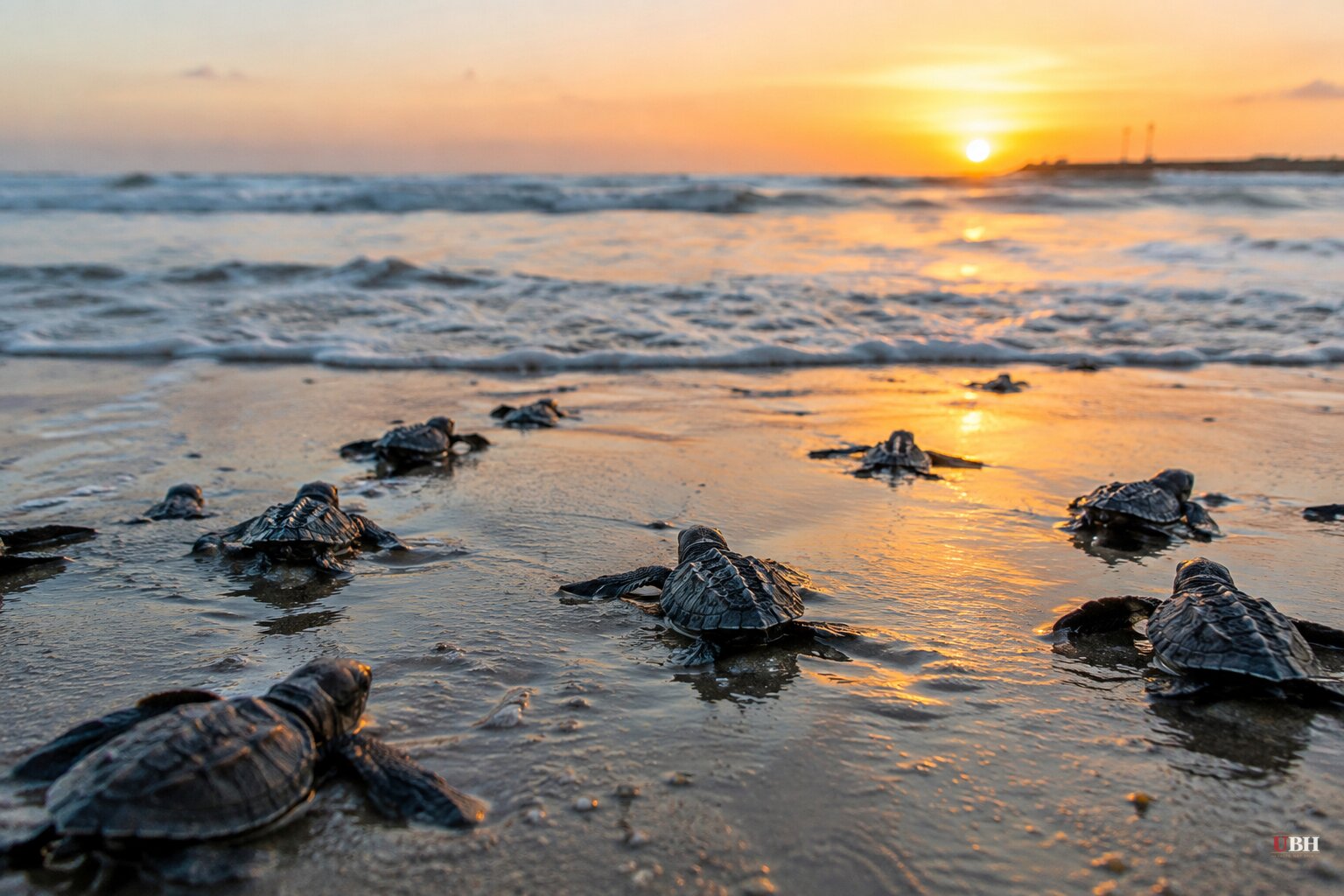
Fifty-four olive ridley sea turtle hatchlings made it into the Pacific early today, Nov. 14, from the first sea turtle nests ever confirmed on the U.S. West Coast.
The eggs spent nearly two months in an incubator at the Aquarium of the Pacific in Long Beach. All 54 hatchlings reached the water, Dr. Lance Adams, the aquarium's director of veterinary services, said at a Saturday news conference.
How the hatch unfolded
Staff noticed a small depression and cracks in the sand of the incubation container on Thursday, Adams said. Those were signs that eggs were hatching below the surface.
Active emergence began around 5 or 6 p.m. Friday, Nov. 13. The first hatchling surfaced at about 7:15 p.m. and sat alone for roughly two hours. Most of the rest broke through together over the following two hours.
"It kind of went from … looking like a very smooth beach sand to looking like an eruption of baby sea turtles," Adams said. He also called it a "tangle of turtles."
The hatchlings are under two inches long and weigh about as much as a large strawberry. The aquarium put the incubation period at 58 days.
Staff and federal biologists carried the hatchlings to a spot in Seal Beach near the original nest. The release took place in the dark, in an area with minimal light and human disturbance. Video was shot from a distance with red or infrared light because flash could interfere with the process, officials said. The release was not announced to the public in advance, to avoid disturbing the turtles.
After the hatchlings entered the surf, staff swept the shoreline for any weaker turtles that had washed back up. Any would have been returned to the aquarium to regain strength, Adams said.
Where the eggs came from
An olive ridley was spotted nesting at Seal Beach on Sept. 16. NOAA Fisheries called it the first recorded nest of any sea turtle species on the U.S. West Coast. A second turtle was seen nesting near the Huntington Beach Pier three days later, about 8 miles away.
The two nests held 204 eggs: 104 at Seal Beach and 100 at Huntington Beach. Scientists moved them to the aquarium on Sept. 25 ahead of Tropical Storm Rachel, which brought high surf and standing water near both nesting sites, officials said.
Until September, the northernmost known olive ridley nest was roughly 700 miles south of Orange County, in Baja California Sur, Mexico.
No one knew until this week whether any of the eggs were fertilized or viable. "We're pleased that some sea turtle eggs were viable," Adams said.
A third nest was lost
A third olive ridley nest appeared Nov. 1 at San Buenaventura State Beach in Ventura County. It did not survive.
Recorded sand temperatures there were significantly lower than at the species' usual nesting grounds. Friday's high tides then stripped the sheltering sand off the nest and exposed the eggs.
"That pretty much destroyed the nest," said Jonathan Snyder, a biologist with the U.S. Fish and Wildlife Service. The few eggs that were not swept away were judged not viable and removed from the beach.
Why here, and what comes next
No one has pinned down why the turtles nested in Southern California. NOAA said the marine heat wave and El Niño-driven warm sea surface temperatures were likely "key factors." The marine heat wave and strong El Niño have pushed local water temperatures closer to those of the turtles' typical nesting grounds.
Aquarium president and CEO Jeff Flocken framed the open question this way: "Whether the reason for the nests in Southern California was because of our weather patterns, or a simple anomaly, this is an important conservation story." He added, "Species that change and adapt are the ones that survive."
The hatchlings face long odds. Officials estimate that only one in 1,000 olive ridley hatchlings reaches adulthood. The turtles go through a 24- to 48-hour "frenzy period" of nonstop swimming, powered by the remaining yolk sac. After that they swim for days to reach deeper water.
Olive ridleys are among the smallest sea turtles. Their Pacific coast of Mexico breeding colonies are listed as endangered under the Endangered Species Act, and all other populations are listed as threatened.
What remains
About 50 eggs from the Seal Beach nest are still incubating. The 100 Huntington Beach eggs are also still at the aquarium. The aquarium said it will post updates as more eggs hatch.
Officials say more nests, or turtles preparing to nest, could turn up along the coast. They are asking the public to watch for sea turtle tracks in the sand and to report nest sightings.
Anyone who finds a stranded sea turtle should notify a local lifeguard right away. If no lifeguard is available, call the NOAA California Sea Turtle Stranding Line at (562) 506-4315.
Whether 2026 turns out to be a one-off or the start of a pattern on California beaches is still unknown.
Sources used for this briefing
8 links from 6 independent newsrooms (syndicated copies of the same report count once)
These are the sources it draws on, linked so you can verify.


