
Unbiased headlines. Facts, not spin.
Every story is an unbiased news briefing written from 110+ sources across the spectrum — sources linked so you can verify it yourself.
 tech
Low Interest (3/10)
July 6, 2026 at 01:20 AM
tech
Low Interest (3/10)
July 6, 2026 at 01:20 AM
3D TV Is Dead. Here Is Why the Industry Killed It Faster Than Consumers Did.
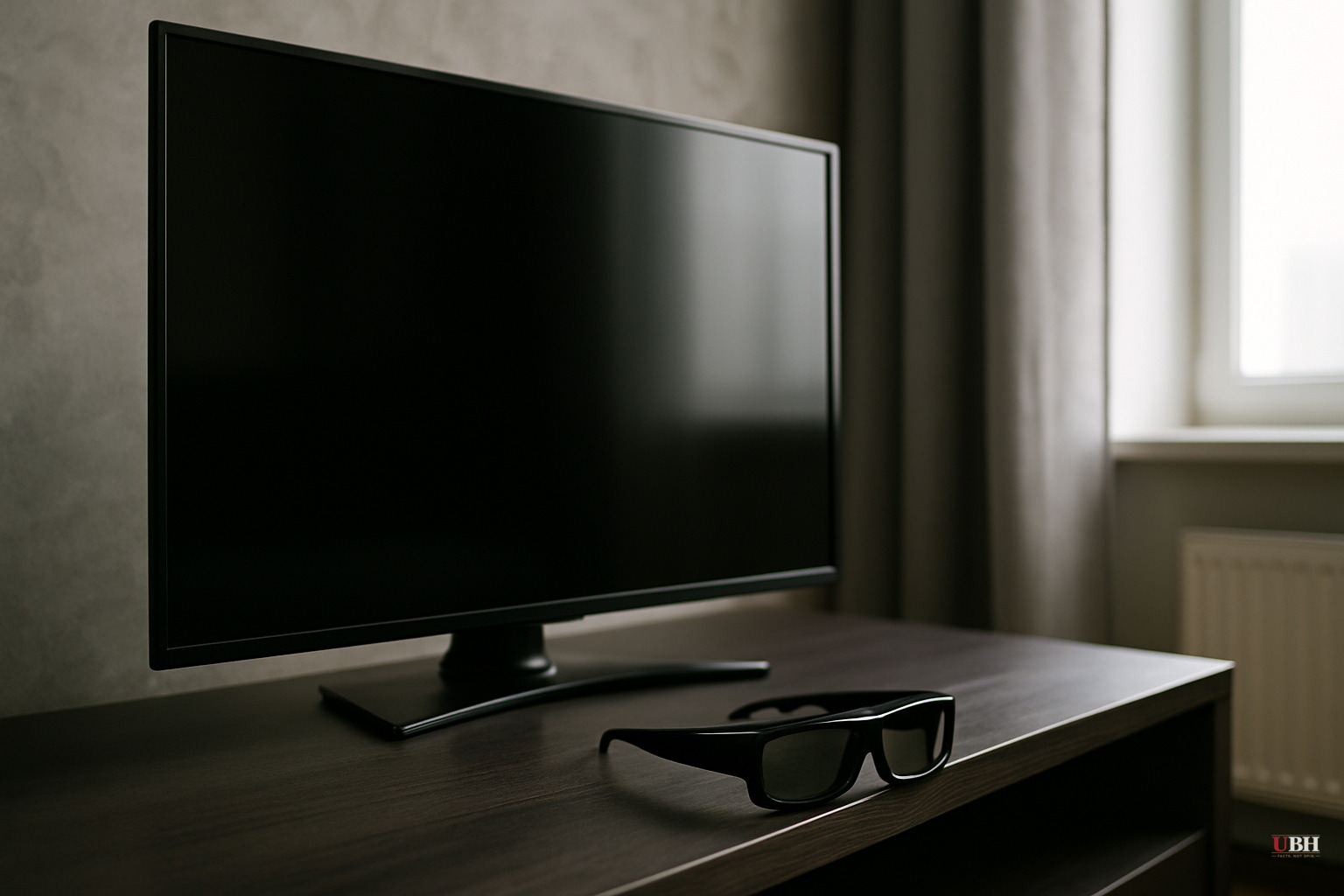
For roughly five years, you could barely walk into a Best Buy without a TV manufacturer trying to sell you a pair of chunky glasses. Samsung, LG, Sony, and Panasonic all shipped 3D-capable sets as a standard feature through most of the early 2010s. The bet was simple: Hollywood was printing money on 3D surcharges, driven by hits like Avatar and How to Train Your Dragon.
That logic made sense in a theater, where the studio controls the environment. At home, it collapsed almost immediately.
What Actually Made 3D TVs Miserable
According to Engadget, the friction points were layered and relentless. Passive glasses ran $10 to $20 a pair. Active-shutter glasses — required for higher-end sets and projectors — ran $50 or more and needed constant charging. You needed a 3D-capable Blu-ray player on top of your 3D TV. Then you needed to find and pay a premium for 3D Blu-ray discs, which were not always easy to source.
Passive 3D TVs compounded the problem technically. Because they had to split the image between two eyes, they effectively halved the resolution of 1080p. You paid a premium for a feature that degraded picture quality.
Screen size mattered enormously and almost no one had a screen large enough. Engadget notes that on a 42- or even 50-inch set, viewed from a normal living room distance, the depth effect largely evaporates. The immersive experience that worked at a 60-foot IMAX screen simply does not translate to a TV most people can actually afford.
Hosting a 3D movie night meant buying glasses for every person in the room. That is not a minor inconvenience. It's a recurring cash cost that made the whole proposition absurd for casual viewers.
A study by Precision Reports found that around 25 percent of households with 3D TVs actually used the technology during the peak period between 2010 and 2018, and less than 10 percent kept using it after three years. The same report found that 65 percent of users stopped because of a lack of content, 50 percent cited discomfort during long viewing sessions, and 42 percent gave up due to high equipment costs.
Hollywood Made It Worse
The theatrical side of 3D had its own rot. Once studios realized 3D tickets commanded premiums over standard screenings, they started retrofitting films in post-production rather than shooting natively in 3D. The results were visibly inferior — muddier, dimmer, lacking genuine depth — and audiences noticed. By 2012, major films like Pixar's Brave and Madagascar 3 saw serious drops in their 3D ticket sales, according to The Hollywood Reporter.
Engadget points to the broader content drought on the TV side as equally damaging. The BBC and ESPN both launched 3D broadcast experiments, and both shut them down in 2013. Kim Shillinglaw, who served as the BBC's head of 3D, was direct about why: "I have never seen a very big appetite for 3D television in the UK," she told Radio Times in 2013. "Watching 3D is quite a hassly experience in the home. You have got to find your glasses before switching on the TV."
Shillinglaw also identified something fundamental about how people watch TV versus how they watch films. Cinema is a focused, single-purpose event. Television is ambient, interruptible, and often social in a way that penalizes any technology requiring everyone in the room to wear hardware.
When the BBC and ESPN exited, the content library effectively stopped growing. 3D Blu-rays served a small collector niche, but that was never going to sustain a mass-market technology.
The Honest Counterargument
The fairest defense of 3D is that the home implementation never got a real chance to mature. Active-glasses systems on large screens, viewed at proper distances, genuinely did replicate a credible version of the theatrical experience, according to Engadget. Enthusiasts who built out proper home theater setups with projectors and premium active glasses reported results that passive TV implementations never came close to. The technology was not inherently broken. It was undersized, underpriced, and undersupported.
There is also an argument that Hollywood poisoned the well. If studios had maintained quality standards — native 3D photography, calibrated dimming, real post-production investment — consumer expectations might have been set correctly from the start. Instead, the gold rush produced so many bad 3D releases that skepticism became the rational default. As producer Jeffrey Katzenberg told The Hollywood Reporter in 2011: "We have disappointed our audience multiple times now, and because of that I think there is genuine distrust."
Why 4K Killed the Coffin Nail
By 2014 and 2015, 4K sets with HDR were hitting the market at prices consumers could stomach, and the upgrade was immediately visible without any accessories, glasses, subscriptions to specialty content, or behavioral changes. Netflix and other streaming platforms began pushing 4K libraries aggressively. The value proposition was obvious.
Manufacturers did not hold a press conference to announce 3D's death. They simply stopped including it. By 2015, 3D had completely disappeared at home, according to Engadget.
The Open Question Going Forward
The 3D TV episode deserves revisiting now because the industry is gearing up for the next round of premium display technology, including Micro RGB LED and continued OLED advancement, according to Engadget. Each new format will face the same core test: does the consumer experience justify the friction and the cost without the feature being stripped out at the value tier?
3D failed that test decisively. Whether autostereoscopic displays — glasses-free 3D, which several manufacturers have been developing — can eventually answer the friction problem remains to be seen. Precision Reports predicts the 3D TV category will grow by 15 percent by 2036 thanks to the rise of glasses-free 3D sets, commercial implementations, and gaming, though current glasses-free implementations rely on sophisticated eye tracking that typically limits them to a single viewer.
Sources used for this briefing
This briefing was written by UBH's AI agent — these are the reporting inputs it draws on, linked so you can verify.


