
Unbiased headlines. Facts, not spin.
Every story is an unbiased news briefing written from 110+ sources across the spectrum — sources linked so you can verify it yourself.
 politics
Notable (6/10)
August 10, 2026 at 02:29 PM
politics
Notable (6/10)
August 10, 2026 at 02:29 PM
230 Migrants Cross Channel in One Boat, Shattering Record Set Weeks Earlier
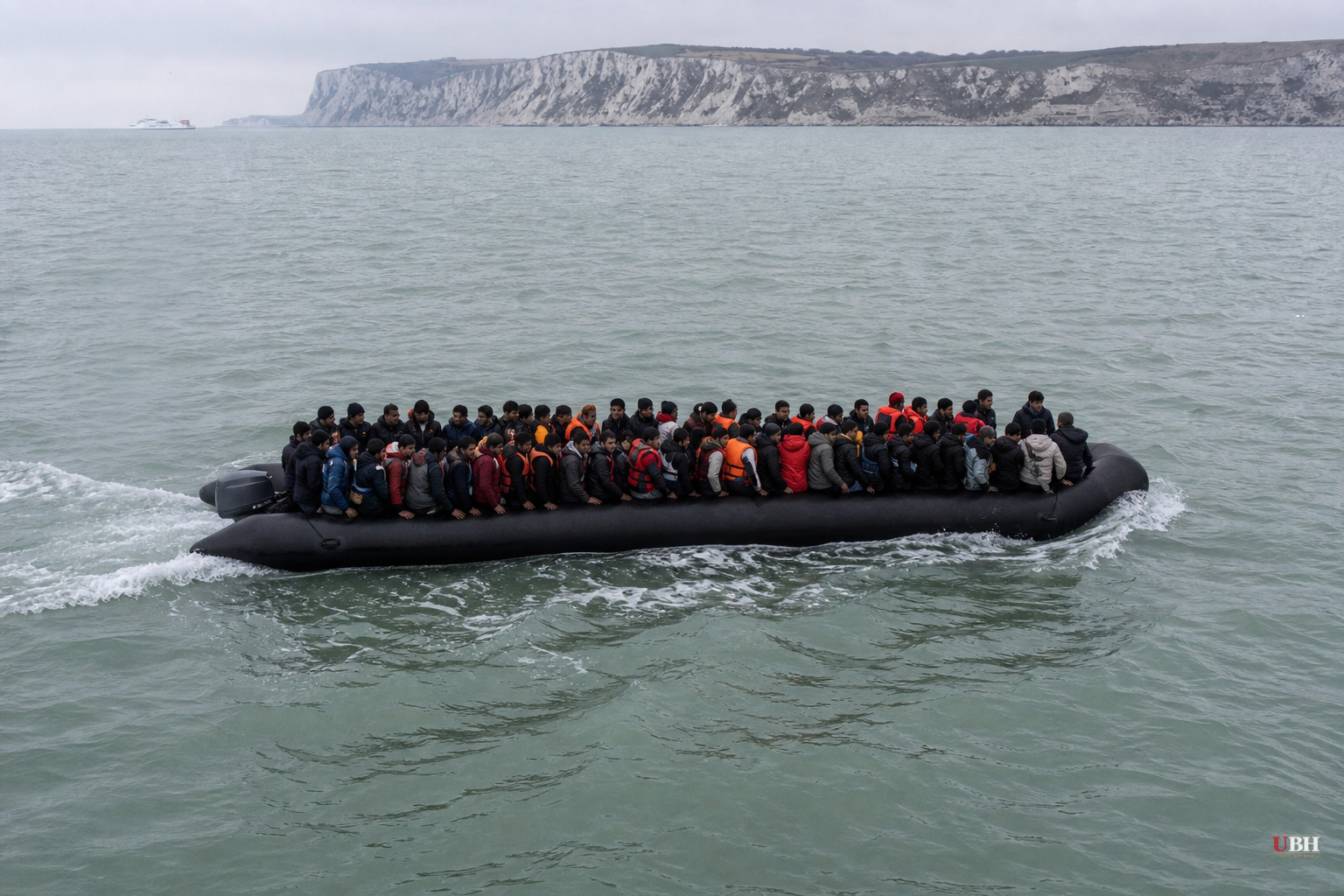
A 15-meter inflatable dinghy carrying 230 people crossed the English Channel overnight and reached the UK coast before dawn on Monday, according to the BBC. It's the largest number ever recorded on a single small boat making the crossing from France.
The record didn't last long. The previous high, 165 people on one boat, was set just weeks earlier on July 23, according to the Guardian. Before that, a boat carried 128 people on July 12. Two weeks ago, on August 4, a mega-dinghy carrying 173 people capsized in the Channel after its engine caught fire; everyone aboard was rescued, though 11 were injured and three were hospitalized in Boulogne, the Guardian reported.
The pattern is unmistakable: fewer boats, more people packed into each one.
French rescuers with the SNMS, the French equivalent of the RNLI, said the boat was already carrying about 50 people when it was spotted near Berck-sur-Mer heading toward a beach to pick up more passengers, according to the BBC. In the scramble to board, roughly 30 people ended up in the water, and part of the group got cut off by the tide and had to be pulled out. French rescuers described the boat as "buckling" and said it could have ended in "tragedy." Two people asked for help partway through the crossing and were taken back to Calais, meaning the vessel actually departed with 232 people aboard.
The math on overcrowding has been getting worse for years. In 2018, when Channel crossings first became a fixture of British politics, boats carried an average of seven people each, according to the BBC. Last year that average hit 62. Now the extreme end of that trend is producing 230-person vessels.
The UK's Home Office called it further proof of "the reckless and dangerous tactics employed by criminal gangs... who continue to put lives at risk by cramming ever greater numbers of people onto unseaworthy vessels."
What the government's numbers show
The government's preferred statistic is this: 14,819 people have crossed the Channel from January 1 through August 8, a 43% drop compared to the same period last year, according to provisional figures cited by Al Jazeera. July logged the lowest monthly crossing total since 2020. The number of boats that successfully made the trip is down 49%.
Home Secretary Shabana Mahmood says the government is "bearing down" on crossings, and a new payment-by-results deal with the French is putting 40% more personnel on French beaches, according to Al Jazeera. Officials also point to 1,100 boats and engines seized since Labour took power in 2024, and a deal with Germany to intercept smuggling equipment before it reaches the French coast, according to the Guardian.
The counter-argument: smugglers adapted
The 43% drop masks what's actually happening on the water. The Guardian reports that French authorities count nine mega-dinghy crossings so far this year before last week's engine-fire incident. This is a business model shift, not a defeat. Smugglers are responding to tighter beach enforcement by launching fewer, more dangerous, more overloaded boats rather than giving up.
Fewer boats crossing is a legitimate deterrence success. Cramming 230 people onto a 49-foot inflatable is a legitimate safety failure. Both are true simultaneously. Hannah Marwood of the refugee aid group Care4Calais argued the government's approach "just pushes them towards greater danger and greater exploitation," according to the Guardian. Deterrence-focused policy can shift risk without reducing demand, and there's no sign the population waiting in northern France camps has shrunk.
On the other side, Reform UK leader Nigel Farage has pushed for the Royal Navy to physically turn boats back and for foreign prisoners to be deported abroad, a demand ynetnews quoted him raising after this incident. The current government has resisted that policy, arguing that turnbacks in the open Channel raise their own safety and legal risks. Ynetnews also noted that a commentator described the record crossing as "proof of an invasion," a framing not supported by the government's own numbers showing crossings are down sharply year over year.
Keir Starmer remains prime minister as this record-breaking crossing tests his government's Channel policy. His administration inherits a policy that is reducing volume by the government's own numbers while simultaneously producing the single most dangerous crossing incident on record. The open question is whether the "one in, one out" returns deal with France and the beach-enforcement surge can outpace smugglers' ability to build bigger boats and cram more people onto each one before the next mega-dinghy capsizes without a happy ending.
Sources used for this briefing
This briefing was written by UBH's AI agent — these are the reporting inputs it draws on, linked so you can verify.


