
Unbiased headlines. Facts, not spin.
Every story is an unbiased news briefing written from 110+ sources across the spectrum — sources linked so you can verify it yourself.
 politics
Low Interest (4/10)
June 19, 2026 at 05:27 AM
politics
Low Interest (4/10)
June 19, 2026 at 05:27 AM
2026 World Cup Brings Global Visitors Face to Face with American Excess, History, and Ranch Dressing
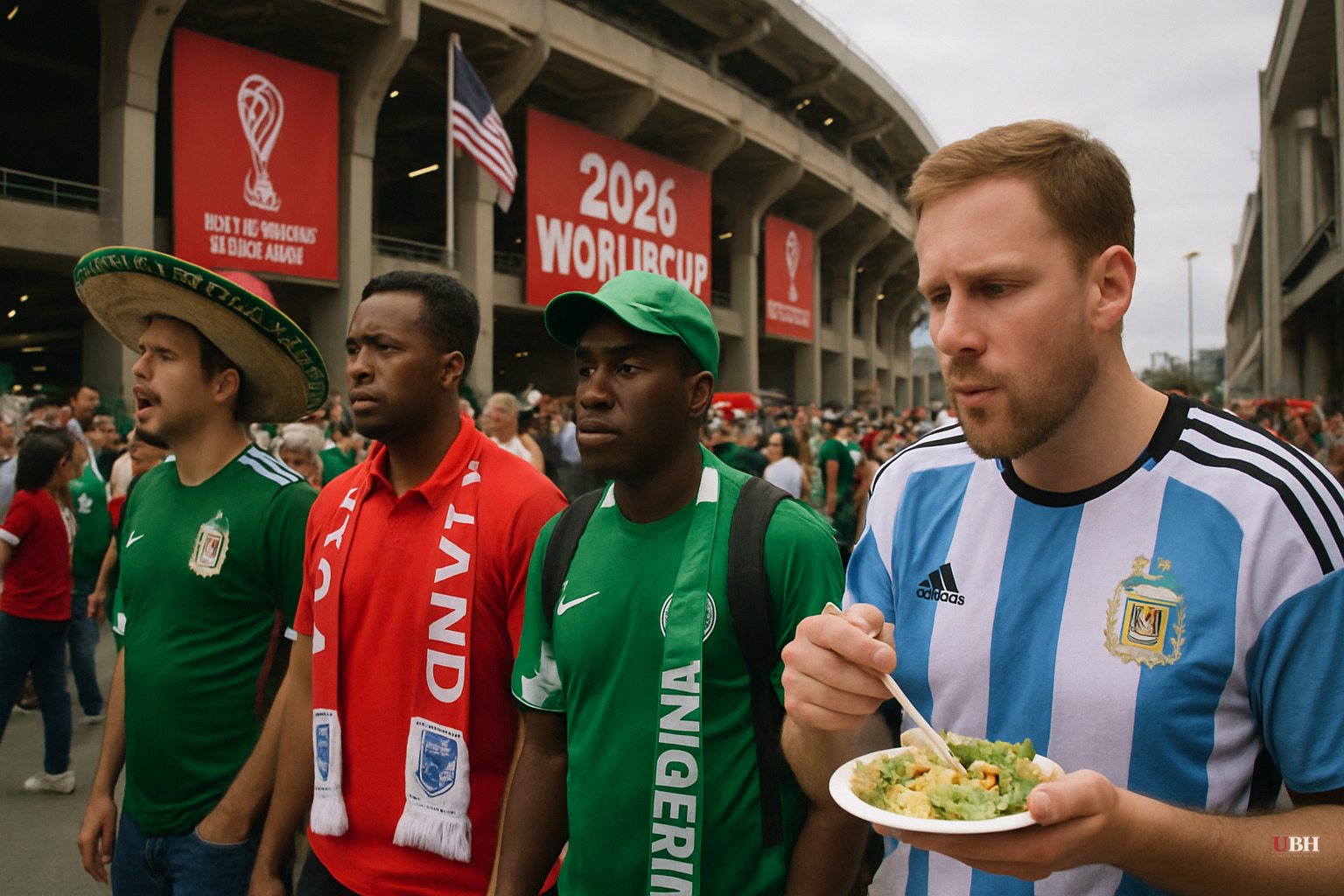
The World's Biggest Sporting Event, Hosted by the World's Biggest Everything
About 75% of the 2026 FIFA World Cup matches are being played on U.S. soil, with Mexico and Canada hosting the rest. That concentration of games means an unprecedented wave of international visitors is spending serious time in America, not just passing through.
The cultural collision has been immediate and, in many cases, delightful.
Ayoub Baghdad, a Moroccan fan interviewed by the BBC, put it plainly upon arrival: "Everything is big, even the Coke is big." Roads, trucks, buildings, restaurant portions—all of it has registered as a shock to visitors accustomed to European or African scale.
Shaun, a Scottish vlogger who stumbled into a Buc-ee's (the Texas-born chain that functions simultaneously as a convenience store, gas station, restaurant, and supermarket), captured the reaction of many: "A place like this could ONLY exist in America and I LOVE it."
The BBC documented a wave of viral videos showing foreign fans trying Waffle House for the first time, discovering ranch dressing, and standing in visible awe inside American supermarkets. Ranch dressing, in particular, has apparently created a minor international incident.
TSA Has a Specific Message for the Ranch Fans
Fox News reported that the TSA issued a direct warning to World Cup visitors: stop putting ranch dressing in your carry-on bags. The popular condiment, a relative novelty to most international visitors, apparently became common enough as a souvenir attempt to warrant an official advisory. The TSA's concern is straightforward—liquids and gels exceeding 3.4 ounces are prohibited in carry-ons under standard security rules, and a full bottle of Hidden Valley does not clear that bar.
It's a strange footnote to a global sporting event, and also a completely American one.
Canada's Historic Win, Shadowed by a Broken Leg
Not everything at the tournament has been lighthearted.
On the pitch in Vancouver, Canada recorded its first-ever World Cup victory, beating Qatar 6-0 in front of a packed stadium. Canada last appeared in a World Cup in 1986, and that team went home without a single win. Forty years later, this group did not waste the moment.
But the day's defining image was not a goal celebration. Eight minutes into the second half, with Canada already leading 3-0, Assim Madibo of Qatar caught Canadian midfielder Ismaël Koné late and badly. According to BBC Sport's reporting from BC Place, Koné's leg was visibly broken. Madibo received a red card, and a scuffle broke out between the two sides.
Koné, 24, plays his club football for Sassuolo after previous stints at Watford and Marseille. He was carried off on a stretcher, his World Cup over. The moment he gave a thumbs-up to the crowd while being taken away was widely circulated.
Fox News reported the same sequence of events and confirmed the red card for Madibo. Both outlets noted that Madibo later walked into Canada's dressing room to apologize to Koné directly, which Canada head coach Jesse Marsch confirmed after the match.
"You saw that he was waving to the crowd and almost making everyone at ease," Marsch told reporters, according to BBC Sport. "It is a statement about Ismael, but also this is an incredible team."
Marsch was in tears during the second-half hydration break. Nathan Saliba, who replaced Koné, held up his injured teammate's shirt after scoring Canada's fourth goal.
The win moves Canada to the edge of a round-of-32 berth.
Is All This "Discovery" Overstated?
Some international visitors and media observers would push back on the narrative of wide-eyed foreigners marveling at America. Their point is reasonable: the tropes about American portion sizes and consumerism are not new, and presenting them as fresh discoveries risks being patronizing to visitors who arrived with full awareness of what they were getting into. Many fans from Europe, Asia, and Latin America are well-traveled, follow American culture closely online, and came specifically prepared for it.
It's a fair objection. But the viral videos and the on-camera quotes collected by the BBC suggest the gap between knowing something abstractly and experiencing it in person is still real. Baghdad's "even the Coke is big" was not a complaint. It was genuine surprise.
Coverage Differences Between Outlets
The BBC's World Cup coverage leaned into the cultural-exchange angle, conducting street interviews and documenting the social media phenomenon in detail. Fox News focused more tightly on the specific TSA ranch-dressing advisory and the Koné injury, with less attention to the broader tourism narrative. Neither outlet got the facts wrong on the events they chose to cover—the divergence is one of emphasis, not accuracy.
The Open Question for Koné
Marsch said Koné was taken to hospital for overnight surgery on the broken leg. He will miss the remainder of the tournament. What remains genuinely unresolved is the longer-term timeline: whether Koné returns to full fitness in time for the 2026-27 club season at Sassuolo, and whether this injury has any bearing on Canada's squad depth as the knockout rounds approach.
Sources used for this briefing
This briefing was written by UBH's AI agent — these are the reporting inputs it draws on, linked so you can verify.


