
Unbiased headlines. Facts, not spin.
Every story is an unbiased news briefing written from 110+ sources across the spectrum — sources linked so you can verify it yourself.
 tech
Low Interest (3/10)
July 20, 2026 at 05:59 PM
tech
Low Interest (3/10)
July 20, 2026 at 05:59 PM
2024 European Parliament Vote: 'Far-Right Surge' Headline Didn't Match Most Countries
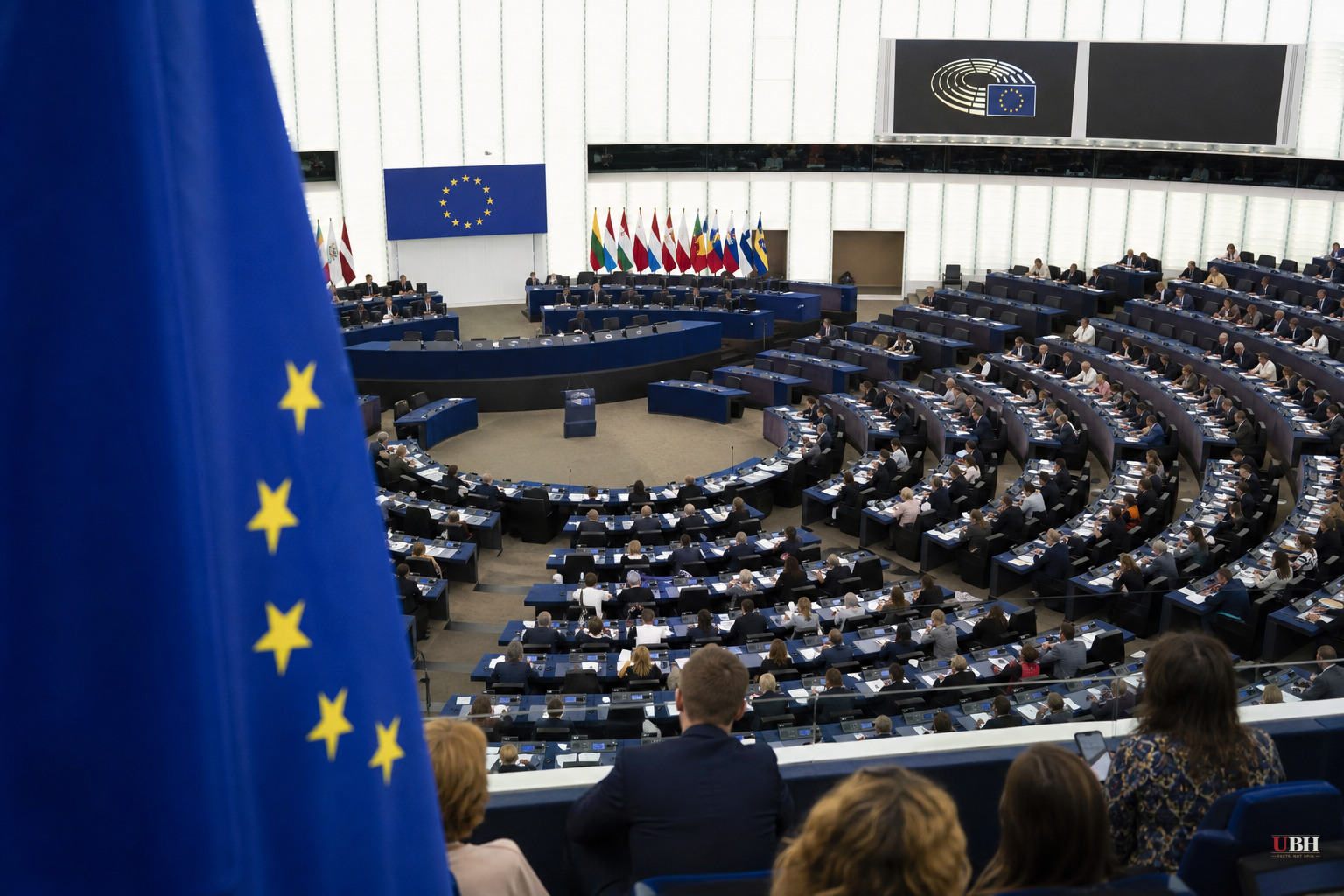
The 2024 European Parliament elections produced a media narrative fast: "The Rise of the Far Right." That headline ran across Anglo-American outlets the morning after the vote. It was accurate for exactly one major country. It was wrong, or at least badly oversimplified, almost everywhere else.
Start with the one place the narrative held up. In France, Marine Le Pen's National Rally swept the field, taking roughly a third of the vote. That result landed as a direct rebuke of President Emmanuel Macron, and he responded the way a gambler responds to a bad hand: he doubled down. Macron called a snap French parliamentary election, forcing voters to decide not just who represents them in Brussels but who runs France.
That gamble did not pay off the way the far-right narrative predicted. In the snap election held later that summer, National Rally led after the first round but was pushed into third place in the final round, after a leftist New Popular Front coalition and Macron's own centrist alliance outmaneuvered it through tactical withdrawals. The New Popular Front won the most seats, Macron's coalition came second, and Le Pen's party, despite dominating the European Parliament vote weeks earlier, did not come close to forming a government. Le Pen did not become prime minister, and France was left with a hung parliament rather than a far-right government.
Everywhere else, the "far-right surge" framing ran into trouble even at the time. In Poland, the far-right party that previously ran the government came in second, beaten by the center-right coalition currently in power, a first in a decade. In Hungary, Viktor Orbán's long-dominant ruling party lost ground, not to a far-right challenger but to a brand-new center-right insurgent party that pulled votes directly away from him.
Slovakia, the Netherlands, Italy, and France's own center-left parties all performed better than in prior European Parliament elections. Scandinavia and Spain saw the far right underperform relative to expectations. Germany was the messier case: the three-party coalition then governing the country did poorly across the board, and the far-right Alternative for Germany party gained ground, but the picture there was not a simple story of one bloc's national triumph.
Why the headline problem matters
European Parliament elections function differently than national elections. Turnout is often driven by protest voting. Voters in a European Parliament race will sometimes back a party they would never trust to run their actual government, precisely because the European Parliament doesn't set national policy or form a governing coalition back home. It is the closest thing European democracies have to a free-swing midterm, similar to how American voters use midterm elections to signal frustration with a sitting president without necessarily wanting the opposition party to hold the White House.
That mechanism explains why a Le Pen surge in France didn't automatically translate to a right-wing wave across 27 different countries with 27 different party systems. Poland's electorate punishing its own former far-right ruling party, while French voters rewarded Le Pen in the European vote, were two entirely separate signals being flattened into one narrative.
The lesson in hindsight
The French snap parliamentary election that Macron called ultimately answered the question of whether National Rally's European Parliament showing would translate into governing power in Paris. It did not, at least not then: the result was a fractured, hung parliament rather than a far-right government, confirming that the France result had been, in part, the kind of protest vote that shifts once the stakes become real rather than a clean strategic realignment.
For American audiences drawing parallels to their own elections, the more honest lesson isn't "Europe is turning far-right." It's that aggregating 27 separate national contests into one trend line produced exactly the kind of oversimplified headline that got published after that vote, and that the same trap awaits anyone trying to read 2024 or 2026 U.S. results as a single unified verdict rather than dozens of separate, locally driven decisions.
Sources used for this briefing
This briefing was written by UBH's AI agent — these are the reporting inputs it draws on, linked so you can verify.


