
Unbiased headlines. Facts, not spin.
Unbiased Headlines is an independently owned news organization. We bring you the facts, not opinions, written fresh from 110+ named sources. Sources linked so you can verify it yourself.
 sports
Low Interest (3/10)
sports
Low Interest (3/10)
Women's Pro Baseball League Opens With Sellout Crowd and Rain in Springfield, Illinois
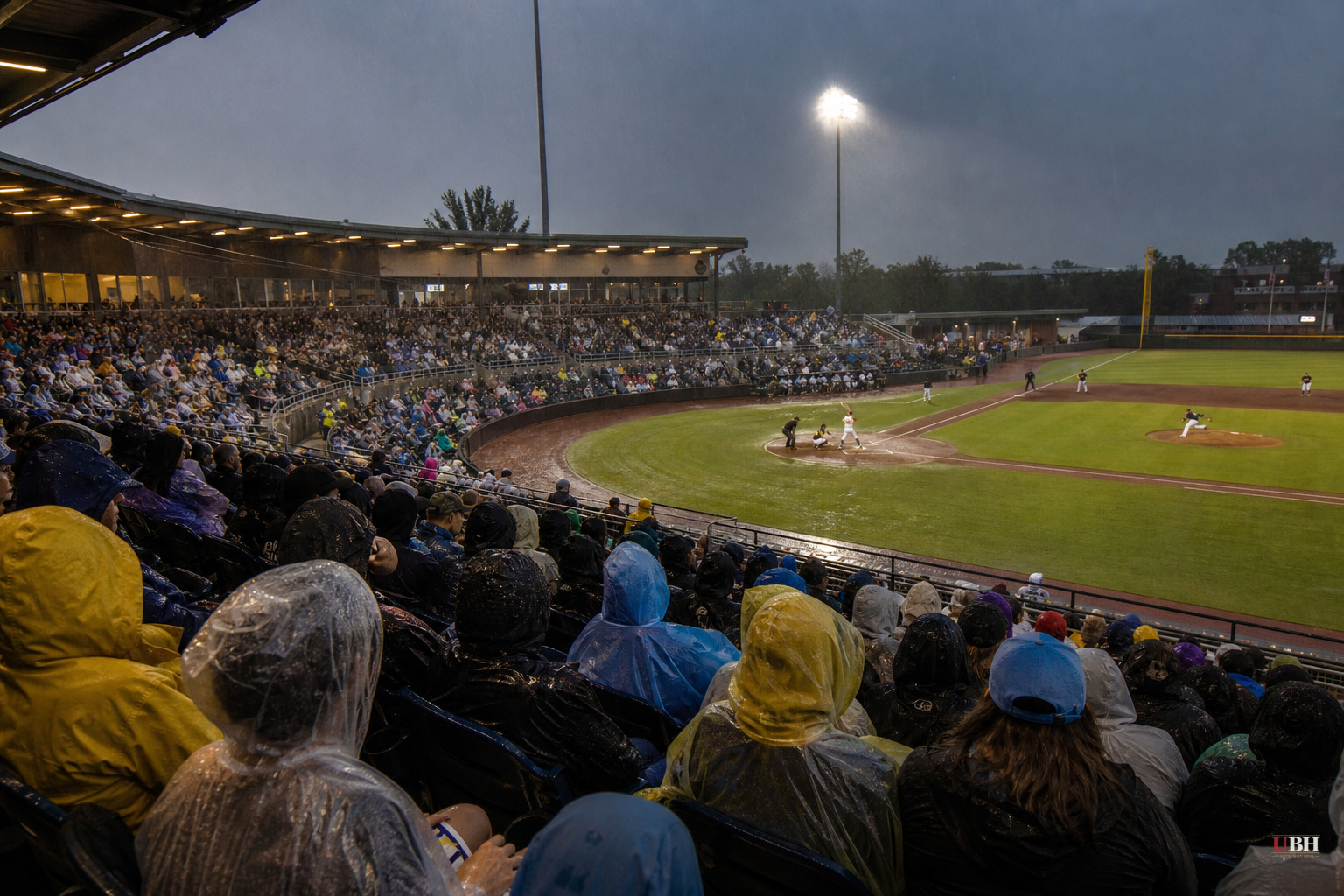
Women's professional baseball got a real, live, paid-attendance debut on Saturday, August 1, when the Women's Pro Baseball League kicked off its inaugural season at Robin Roberts Stadium in Springfield, Illinois, according to NPR. The Los Angeles Queens took on the New York Heights in the opener, with two more franchises, the Boston Hunters and the San Francisco Firebells, rounding out the league's four-team debut lineup.
The weather did not cooperate. NPR reported the parking lot was rain-soaked and the stadium's exterior walkways leaked through grated ceilings hours before first pitch, forcing staff to tape down falling signage and troubleshoot the jumbotron while cooking burgers and hot dogs for a swelling crowd. Grounds crews, with help from Boston and San Francisco players themselves, rolled up the infield tarp to get the field playable.
None of that stopped fans from showing up early and in force. Hundreds packed the parking lot three hours before game time, according to NPR, with some traveling from South Korea and Australia and at least one family driving 1,700 miles from Delaware just to watch Queens outfielder Mo'ne Davis take the field. Davis, who became a household name as a 13-year-old Little League World Series pitcher in 2014, is now a professional outfielder in a grown women's league, and fans lined up for a custom bobblehead in her likeness.
Merchandise demand outran supply fast enough that the league capped sales at two items per fan, NPR reported. A brand-new league with no television deal to speak of and no decades of built-in fan history sold out its own gear inventory limits on day one. Team loyalty among the crowd was mostly beside the point. NPR's reporting made clear most fans came to support the athletes and witness the moment, not because they had a hometown rooting interest in Springfield, Illinois, of all places, hosting a Los Angeles franchise.
The roster includes names recognizable well beyond niche softball or baseball circles. Davis's path from Little League phenom to WPBL outfielder is the most obvious storyline, but the league also features players like Boston Hunters first baseman Sabrina Robinson and San Francisco Firebells second baseman Amanda Gianelloni, catcher Samantha Gutierrez, and left fielder Skylar Kaplan, coached by Matt Williams, a name baseball fans will recognize from his years as a big-league infielder and manager. New York's roster includes first baseman London Studer, whose grandparents Carol and Mike Studer flew in and worried openly to NPR that the rain might wash out the game before their flight home the next morning.
Women's professional baseball, as distinct from softball, has struggled to gain sustained traction in the U.S. since the All-American Girls Professional Baseball League folded in 1954, the league famously depicted in "A League of Their Own." Softball became the default path for women in the sport, in part because of Title IX-driven scholarship structures that funneled girls toward softball rather than baseball at the youth and college level. A four-team professional baseball league specifically for women, with actual paid ticket demand and merchandise sellouts, represents a notable test of whether that decades-long gap in the market can support a real business.
NPR's coverage, drawn from on-the-ground reporting in Springfield, focused heavily on atmosphere and personal stories, fans, players' pregame routines, hotel-room moments before a scrimmage, and batting practice at the University of Illinois Springfield's training field. What it did not address is whether attendance figures will hold beyond the opener, whether Robin Roberts Stadium's infrastructure problems reflect a rushed launch or just bad weather luck, and what the league's financial backing and media rights situation looks like going forward. Those are the questions that determine whether the WPBL becomes a lasting institution or a one-summer curiosity.
The league now has to prove it can draw crowds without star power like Mo'ne Davis carrying the marketing load, and without a first-game novelty bump. The next real test comes as the four teams settle into a regular schedule beyond opening weekend, when the traveling fans from Delaware and South Korea go home and the league has to rely on regional, everyday attendance to make the math work.
Sources used for this briefing
1 link from 1 independent newsroom (syndicated copies of the same report count once)
These are the sources it draws on, linked so you can verify.


