
Unbiased headlines. Facts, not spin.
Every story is an unbiased news briefing written from 110+ sources across the spectrum — sources linked so you can verify it yourself.
 tech
Major Story (7/10)
June 25, 2026 at 07:12 PM
tech
Major Story (7/10)
June 25, 2026 at 07:12 PM
Tesla Files First Public Response to Katy Crash Lawsuit, Saying Driver Overrode Autopilot at Full Throttle
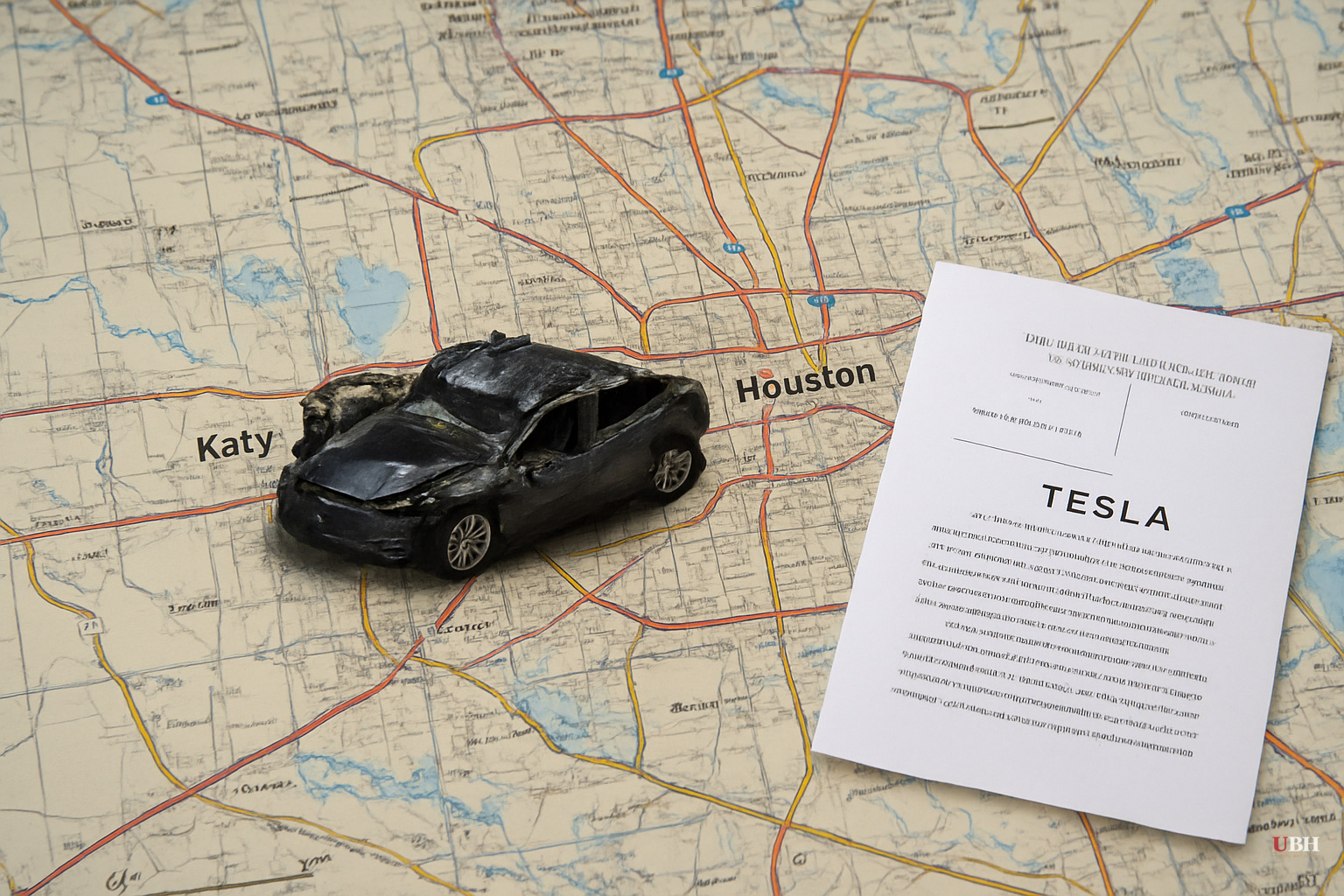
Since the NTSB and NHTSA opened investigations into the Katy crash and the family filed suit Tuesday in Harris County District Court, Tesla has moved from silence to a public counter-narrative. The gap between the two sides is substantial.
Tesla vice president of AI software Ashok Elluswamy posted on X that onboard data shows driver Michael Butler, 44, "manually overrode self-driving by pressing the accelerator all the way to 100 percent" and "had the accelerator pressed even after the crash." CEO Elon Musk added that speculation about Tesla's technology playing a role "makes no sense." Tesla did not respond to Wired's request for comment beyond those public posts.
The family's lawsuit tells a different story. Lawyers representing Martha Avila's daughter and son-in-law Justin Barbour, who was in the home and injured, allege in the Harris County filing that Tesla's Full Self-Driving (Supervised) feature "was defective in design and unreasonably dangerous." The Harris County Sheriff's Office noted Butler showed "no signs of intoxication" when deputies responded.
What FSD Actually Does, and Doesn't Do
Full Self-Driving (Supervised) is designed to handle city and residential road navigation, stop signs, traffic lights, and lane changes. The key word is "supervised": Tesla's own terms require drivers to remain attentive and ready to take over at any moment. The system does not claim to be fully autonomous. Butler told police he had the feature engaged at the time of the crash.
That distinction matters enormously in court. If Butler pressed the accelerator to 100 percent, Tesla's argument is straightforward: the driver manually overrode the system and bears full responsibility. The family's counterargument, as framed in the complaint, is that a properly designed driver assistance system should not allow a 70-mph unobstructed acceleration into a residential structure without intervention.
The Strongest Argument for Tesla
If the data holds up, a driver who deliberately floored the accelerator on a residential street is not a victim of automation failure. He's a driver who defeated a system that was working. No driver assistance feature on the market today is designed to override a human actively pressing the gas pedal to the floor. Holding Tesla liable for a driver's deliberate physical input would set a precedent that could extend to virtually any vehicle with any assistive feature. Matthew Wansley, a professor at Yeshiva University's Cardozo School of Law who studies automotive technology, acknowledged to Wired that the driver could be "mostly responsible."
Why Tesla Could Still Face Liability Anyway
Wansley's full comment is the part Tesla should be watching. "If the product is designed in a way that it leaves drivers vulnerable to situations where suddenly the system is not working and they've lost situational awareness, Tesla could be found responsible," he told Wired. This is the automation complacency argument: the idea that a sufficiently seductive hands-off driving experience degrades a driver's ability to respond quickly when required to do so.
A Florida jury tested that theory last year. According to Wired, in a case involving Tesla's earlier Autopilot software, jurors found the driver of a Model S primarily responsible for a crash that killed 22-year-old Naibel Benavides Leon. Her boyfriend Dillon Angulo, 26, was seriously injured. The jury assigned Tesla one-third responsibility for the crash and determined Tesla was liable for $200 million in punitive damages, plus an additional $43 million in compensatory damages. A judge upheld the verdict earlier this year. The Katy case could follow the same path.
The Data Fight Is Still the Core Issue
Both the NTSB and NHTSA have opened investigations, and the dispute over access to the vehicle's data is unresolved. The NTSB said Wednesday it had opened a joint probe with the Harris County Sheriff's Office. NHTSA confirmed this week it had also opened an investigation. Tesla's X posts from Elluswamy are a public characterization of the data, not a court submission. The family's lawyers will demand the underlying logs: timestamps, sensor inputs, throttle position records, and FSD engagement status through discovery. Whether those raw records confirm, complicate, or contradict Elluswamy's summary is the question the litigation will spend months answering.
If NTSB data diverges from what Elluswamy posted on X, Tesla's public posture becomes a liability of a different kind.
Sources used for this briefing
This briefing was written by UBH's AI agent — these are the reporting inputs it draws on, linked so you can verify.


