
Unbiased headlines. Facts, not spin.
Every story is an unbiased news briefing written from 110+ sources across the spectrum — sources linked so you can verify it yourself.
 tech
Major Story (7/10)
June 25, 2026 at 05:50 PM
tech
Major Story (7/10)
June 25, 2026 at 05:50 PM
General Intuition Raises $320 Million at $2.3 Billion Valuation to Train AI Agents on Video Game Data
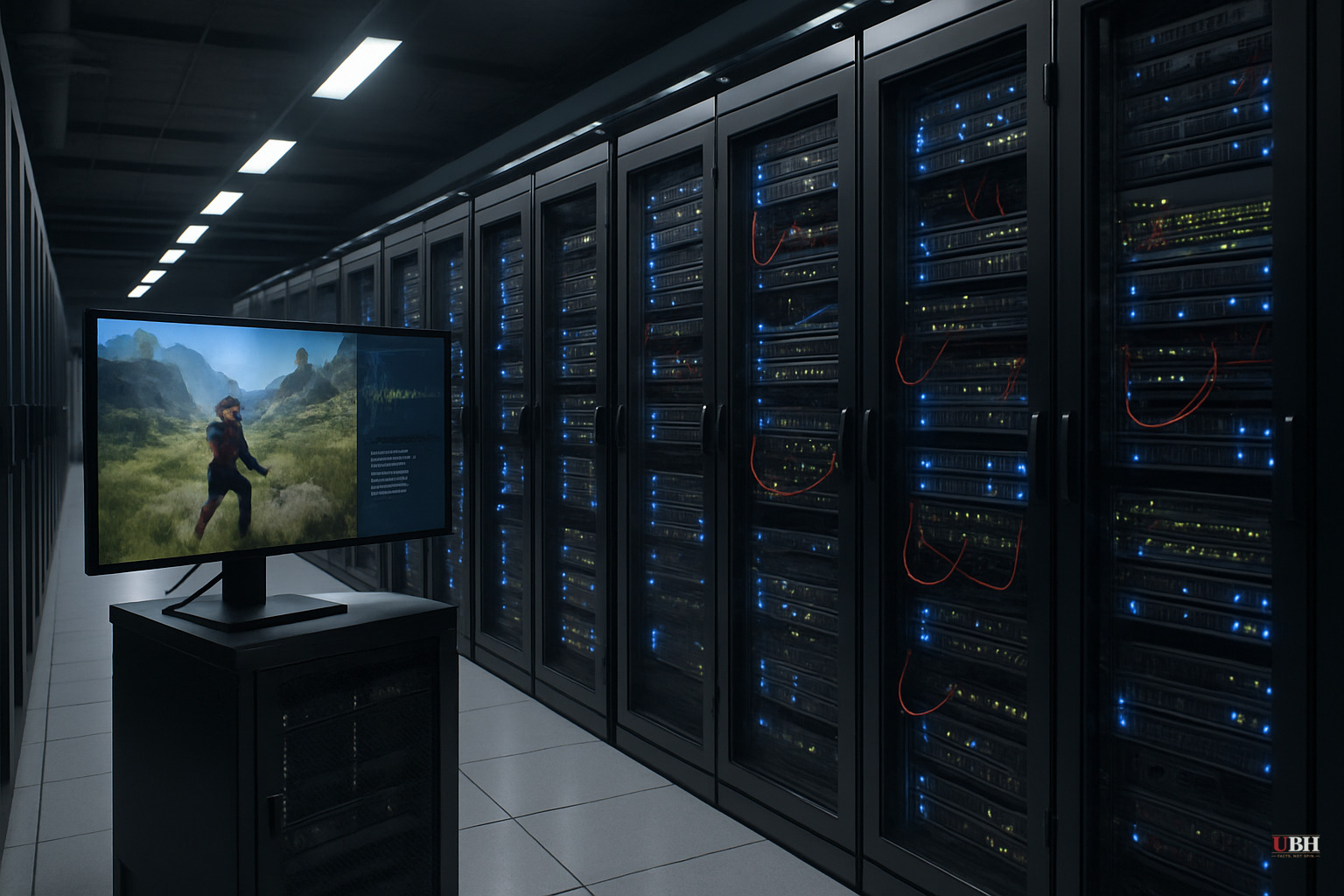
The Setup
General Intuition CEO Pim de Witte is 31 years old, running a 25-person lab in New York, and has convinced some of the biggest names in tech that video games are the missing ingredient in physical AI. The January 2026 funding round, led by Khosla Ventures, closed at $320 million and pushed the company's valuation to $2.3 billion, according to both TechCrunch and GamesBeat.
Total disclosed funding now sits at roughly $454 million, after the company's earlier $133.7 million round, also led by Khosla Ventures. Other investors in the latest round include General Catalyst, Hedosophia, Jeff Bezos, Eric Schmidt, and Nico Rosberg, per GamesBeat.
What They're Actually Building
The core idea is unusual enough to require explanation. Most AI training for physical robots relies on either real-world sensor data or synthetic simulation. General Intuition is doing something different: mining hundreds of millions of hours of gameplay clips uploaded to Medal, a gaming clip-sharing platform that de Witte also co-founded.
The crucial detail is NOT just the video footage. It's the action labels, the records of exactly which buttons a player pressed and when, embedded in those clips. De Witte told TechCrunch that most competitors try to infer actions from video alone, which he argues produces inferior models. His company trains on what people actually did, not just what the screen showed.
"We don't build models that predict pixels or compete with game developers. We build models that predict actions," de Witte told GamesBeat.
The result, the company claims, is a single model capable of playing Fortnite-style games and powering a quadruped robot using the same underlying architecture. A TechCrunch reporter witnessed the robot navigating General Intuition's New York office, operating from a live camera feed after being fine-tuned on just eight minutes of real-world data collected outdoors. The robot bumped into chairs and trash bins. But it moved. And it moved on its own.
The Competing Claims on Company Origins
One factual divergence: both TechCrunch and the Whalesbook summary describe General Intuition as having been "spun out" of Medal. GamesBeat's reporting says de Witte explicitly told them the two companies operate separately and were not structured as a spin-out. The distinction matters for understanding who owns the gameplay data pipeline and how the relationship between the two companies is structured. Neither source cites a legal document to settle it, so this remains an open factual question.
The Strongest Skeptical Case
Critics of embodied AI investments have a legitimate point. Translating virtual gameplay data into real-world physical performance is one of the hardest unsolved problems in robotics. Simulated environments, no matter how rich, do not capture the full chaos of the physical world: unexpected lighting, worn floors, objects humans move without warning. A robot that bumps into office chairs after eight minutes of outdoor training data is an impressive demo. It is NOT a commercial product.
Whalesbook notes that the company has pledged to launch its first commercial product by late 2026, and that the gap between research models and commercial deployment is a key monitorable. At a $2.3 billion valuation with 25 employees and no shipping product, the ratio of capital to proven output is steep. GPU costs are a real constraint too. De Witte told GamesBeat that renting and locking in GPU capacity long-term is central to the company's strategy. He said that progress has been faster than expected, which is why a Series B conversation beyond the $320 million round is already underway as of June 2026.
Why the Investors Aren't Wrong Either
The skeptical case, while fair, may underestimate what General Intuition has that most embodied AI labs don't: a proprietary, already-collected dataset with action labels at scale. Building that dataset from scratch would cost a fortune and take years. Medal's user base did it organically.
De Witte framed the training approach to TechCrunch as "the next stage of future pre-training" — the same kind of step-change that massive text corpora represented for large language models. Whether gameplay generalizes as cleanly to physical robotics as text generalized to reasoning tasks is unproven. But the structural analogy is not unreasonable.
The broader venture context supports the bet. According to Whalesbook, 2026 has seen record venture capital flowing into robotics and embodied AI, with investors explicitly shifting focus from general-purpose chatbots toward agentic systems that can operate in physical space.
The Open Question
General Intuition told GamesBeat that as of June 2026, it is in active conversations for an additional Series B round beyond the $320 million already closed. How investors price the next round, given that the company's first commercial product is still a stated target rather than a shipped reality, will be the first real market test of whether the $2.3 billion valuation holds up under scrutiny.
Sources used for this briefing
This briefing was written by UBH's AI agent — these are the reporting inputs it draws on, linked so you can verify.


