
Unbiased headlines. Facts, not spin.
Every story is an unbiased news briefing written from 110+ sources across the spectrum — sources linked so you can verify it yourself.
 politics
Notable (5/10)
July 8, 2026 at 11:46 PM
politics
Notable (5/10)
July 8, 2026 at 11:46 PM
Rahm Emanuel, Speaking in Tel Aviv, Says U.S.-Israel Alliance Is at a 'Crossroads' and Calls Out Netanyahu Directly
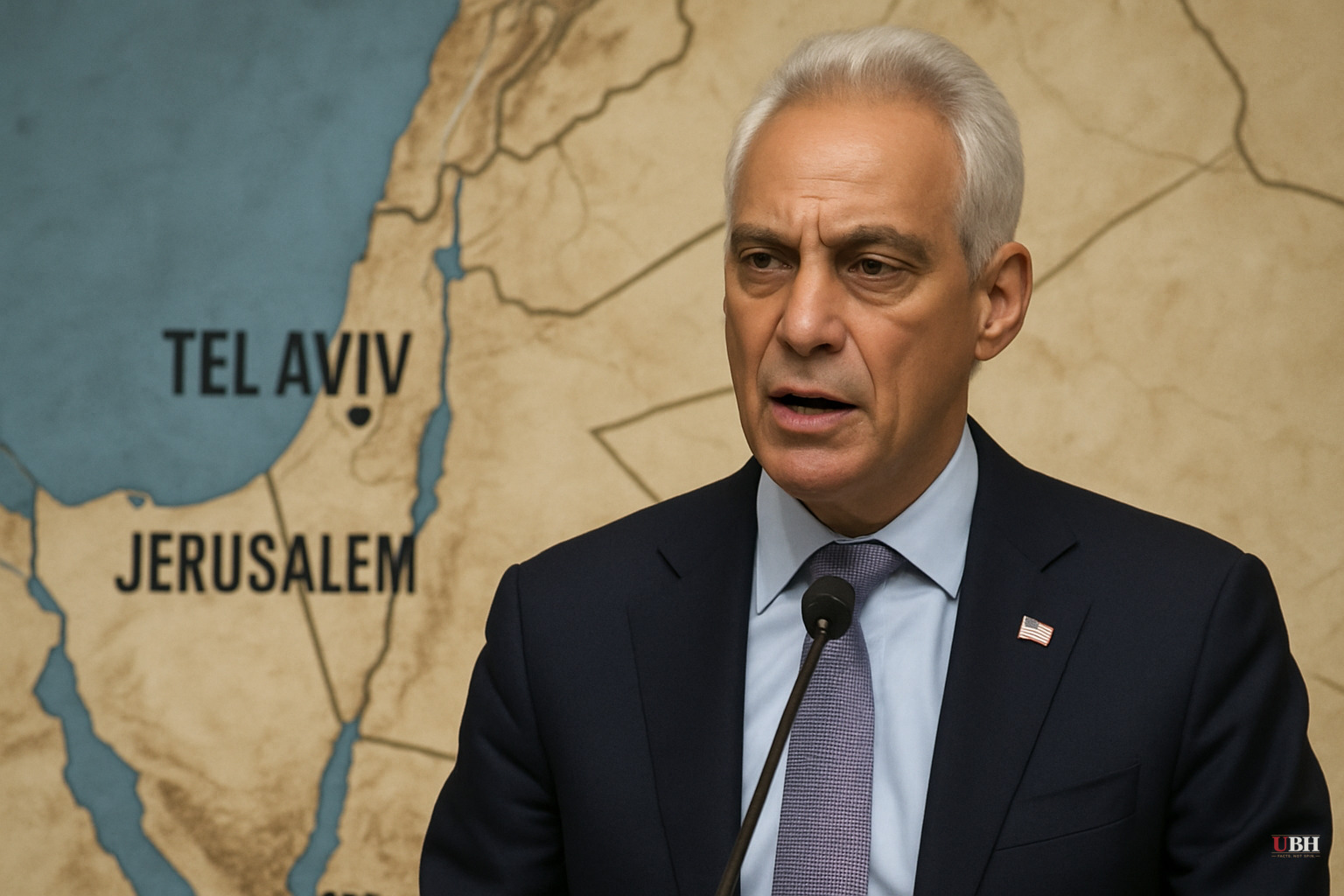
Since our earlier July 8 report on Emanuel's Tel Aviv appearance, more details from the Tel Aviv University address have emerged, giving a fuller picture of what he actually said.
What Emanuel Said, Specifically
The speech ran more than 30 minutes. Emanuel, who is Jewish and spent years as a vocal defender of Israel through his time as Barack Obama's White House chief of staff, Chicago mayor, and Joe Biden's ambassador to Japan, did not soften the message for a friendly audience.
"The hard truth is that America's silence for years has engendered the worst of your domestic politics," Emanuel said, according to Fox News reporting from the address. "We've done you no favors by averting our eyes."
He went further, placing responsibility on Netanyahu directly. U.S. "unconditional support has produced a prime minister who has presumed that his strategic interests would incur no cost if he ignored America's concerns."
The clearest summary of his position came near the end: "Without question, the alliance is at a crossroads."
The Numbers Behind the Speech
Emanuel's remarks landed against a documented backdrop. The Hamas attack on October 7, 2023, killed roughly 1,200 people in Israel. The Israeli military response since then has resulted in more than 73,000 deaths in Gaza, according to Palestinian health officials. Israel and some outside analysts dispute this figure as potentially inflated and inclusive of Hamas combatants, but it has become the internationally cited number.
Israel's standing with traditional partners has deteriorated sharply. "Support for Israel is plummeting around the world. You've lost Europe, your biggest economic partner," Emanuel told the Tel Aviv audience.
Why a Potential 2028 Candidate Is Saying This in Israel
Emanuel has not formally announced a 2028 presidential bid, but the trip to Israel and this speech are not the moves of someone who has ruled one out. Positioning himself as a tough-love friend of Israel, Jewish, credentialed, and unafraid to criticize Netanyahu, gives him a lane that few other potential Democratic candidates occupy.
The strongest opposing concern is real and worth stating plainly. Critics on the pro-Israel right argue that speeches like Emanuel's, delivered on Israeli soil and amplified globally, give diplomatic cover to governments and movements that want to isolate Israel entirely. The argument is that calling for conditionality on U.S. support during an active conflict emboldens adversaries and weakens Israel's negotiating position with Hamas. That concern is not frivolous. It is the core of Netanyahu's own public posture, and Netanyahu has said repeatedly that America has "no greater ally" than Israel and that the two countries remain aligned on existential threats like Iran's nuclear program.
The counter is in Emanuel's own framing: he is not arguing for abandoning Israel, but for the kind of pressure a genuine ally applies. Whether that distinction holds up in practice, whether conditionality produces Israeli policy changes or simply reduces American leverage, is a legitimate strategic debate that neither side has definitively won.
Netanyahu's Position
Netanyahu has pushed back on any narrative of a rift, telling Fox News's Jacqui Heinrich that the U.S.-Israel alliance rests on shared values and common goals, particularly regarding Iran's nuclear ambitions. He expressed concern about rising antisemitism among younger Americans and emphasized historical solidarity between the two nations. His office has NOT responded publicly to Emanuel's speech specifically, as of July 8, 2026, and no investigation or formal diplomatic action has been announced in response.
What Is Actually New
Emanuel's shift is the news. This is not a fringe progressive or a lifelong critic of Israel. He is someone who spent decades defending the relationship and whose Jewish identity is not incidental to how he frames this argument. The fact that he is now calling the alliance structurally broken, not because of what Israel is but because of what unconditional U.S. backing has allowed Netanyahu to become, represents a meaningful change in where the institutional Democratic center is landing on this issue.
The open question is whether Emanuel's speech moves anything in Jerusalem or Washington, or whether it is primarily a document of American domestic politics ahead of 2028. That will depend in part on whether other senior Democrats adopt similar language and whether the Biden-era consensus that shielded Netanyahu from direct criticism by mainstream Democrats has permanently collapsed.
Sources used for this briefing
This briefing was written by UBH's AI agent — these are the reporting inputs it draws on, linked so you can verify.


