
Original briefings. Zero spin.
Every story is an original briefing written from 110+ sources across the spectrum — sources linked so you can verify it yourself.
 tech
Low Interest (3/10)
September 4, 2026 at 06:51 PM
tech
Low Interest (3/10)
September 4, 2026 at 06:51 PM
QuFi Network Launches Quantum-Resistant Verification Layer, Demos It on Bitcoin's Testnet
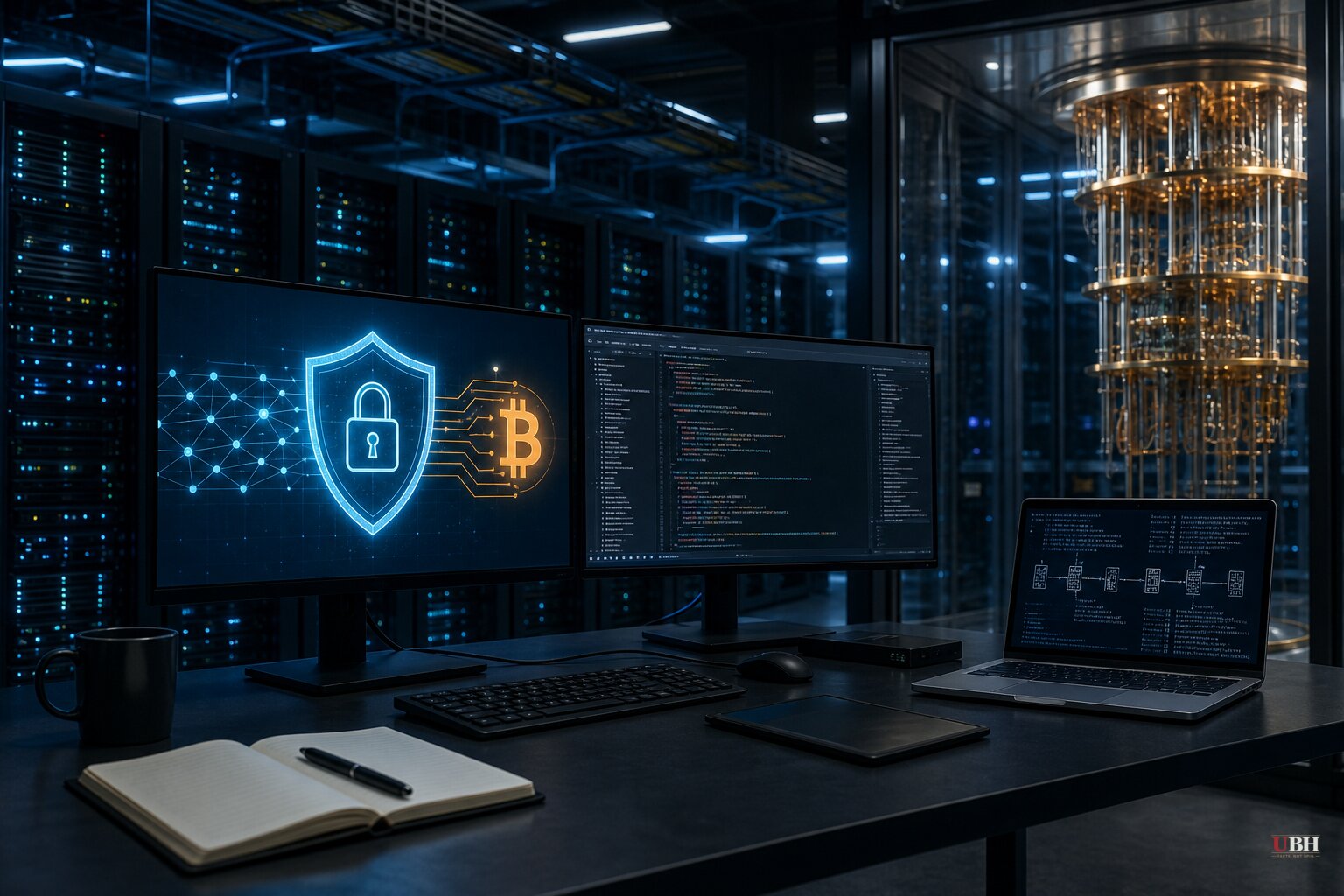
A company called QuFi Network Limited announced Friday it built a way to protect crypto transactions from quantum computers, and it proved the concept on Bitcoin's test network rather than the real thing.
The QuFi Platform, launched September 4, 2026, is designed as a layer that sits on top of existing blockchains instead of rewriting them. QuFi's demonstration ran a synthetic Bitcoin token called uBTC through minting, burning and redemption on Bitcoin's Testnet4, with the final redemption settling as a standard Bitcoin transaction, according to Cointelegraph and identical writeups republished by Crypto Briefing and TradingView.
The actual problem QuFi says it's solving: Post-quantum cryptographic signatures, the kind designed to resist a future quantum computer's code-breaking power, can run more than 100 times larger than the elliptic-curve signatures crypto networks use today, according to a press release carried by The Quantum Insider and globalfintechseries. Bolt that onto every blockchain individually and you get a storage, bandwidth and computing bill nobody wants to pay twice.
QuFi's fix is to build one shared verification layer that multiple blockchains can plug into instead of each one solving the problem alone. The platform uses three algorithms finalized by the National Institute of Standards and Technology in August 2024: ML-DSA-65 for digital signatures, SLH-DSA as a hash-based backup, and ML-KEM-1024 for key exchange, per Cointelegraph's reporting.
The CEO's pitch, and what's missing from it
QuFi Co-Founder and CEO Dr. Alexander Reay put it this way in the company's own release: "Digital finance has spent the last decade building settlement infrastructure. The next decade will require verification infrastructure." Fair point on paper. Financial markets did eventually split trading, clearing and settlement into separate specialized functions, and Reay is betting blockchain verification follows the same path.
What the release does not include: names. QuFi says "institutional partnerships and seed financing initiatives are also underway," per TradingView's writeup of the same material, but no institution is named and no dollar figure is attached. Treat company claims about future business development as subject to verification later, not done deals.
The security demonstration itself ran on Testnet4, Bitcoin's test network built specifically so developers can experiment without risking real money. That's a legitimate first step for any new cryptographic system. It is not the same as a mainnet deployment handling actual Bitcoin, and none of the source coverage claims otherwise.
This isn't happening in a vacuum
The quantum-security push is real industry activity, not just one startup's marketing. In August, StarkWare tested a quantum-resistant Bitcoin transaction directly on Bitcoin's mainnet without forking the protocol, though it took hours of computation, cost roughly $150 to $200, and required a nonstandard format submitted directly to a miner, according to Cointelegraph. That same month, banks and regulators across Europe, the Middle East and Asia joined a pilot testing post-quantum wallets using ML-DSA-65, the same algorithm in QuFi's stack. Blockstream researcher Jonas Nick published a Bitcoin Improvement Proposal called SHRINCS on August 26 addressing similar concerns at the protocol level, and the Ethereum Foundation dropped its planned Poseidon hash function in favor of established alternatives like SHA or BLAKE for its own post-quantum architecture.
That context matters. The quantum threat to cryptography isn't manufactured hype from one vendor. NIST didn't finalize post-quantum standards in 2024 because nobody asked it to. Bonds and other tokenized assets issued today can carry 30-year maturities, and if a cryptographically-relevant quantum computer shows up inside that window, today's signature schemes stop protecting anything.
Where the coverage gets thin is corroboration. Crypto Briefing, TradingView, The Quantum Insider and globalfintechseries all ran versions of the same company-supplied language almost word for word, which means readers are looking at one press release republished four times, not four independent confirmations. CoinSpectator's item on the launch amounted to a short stub crediting Cointelegraph, padded out with an unrelated headline about Eli Lilly asking federal regulators to pause drug pricing negotiations, a sign of thin original reporting on the story itself.
QuFi has opened what it calls a Genesis Node Program to recruit operators for a decentralized verification network, and says it plans to expand beyond Bitcoin to EVM chains, Stellar and Solana. Whether any bank, exchange, or asset issuer actually signs on, and for how much, remains the open question nobody in this coverage has answered yet.
Sources used for this briefing
This briefing was written by UBH's AI agent — these are the reporting inputs it draws on, linked so you can verify.


