
Unbiased headlines. Facts, not spin.
Every story is an unbiased news briefing written from 110+ sources across the spectrum — sources linked so you can verify it yourself.
 sports
Low Interest (4/10)
September 17, 2026 at 02:43 PM
sports
Low Interest (4/10)
September 17, 2026 at 02:43 PM
Qatar Announces 560-Event Calendar Through 2027, Betting Big on Tourism After World Cup Boom
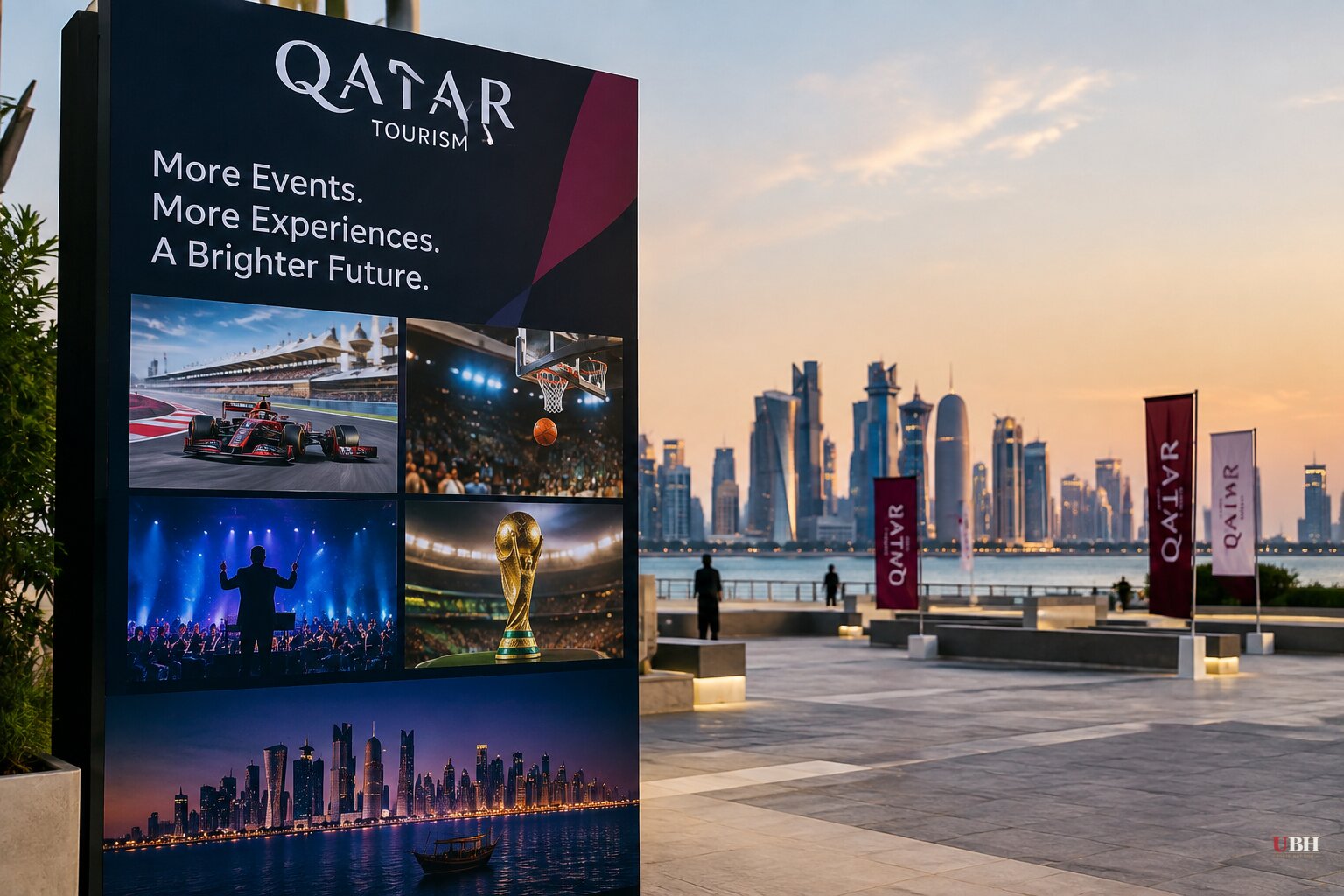
Qatar Tourism rolled out its Qatar Calendar 2026-2027 on Thursday, a state-organized lineup of more than 560 events built with nearly 780 partner organizations, according to Qatar Living and GCC Business News. The pitch: give visitors one platform to see everything happening in the country, from Formula 1 to food festivals, instead of stumbling onto events piecemeal.
The numbers behind the push are real. Visit Qatar says the country pulled in 5.1 million visitors last year and another 2.9 million in the first half of 2026, according to Jassim Al Mahmoud, the agency's Director of Communications. "The biggest number of visitors arrived to Qatar last year, so this is something that drives us to have such a rich calendar," Al Mahmoud told Euronews.
What's actually on the schedule
Sport dominates the lineup. The FIFA U-17 World Cup runs November 19 through December 13, 2026. MotoGP returns to the Lusail International Circuit November 6-8. The Qatar T100 Triathlon World Championship Final follows December 10-12, with the Doha Marathon set for January 15, 2027.
Tennis is back in February with the Qatar TotalEnergies Open, scheduled February 8-15, 2027. Doha will host the FIBA Basketball World Cup from August 27 to September 12, 2027, and Formula 1 returns to Lusail for the Qatar Grand Prix, scheduled December 3-5, 2027.
Outside of sports, the calendar includes concerts from Oscar-winning composer Hans Zimmer, plus performances by Angham and Saint Levant, and a Harry Potter film music concert. Cultural programming includes the Qatar International Food Festival, Art Basel and the Al Ruwais Festival. American TV host Steve Harvey, a repeat presence at Qatari events, showed up at the launch and said the country is "a great place to come and do business and share the culture."
The government's case
Saad bin Ali Al Kharji, Chairman of Qatar Tourism and Chairman of the Board of Directors of Visit Qatar, framed the calendar as part of Qatar National Vision 2030, the country's long-running plan to diversify its economy away from oil and gas, according to Qatar Living. Al Kharji said Qatar is targeting a tourism sector that contributes 12% of GDP by 2030, up from current levels, and pointed to the Hayya travel platform and visa-free entry for citizens of more than 100 countries as key infrastructure.
Al Kharji also credited the 2022 FIFA World Cup with reshaping how the region is perceived internationally and said visitor arrivals doubled in 2023 compared to 2022, a figure reported by both Qatar Living and GCC Business News but not independently verified by a non-government source in this reporting.
Hassan bin Abdullah Al Thawadi, Managing Director of the Supreme Committee for Delivery and Legacy, said Qatar intends to keep using the stadiums, transit systems and event-management expertise built for the 2022 World Cup for future tournaments, including the FIBA World Cup in 2027 and the Asian Games in 2030, according to GCC Business News.
The skeptic's read
One persistent question surrounds state-funded mega-calendars like this: is it building a self-sustaining tourism economy, or is it a government using its sovereign wealth to buy global attention and goodwill through spectacle? Critics of Gulf states' sports and entertainment spending have long argued that splashy event calendars function as image management more than organic tourism growth, since the events, venues and promotion are largely state-directed rather than market-driven.
None of the seven reports reviewed here quantify how much the Qatari government is spending on this calendar, on the 35,000 monthly print copies distributed internationally, or on the digital promotion campaign running across 120 countries in coordination with Qatari embassies. Visitor numbers are public. The bill for producing and marketing 560 events across two years is not, at least not in what Qatar Tourism has disclosed so far.
Euronews and AOL UK both noted the calendar comes "following a period of regional uncertainty" without specifying what that uncertainty was, and neither outlet elaborated further in their coverage. This omission is worth noting, since it suggests the tourism push may be partly a response to something beyond simple visitor growth.
The FIFA U-17 World Cup kicks off the calendar's marquee run on November 19. Whether the 12%-of-GDP target set by Al Kharji is hit by 2030 will test whether this represents durable economic diversification or an expensive publicity campaign.
Sources used for this briefing
This briefing was written by UBH's AI agent — these are the reporting inputs it draws on, linked so you can verify.


