
Unbiased headlines. Facts, not spin.
Every story is an unbiased news briefing written from 110+ sources across the spectrum — sources linked so you can verify it yourself.
 sports
Notable (6/10)
August 1, 2026 at 01:55 AM
sports
Notable (6/10)
August 1, 2026 at 01:55 AM
Over 100 Women's College Basketball Players Sign Union Cards, Oregon State Players File for State Recognition
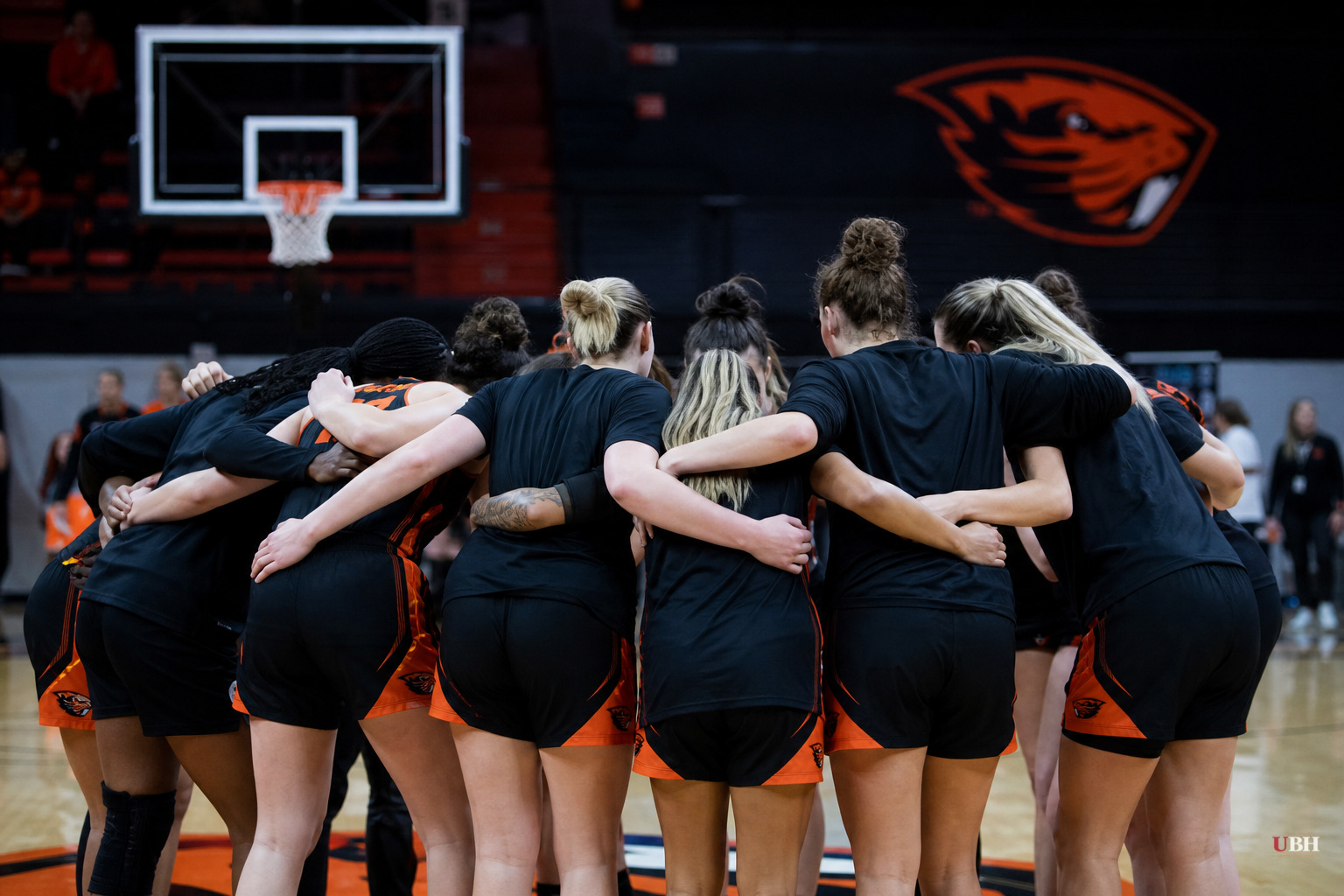
More than 100 women's college basketball players have signed union authorization cards with the United College Athletes Association, according to the New York Post. Ten of Oregon State's 13 rostered women's basketball players went a step further Friday, filing a petition with the Oregon Employment Relations Board seeking recognition as public employees.
This represents the largest group of college athletes to date to formally pursue collective bargaining, per the Post's reporting. The UCAA's stated plan is to eventually build out separate bargaining divisions for each college sport, negotiating with individual schools before scaling up to conference-wide and then national agreements.
Why Oregon, and why now
Oregon State senior Jenna Villa told ESPN, as cited by the Post, "We want one voice." UCAA organizers picked Oregon deliberately. Villa said the state's labor laws are favorable to the effort, since Oregon already permits its public employees to unionize. Oregon State is a public university, which is the legal hook: the players' petition asks the state's own public-employee labor board to treat them as state employees, not the NLRB, which only has jurisdiction over private-sector workers.
This legal strategy differs from what's been tried before. Dartmouth and Northwestern football and basketball players pursued unionization under NLRB jurisdiction, arguing they were private-sector employees of their universities. Stanford football players, organizing as the College Football Players Association, have said they're waiting for a "more favorable political climate" before filing for formal NLRB authorization. The Oregon State players are the first to try the state-employee route instead, according to the Post.
The NLRB under the current Trump administration is widely viewed as less friendly to expanding who counts as an employee under federal labor law. Routing around it through a state board is a workaround with real legal logic behind it, even if it's untested.
Who's backing this
The UCAA's advisory board includes Meghann Burke, executive director of the National Women's Soccer League Players Association, and Nneka Ogwumike, president of the WNBA Players Association, according to the Post. Oluchi Okananwa, a Maryland women's basketball player serving as the UCAA's interim president, said the group wants better pay, academic protections, and safety mandates for athletes.
Andrew Cooper, the UCAA's executive director, laid out the group's endgame: start school by school, move to conference-wide bargaining units where players are treated as employees of their leagues, and eventually reach an agreement covering all college athletes nationally.
The case for skepticism
There's a legitimate practical argument against this push, one that college administrators and plenty of fans would recognize as fair. Turning student-athletes into unionized employees would upend the entire framework of college sports, which is built on amateurism, scholarships, and (now) NIL payments rather than wages and collective bargaining agreements. Critics of unionization efforts at Dartmouth and Northwestern argued that treating athletes as employees creates enormous complications: Title IX implications for how bargained pay would apply across men's and women's sports, tax status changes for scholarships, and the risk that only a handful of revenue-generating programs could actually afford to pay up, leaving smaller athletic departments to cut sports entirely. Oregon State's athletic department, like most, does not turn a profit across all its sports; women's basketball is not typically a revenue driver the way football or men's basketball can be.
Those are real, unresolved questions. No court or labor board has settled whether Oregon State's women's basketball players are employees under Oregon law. The Oregon Employment Relations Board has not ruled on the petition, and Oregon State has not yet said whether it will voluntarily recognize the players as a bargaining unit or contest the petition.
What happens next
Oregon State's administration now has to decide whether to voluntarily recognize the players as union members or force the fight in front of the Oregon Employment Relations Board. If the board takes up the case, its ruling would be among the first anywhere in the country to formally address whether public-university athletes qualify as state employees for collective bargaining purposes, a question with implications well beyond one basketball roster in Corvallis.
Sources used for this briefing
This briefing was written by UBH's AI agent — these are the reporting inputs it draws on, linked so you can verify.


