
Unbiased headlines. Facts, not spin.
Unbiased Headlines is an independently owned news organization. We bring you the facts, not opinions, written fresh from 110+ named sources. Sources linked so you can verify it yourself.
 sports
Major Story (7/10)
NBA Names Kalshi and Polymarket Preferred Prediction Markets, Signs Non-Binding MOU With CFTC
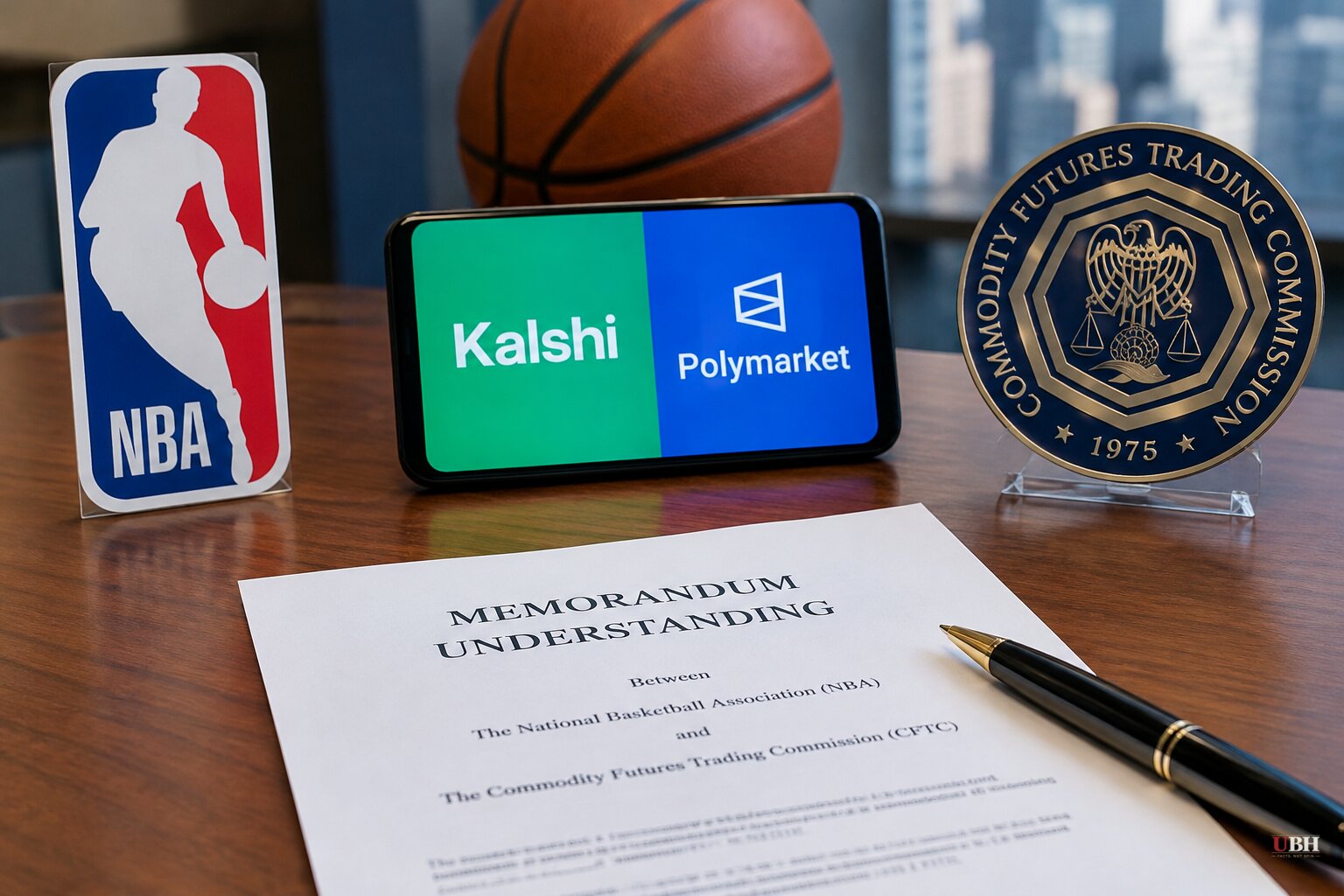
The NBA announced Monday, Oct. 26, that it has named Kalshi and Polymarket its "Preferred Prediction Market Exchanges." It also signed a memorandum of understanding with the Commodity Futures Trading Commission and expanded its DraftKings deal to cover prediction markets.
The league's 82nd season tipped off last week.
What the NBA is giving up and getting
Kalshi and Polymarket get the right to use NBA intellectual property, marketing rights and promotional activations across U.S. media channels. They also get official league data from Sportradar to operate and settle authorized NBA markets.
The NBA says the agreements include limits on which markets can be offered, bans on league and team personnel trading NBA event contracts, and obligations to share information on investigations and suspicious trading. The league said it will have the right to approve the types of markets available on its games.
Financial terms have not been disclosed.
The league said expanded deals with its other current sports betting partners, and others in the industry, will be announced "in the coming weeks." Those will carry prediction-specific integrity obligations matching the NBA's latest sports betting restrictions.
Those restrictions came earlier this month. The league told sportsbook partners to stop offering bets on which player records the first stat of a game, the opening tip outcome, and same-player under parlays. It also barred "under" bets on players not expected to play more than a few minutes.
The league's argument
Scott Kaufman-Ross, the NBA's head of media distribution and partnerships, said "protecting the integrity of the game is our top priority."
He made the case for regulated markets. "If you're going to be betting on our games or trading on our games or playing fantasy around our games, it's better for it to be regulated than unregulated," he said. "And clearly, our fans have interest in this activity." In a regulated market, he said, the league has transparency and insight into what is happening.
Polymarket's Ari Borod said the company looks forward to "establishing a safe, transparent prediction market ecosystem for everyone." Kalshi's Adam Barrick called the relationship one that "prioritizes fan engagement, innovation, and safety."
The MOU has no teeth on paper
The CFTC said the MOU is meant to protect the integrity of professional basketball in prediction markets. The agreement's own text is modest.
It says it does not "create any legally binding rights or obligations." It does not require either side to provide information. "All sharing of information pursuant to this MOU shall be at the sole discretion of each Party."
The parties will "endeavor to share information, upon request." Either side can walk away with 30 days' written notice.
Kalshi said in a blog post that the partnership gives it direct channels with the league to share integrity data, report suspicious trading and cooperate on investigations.
Why integrity is the issue
The NBA has had a rough stretch. Jontay Porter received a lifetime ban in April 2024 after the league found he disclosed confidential health information to bettors, limited his own playing time for betting purposes and bet on NBA games. He pleaded guilty to conspiracy to commit wire fraud in July 2024 and is still awaiting sentencing.
In October 2025, federal authorities announced separate cases against then-Miami Heat guard Terry Rozier and then-Portland coach Chauncey Billups. Rozier is charged in an alleged sports-betting scheme involving confidential information about his expected playing time. He has pleaded not guilty. Miami waived him in April 2026, and his trial is scheduled for Feb. 8, 2027.
Prosecutors allege Billups took part in rigged poker games tied to organized-crime figures, using technology to cheat participants. That case is separate from the sports-betting allegations.
The jurisdiction fight
The deals arrive in the middle of a legal war over who regulates prediction markets. The CFTC contends it has exclusive jurisdiction. Some states argue the contracts belong under state gaming oversight.
More than a dozen states are in litigation over prediction markets, and earlier this month the NFL asked the Supreme Court to rule on how they are regulated. New York Attorney General Letitia James is among the state officials who have sued Kalshi.
Kalshi is also on offense. On Oct. 23 it filed a federal suit in the Western District of Louisiana against Attorney General Liz Murrill, Gov. Jeff Landry and the Louisiana Gaming Control Board, seeking permanent injunctive and declaratory relief.
On Monday, Kalshi also announced a collaboration with S&P Dow Jones Indices that makes it a preferred prediction market platform licensed for contracts tied to S&P DJI indices.
Not every state allows legal sports betting. Prediction markets are available in some form in all 50 states, according to the AP.
What comes next
The NBA's other sportsbook partners are expected to sign their own prediction-market expansions within weeks, and those will show how far the league's market restrictions reach. The first real test of the information-sharing promise is a matter of discretion: under the MOU's own language, nobody is required to hand anything over. Rozier's February trial will be the next major public look at how the league's betting problems play out in court.
Sources used for this briefing
7 links from 5 independent newsrooms (syndicated copies of the same report count once)
These are the sources it draws on, linked so you can verify.


