
Unbiased headlines. Facts, not spin.
Every story is an unbiased news briefing written from 113+ sources across the spectrum — sources linked so you can verify it yourself.
 sports
Low Interest (3/10)
Event date: October 2, 2026
sports
Low Interest (3/10)
Event date: October 2, 2026
India's Smaller Asian Games Squad Produced 25% Fewer Golds, But the Same Medal Rate as 2022
A quarter fewer athletes, a quarter fewer golds
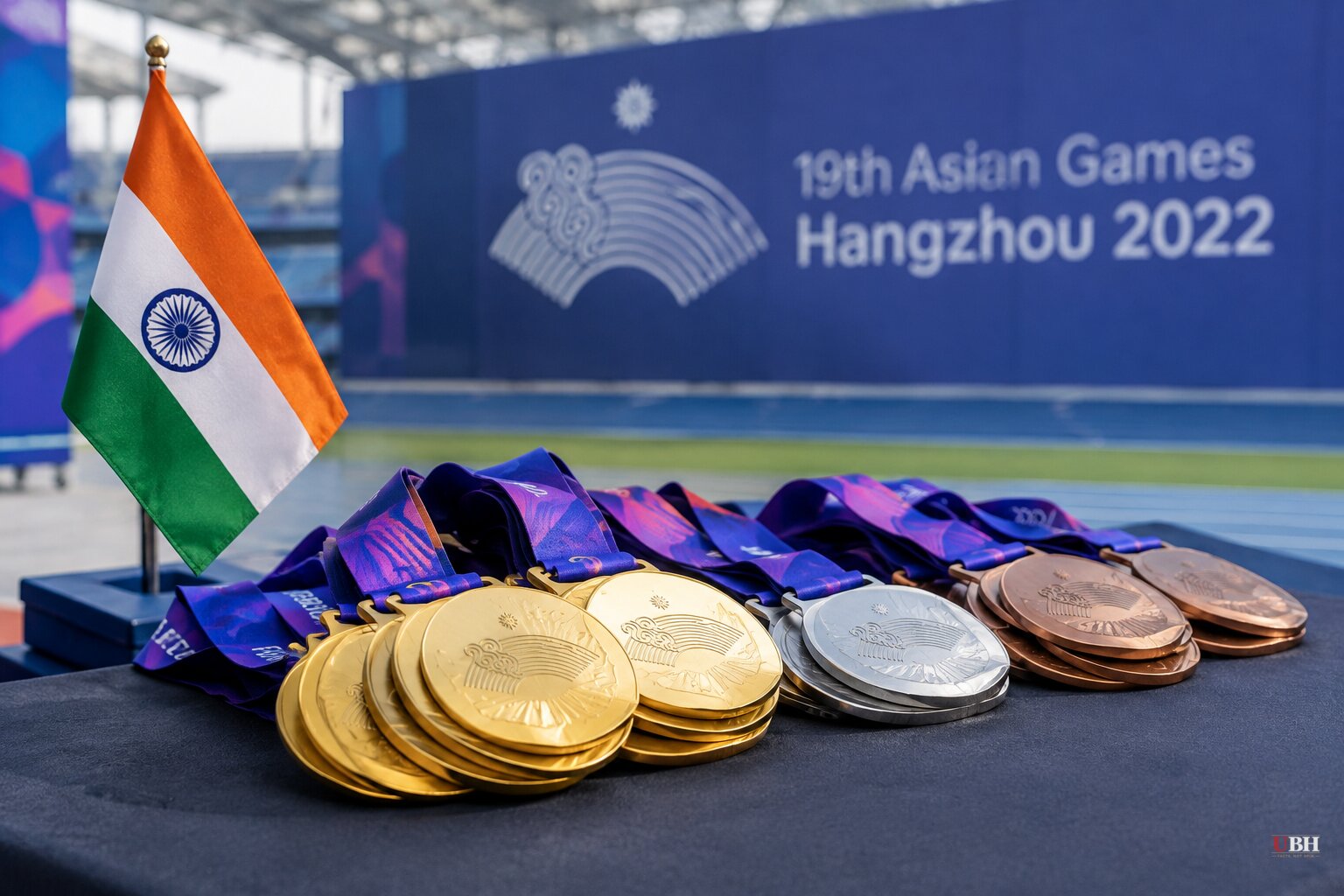
Since the Asian Games closed in Nagoya on October 4, the final numbers on India's campaign have settled. India sent 495 athletes to Aichi-Nagoya, down 25.1% from the 661-strong contingent that competed at Hangzhou in 2023, according to the Times of India. The team came home with 85 medals: 21 gold, 27 silver, 37 bronze. That's down from 106 medals (28 gold, 38 silver, 40 bronze) three years ago.
The Sports Ministry made the cut deliberately. A ministry source told the Times of India in late August that the qualification bar, set a year in advance, would not move despite criticism: "If somebody has to run inside 10 seconds to be a contender for a medal in the 100m event, should we send an athlete who clocks 15 seconds? We have set the criteria that if an athlete is in the top six in Asia, we will select him or her, otherwise not."
The policy had major consequences for several programs. Football, which sent 44 players in 2023, sent zero this time. Basketball lost 20 roster spots, handball 16, tennis dropped from 12 players to seven, and multiple judoka and wushu athletes were cut from the initial list.
The per-athlete math improved, the gold math didn't
Looking at medals per athlete, the leaner squad actually performed slightly better. India won 16 medals per 100 athletes sent to Hangzhou; that rose to 17.2 per 100 in Nagoya, a gain of roughly 7.3%, according to figures reported by Aman Shanti News.
Golds told a flatter story. India's gold count fell from 28 to 21, a 25% drop, which lines up almost exactly with the 25.1% cut to the contingent. The gold rate per 100 athletes was essentially unchanged: 4.24 in both editions. The smaller team didn't make India more efficient at winning golds. It just won golds at the same rate with fewer people trying.
Critics could argue that if the whole premise was quality over quantity, a flat gold-conversion rate suggests the squad didn't get meaningfully sharper, it got smaller. Defenders of the policy counter that total medals per athlete did rise, and that sending non-contenders in sports like football and basketball was never going to produce golds anyway, so removing them was a rational trim rather than a competitive loss.
Where the golds came from shifted hard
In 2023, shooting (seven golds), athletics (six) and archery (five) produced 18 of India's 28 golds, 64% of the total. In Nagoya, archery held steady with five, but shooting dropped to three and athletics fell to a single gold.
Boxing and wrestling saw the biggest gains. Boxing, which won zero gold in Hangzhou, won three in Nagoya, all on the same day. Lovlina Borgohain beat China's Bao in the women's 75kg final, becoming the first Indian woman boxer since Mary Kom to win Asian Games gold, according to Business Standard. Hours later Parveen Hooda beat Chinese Taipei's Chen Nien-chin in the 65kg final to become the third. Ankush Panghal closed the sweep by beating South Korea's Kim Min-seong in the 80kg final. Wrestling, also shut out in 2023, delivered two golds, including Sujeet Kalkal's comeback win at 65kg freestyle.
Athletics: depth without the top step
India's athletics team finished with 24 medals, its third-highest total in Asian Games history, but only one gold against six in Hangzhou, according to The Print and India Today. The single gold came on the final night of track and field, September 29, when Kiran Pahal, Machettira Poovamma, Prachi Choudhary and Vithya Ramraj ran 3:29.69 in the women's 4x400m relay to beat Bahrain and China, according to The Print. That result extended India's streak of winning at least one athletics gold at every Asian Games since 1998, India Today reported.
Vithya Ramraj left Nagoya with three medals, including a national record of 54.75 seconds in the 400m hurdles. Distance runner Gulveer Singh also collected three medals: silver in the 10,000m and 1500m, bronze in the 5000m.
Established medal winners mostly slid down a rung rather than off the podium entirely. Tajinderpal Singh Toor went from shot put gold to silver. Parul Chaudhary, a double gold medalist in 2023, returned with two bronzes. Tejaswin Shankar dropped from decathlon silver to bronze.
What's unresolved
The Sports Ministry has not said whether the qualification criteria will tighten further, loosen, or stay fixed ahead of the next Asian Games. With football, handball and basketball now shut out entirely from India's Asiad program, the open question is whether those sports get a pathway back in before the next cycle, or whether the lean-squad model becomes permanent policy regardless of the flat gold-conversion numbers from Nagoya.
Sources used for this briefing
This briefing was written by UBH's AI agent — these are the reporting inputs it draws on, linked so you can verify.


