
Unbiased headlines. Facts, not spin.
Unbiased Headlines is an independently owned news organization. We bring you the facts, not opinions, written fresh from 110+ named sources. Sources linked so you can verify it yourself.
 sports
Low Interest (3/10)
Event date: September 4, 2026 ·
sports
Low Interest (3/10)
Event date: September 4, 2026 ·
IBM's AI Now Grades Every Serve at the US Open, Tracking 1.2 Billion Data Points
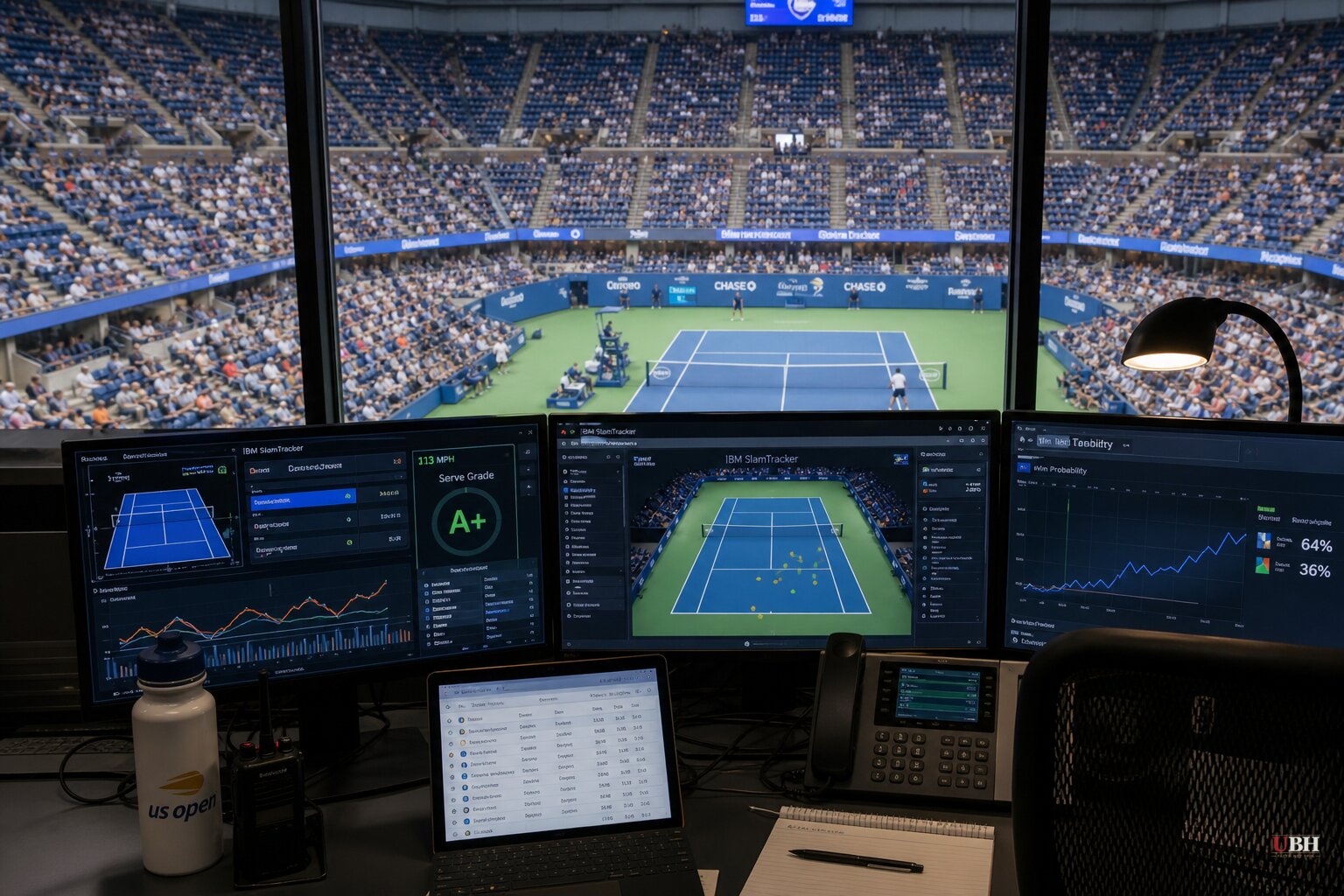
Since IBM and the United States Tennis Association unveiled a new suite of AI-powered features on Aug. 25, the 2026 US Open has become a running experiment in how much data fans and players actually want during a tennis match. The tournament runs from Aug. 23 to Sept. 13, with the singles main draw beginning Aug. 30, and by early September it was well into its second week, with the numbers behind the AI push piling up.
Four features anchor the rollout: Live Updates, Serve Quality, Key Moments and an expanded Match Chat, according to IBM and the USTA. The system pulls live match data, historical stats and editorial content into one feed, aimed at fans who follow multiple players and can't keep track of every score.
How the serve-tracking actually works
The headline feature is Serve Quality. Cameras around the perimeter of Arthur Ashe Stadium track the ball, racket and a player's limbs, capturing 21 data points across the body and racquet 50 times per second, according to Tennis365 and the Philippine Daily Inquirer. IBM's Watsonx platform crunches that into a single score out of 100, measuring a serve's efficiency, accuracy and consistency, available after every match in the app.
When Coco Gauff faced Zeynep Sönmez, her serve-quality breakdown flagged "controlled racket preparation and deep knee bend during her setup" as the source of her winning serves, according to CBS News. IBM projects the feature will generate roughly 1.2 billion data points across all 254 singles matches by the time the tournament ends, per Tennis365 and Fox Business, a figure IBM's Tyler Sidell, the company's technical program director for sports and entertainment partnerships, rounded to "over a billion" in his own comments to CBS.
The "likelihood to win" tracker, running for about six years but now updated live after every point for the second straight year, uses media data and recent performance to generate shifting win odds. Gauff's win probability against Sönmez opened at 72% and climbed as she built momentum, CBS reported.
Players are using it too, with limits
Jessica Pegula, who advanced to the fourth round of the tournament, told CBS News she uses AI-driven pattern data on opponents' serves before matches. "It's the one controllable shot we have in tennis," she said. But she was blunt about where the data stops mattering. "Sometimes things change during the match, sometimes someone changes their strategy, and you still have to really trust your instinct."
Former ATP pro Sam Querrey, now a broadcaster, made a similar point to Tennis365, saying players can't process 15 or 20 data points mid-match. Coaches distill the numbers into three or four bullet points players can actually use, he said.
The survey numbers deserve a skeptical read
IBM is backing the rollout with a splashy stat sheet: a Morning Consult survey it commissioned found 46% of more than 20,000 sports fans across 12 countries say their digital expectations have risen in the past one to two years, that 72% use sports apps as their main fan hub, and that 64% of tennis fans say they trust AI-generated commentary, according to Fox Business and aibc.world.
Those numbers come from a poll IBM paid for and is using to promote its own product. That doesn't make the findings false, but it means they're marketing material, not independent research, and should be read that way. IBM's Kameryn Stanhouse and Jonathan Adashek, both company executives, are the ones fronting the pitch in interviews with Fox Business and the Philippine Daily Inquirer, which is standard for a company selling its own tech but worth naming plainly.
The tournament AI can't predict
The rollout is happening against a backdrop the algorithms didn't see coming. Top-ranked Jannik Sinner withdrew from the tournament with a right knee injury, according to Fox Business, scrambling a men's draw no win-probability model had built for. Meanwhile Filipina player Alex Eala, seeded No. 17 this year after winning her first WTA Tour title at the Washington DC Open, is playing her highest-seeded Grand Slam back at the site where she won the 2022 junior title, the Philippine Daily Inquirer reported.
Neither storyline shows up as a data point in Serve Quality. As the tournament moves toward its final weekend, the open question is whether IBM's live win-probability tracker holds up any better than a coin flip once the draw gets reshaped by injury withdrawals and unseeded runs. That unpredictability is what Sidell himself told CBS is "the fun about it."
Sources used for this briefing
7 links from 7 independent newsrooms (syndicated copies of the same report count once)
These are the sources it draws on, linked so you can verify.


