
Unbiased headlines. Facts, not spin.
Unbiased Headlines is an independently owned news organization. We bring you the facts, not opinions, written fresh from 110+ named sources. Sources linked so you can verify it yourself.
 politics
Major Story (7/10)
Four Senators Demand Iran War Funding Ban in December Stopgap While Murray, Coons Resist a Shutdown Fight
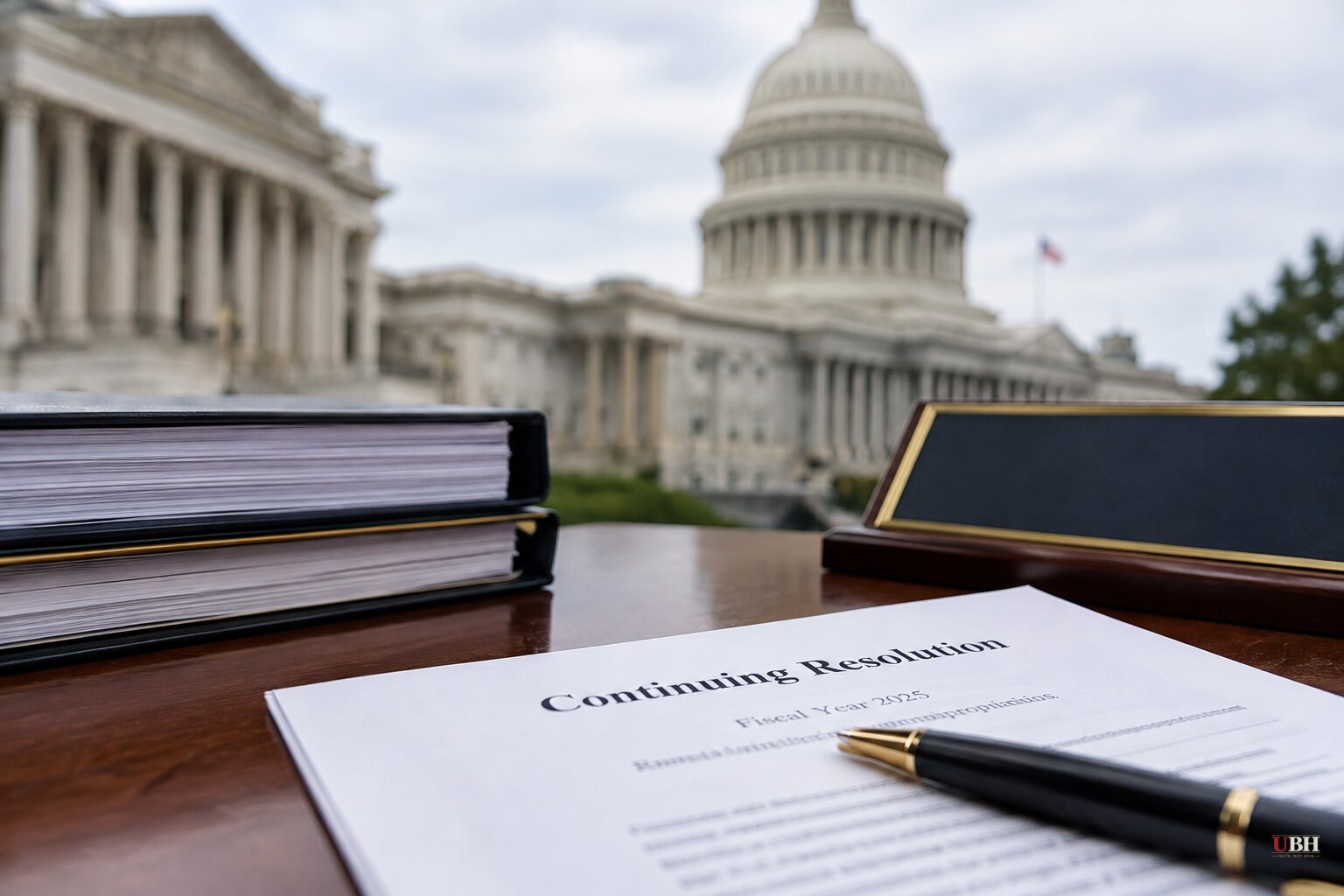
Since Sens. Michael Bennet and Chris Van Hollen vowed this week to block funding bills that pay for the Iran war, the push has grown from two senators to four, and it has exposed a split among Democrats over how to use the Dec. 11 deadline.
On Thursday, Nov. 12, Bennet of Colorado, Tammy Duckworth of Illinois, Van Hollen of Maryland and independent Bernie Sanders of Vermont issued a joint statement. "Any short-term package must include language that restricts the Trump Administration from using appropriated funds to continue his war against Iran," they wrote.
"When we vote on appropriations, we intend to fund the government and stop funds for this war," the statement said.
The math in the Senate
Republicans hold 53 Senate seats until the new Congress is sworn in on Jan. 3. Advancing major legislation takes 60 votes, so a stopgap needs at least seven Democrats.
Even if a bill clears both chambers, President Trump's signature is required unless Congress has veto-proof margins. Nobody is predicting those with Republicans running both chambers.
Congress passed a continuing resolution in September that froze funding and set the Dec. 11 date. Not one of the 12 annual appropriations bills has passed for fiscal 2027, according to The Center Square.
Where the party leaders stand
Patty Murray of Washington, the top Democrat on the Appropriations Committee, has not signed on. She said Tuesday that committee leaders are debating how long a stopgap should last and whether to attach restrictions on administration spending. "We're exploring all options at this point," she said.
Murray has been firm on one point: Democrats will not approve the tens of billions in extra war money the administration requested this summer. NPR's Tom Bowman put that supplemental at $67 billion. In a Nov. 10 floor speech, Murray said Trump "is absolutely not getting" the nearly $70 billion he wants for the war or his $1.5 trillion war budget. She also cautioned that "we can end Trump's war with Iran, but not with a snap of our fingers."
Rep. Rosa DeLauro of Connecticut, the top Democrat on the House Appropriations Committee, joins Murray in favoring a short-term extension. Neither has committed to making Iran restrictions a condition of support.
The argument against a shutdown fight
Sen. Chris Coons of Delaware, the top Democrat on the Senate Appropriations defense subcommittee, opposes using the deadline this way. "I do not think we should have a government shutdown," he told The Washington Sun. He said Democrats can send a message by defeating the administration's supplemental and reconciliation requests. "That's a pretty strong signal that they're not getting the money they're asking for the war and for [defense] modernization," Coons said.
A shutdown, Coons warned, "would divert us from our core objectives for weeks, if not months."
Rep. Adam Smith of Washington, the top Democrat on the House Armed Services Committee, framed it as a practical question. "I want the war to end," he said. "Would shutting down the government make that more likely, or would it just hand the Republicans a political victory while the war continues?"
Smith pointed to a basic problem with the leverage. Trump has been financing the operation without a specific appropriation, using existing Pentagon funding. Refusing new money would not necessarily stop operations.
What the four senators say is at stake
The senators argue the midterm results show voters want the war ended. They say it has "driven up the cost of gas, groceries, and fertilizer." They also say more than 20 American service members have been killed and hundreds wounded, "while achieving none of President Trump's stated goals." Those are their claims, not figures the Pentagon has confirmed in the material here.
They cite Vietnam, Afghanistan and Iraq as wars that dragged on for decades. Van Hollen has been urging Congress to cut funding the way it did to help end Vietnam. Bennet wrote colleagues over the weekend asking them to oppose any continuing resolution with "another cent for" the war. "The stakes are too high for us to fall into our usual shutdown politics," he wrote.
The authorization problem
Congress has never authorized the Iran war. The War Powers Act of 1973 gives a president 60 days to operate without approval. The Center Square reports the administration got past that deadline by declaring a temporary ceasefire, which Defense Secretary Pete Hegseth claimed reset the clock. It also reports that Congress later passed a war powers resolution ordering a halt, and that the Pentagon ignored it.
Senate Democrats have shown they will use funding as leverage. They triggered a 76-day shutdown of the Department of Homeland Security in February over demands for ICE and Border Patrol reforms, according to The Center Square.
Military moves continue
The USS Theodore Roosevelt is headed to the region, which would put three aircraft carriers there, NPR's Bowman said. Trump has said he might bomb Iran, then told the Financial Times he did not expect to do so now, Bowman noted. Meanwhile Vice President JD Vance has reached out to senior Iranian officials about a deal. NPR says Trump said this week that he would not have done anything differently despite the midterm losses.
The next test comes in the Appropriations Committee, where Murray and her colleagues are still deciding the length of the stopgap and whether it carries any Iran language. They face a Dec. 11 deadline, and a bill that passes the Senate needs seven Democratic votes. Four senators have already said they will not provide theirs without a war funding restriction.
Sources used for this briefing
7 links from 7 independent newsrooms (syndicated copies of the same report count once)
These are the sources it draws on, linked so you can verify.


