
Unbiased headlines. Facts, not spin.
Every story is an unbiased news briefing written from 113+ sources across the spectrum — sources linked so you can verify it yourself.
 sports
Low Interest (3/10)
October 5, 2026 at 09:29 AM
sports
Low Interest (3/10)
October 5, 2026 at 09:29 AM
FIA Admits Untested Software Bug Stalled Cars and Delayed Bahrain Grand Prix in Malaysia
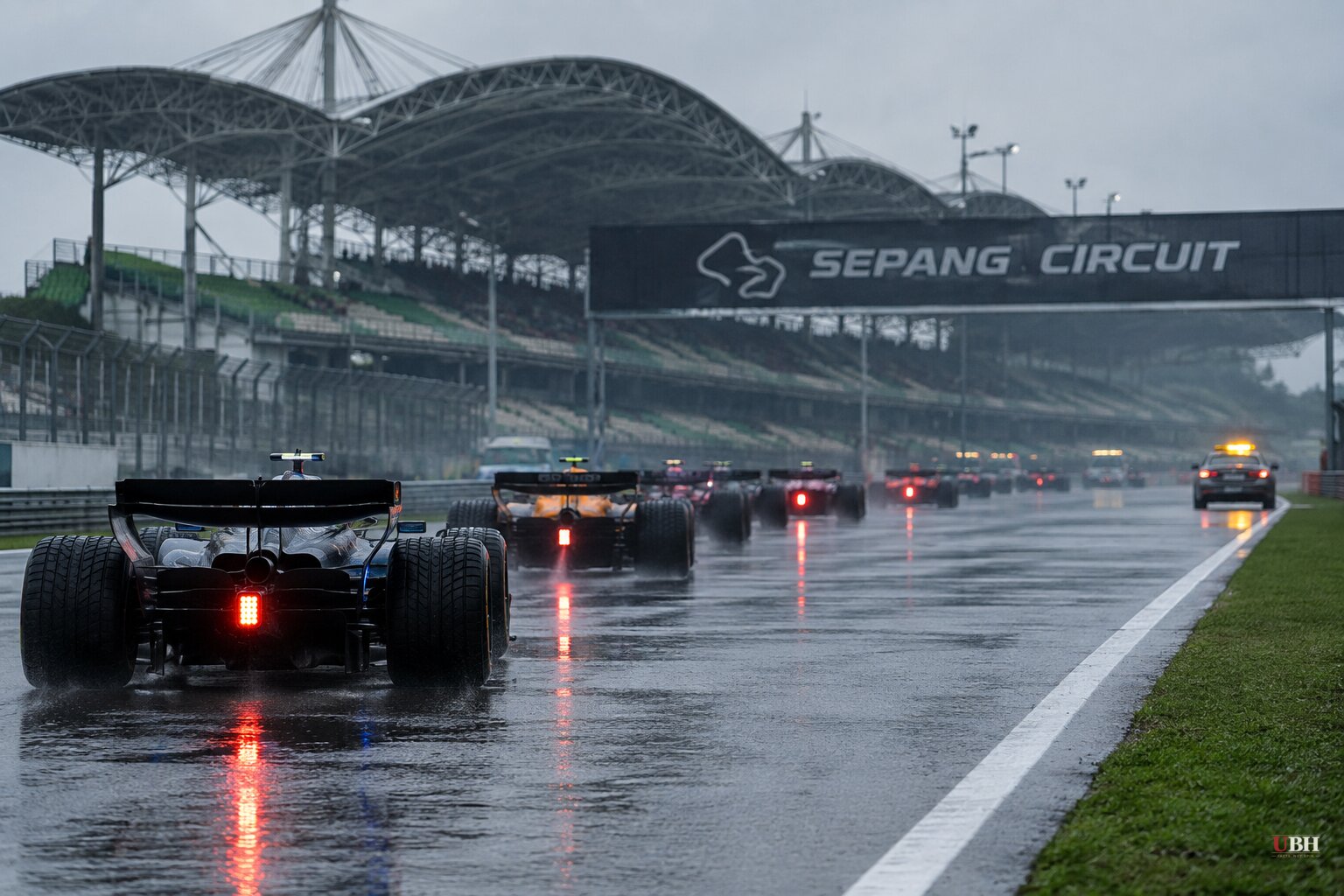
Formula One's governing body got caught flat-footed by its own technology on Sunday, October 4, when a software bug froze power to multiple cars during the formation lap of the Bahrain Grand Prix, run at the Sepang International Circuit in Malaysia after the race was relocated because of the conflict in the Middle East.
The FIA says the problem came from wet-weather software built into every team's power unit this year, designed to trim electrical output from 350kW to 250kW in certain sections for safety, according to Road & Track. Cars running at low speed and low rpm in the rain triggered a glitch that put engines into roughly 60 seconds of what Road & Track described as sleep mode.
Ferrari's seven-time world champion Lewis Hamilton had to stop his car on track, shut off the engine, and restart it. "I've never done that before," he said, according to The Guardian. Red Bull's four-time champion Max Verstappen, on pole and the eventual race winner, compared it to the "Lego race" held before the British Grand Prix. Mercedes' Kimi Antonelli, the championship leader, called it "insane," telling The Guardian: "At some point we were five-wide in the straight, because we couldn't understand what was going on."
Officials pulled the field back to the pits. Combined with the initial rain delay, the restart took one hour and 33 minutes, according to the Irvine Times, which republishes USA Today's motorsports coverage. No outlet reported an official explanation for why the second portion of that delay, 53 minutes after the field returned to the pits, ran as long as it did.
The FIA's single-seater director, Nikolas Tombazis, told reporters the agency simply hadn't had the chance to stress-test the software. "We didn't manage to test the software as extensively as we would have liked, because there's been very little wet running this year," he said, per the Guardian and confirmed across Reuters coverage carried by Al Jazeera, The Straits Times, The Hindu, and Channel NewsAsia. "Some cars went very slowly, almost came to a standstill. There was a bit of a concertina effect between cars, and some cars almost stopped completely."
Tombazis added that Sepang marked the season's first wet race weekend, and the track had dried out by the time the race actually got underway. "Sometimes things fall through the net and people learn, and you do a better job next time," he said.
That explanation is fair on its face. This was a combination of conditions the FIA had not encountered before, and it pushed out a software fix during the delay rather than leaving the problem unresolved. A governing body spent a full preseason and multiple race weekends without validating a safety-critical system in the one condition, rain, where it was designed to matter most. For a sport spending enormous sums on a regulatory overhaul, that represents a significant gap in testing.
Drivers have been complaining about the 2026 rules since the season opener, and Sunday's fiasco reignited it. The new formula splits power almost 50-50 between combustion and battery, and McLaren's Lando Norris, who finished ninth, called the whole system "just horrible," telling The Guardian: "We shouldn't have any of that stuff, the electronic side."
Williams' Carlos Sainz went further, questioning the decision-making behind the rules in the first place. "[F1] needs to have a hard look at themselves and see how we ended up in this situation," he said. "It is clear the regs are extremely complicated for the drivers, for the teams, for the power units, for the manufacturers. It is too complicated. Again, my only question mark is who five years ago decided that this was the direction to go?"
Once the race actually started, behind a safety car for two laps before a standing start, it played out normally. Verstappen slipped to third early before clearing Kimi Antonelli after a second safety car period on lap 13 and crossing the line 2.3 seconds ahead for his first win of the season, according to the Irvine Times. Hamilton drove from 18th to third, which the Irvine Times reported was his first podium since the British Grand Prix in July. Mercedes' George Russell, who had been running third and still held an outside title shot, retired with an engine failure five laps from the end, a result unrelated to the formation-lap bug. That leaves Russell 84 points behind Antonelli with seven races left and 183 points still available.
The FIA says it will conduct a full review with teams and power unit manufacturers. The Guardian reports the current engine formula will not be changed this season, with a minor adjustment planned for next year and more serious change in 2028, meaning drivers will run the rest of this season under the same rules that stalled a Formula One grid in front of a global TV audience.
Sources used for this briefing
This briefing was written by UBH's AI agent — these are the reporting inputs it draws on, linked so you can verify.


