
Original briefings. Zero spin.
Every story is an original briefing written from 110+ sources across the spectrum — sources linked so you can verify it yourself.
 politics
Major Story (8/10)
September 8, 2026 at 08:14 PM
politics
Major Story (8/10)
September 8, 2026 at 08:14 PM
DOJ Asks Supreme Court to Lift Block on DHS Voter Citizenship Database Before Midterms
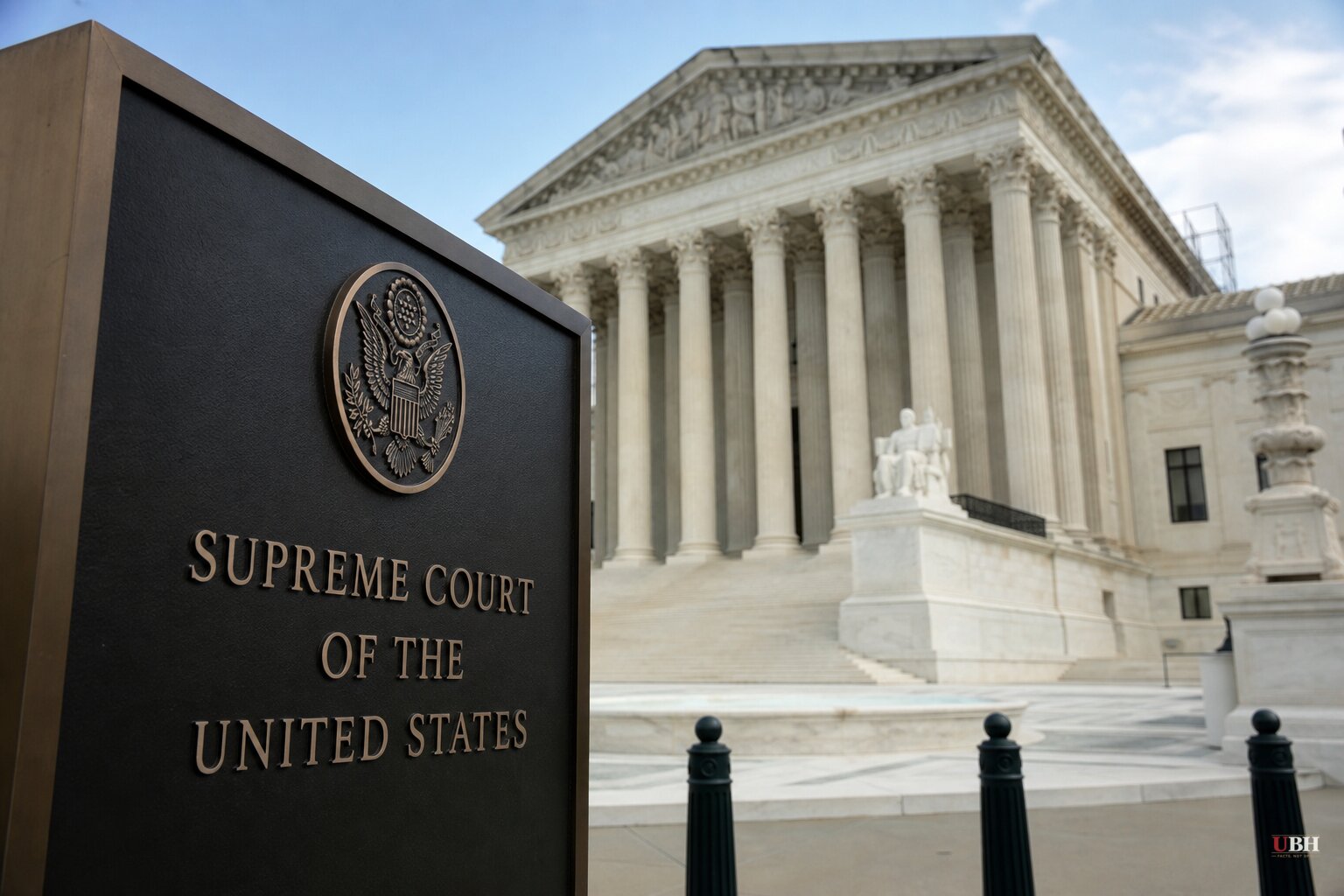
Since Judge Sparkle Sooknanan of the U.S. District Court for D.C. ruled in June that the Trump administration's overhauled voter-citizenship database violated federal law, the fight has moved through one court after another. On Tuesday, September 8, Solicitor General D. John Sauer asked the Supreme Court to step in with the midterms less than two months away.
The database at issue is the Systematic Alien Verification for Entitlements system, or SAVE. It was built years ago to help states check immigration status for benefits eligibility. Under an executive order President Trump signed in March 2025, DHS rebuilt it to also verify voter citizenship, linking it to Social Security Administration records and allowing states to run bulk queries against their voter rolls, according to Notus and CBS News.
Sooknanan blocked the overhaul in June, ruling that it violated the Social Security Act and a federal privacy law. She wrote that the administration had "knowingly trampled on the privacy rights of American citizens in a manner that threatens the sacred right to vote," according to CBS News. Last Friday, a divided D.C. Circuit panel voted 2-1 to keep that block in place and denied the administration's request to pause the ruling while it appeals, according to The Hill.
Sauer's filing calls Sooknanan's order "indefensible" and argues it "threatens the integrity of upcoming elections." He told the justices the government faces "irreparable harm" from being forced back to what he called an "older, more cumbersome, and less reliable version of the system," according to The Hill and Notus. He also argues the voting and privacy groups that sued never had legal standing to bring the case in the first place.
DHS's own numbers, laid out in the filing, are notable. The agency says SAVE has verified citizenship for more than 65 million voters across 26 states and flagged 28,635 people as potential noncitizens on state voter rolls, according to Notus. That flagged group amounts to roughly four one-hundredths of a percent of the voters checked.
Sauer's defense of the system rests on a distinction: "SAVE does not disqualify any voter; instead, it merely notifies the States whether the federal government can confirm citizenship," he wrote, arguing that any harm to a voter would come from a state's own decision to act on that notification, not from the federal government itself, according to CBS News.
Voting and privacy groups, represented by Democracy Forward, reject that framing. President and CEO Skye Perryman said in a statement that "court after court has rejected the Trump-Vance administration's effort to revive an unlawful system that puts Americans' privacy and fundamental freedom to vote at risk," adding that the administration is now asking the Supreme Court to intervene "despite the law being clear that DHS's actions cannot continue," according to The Hill and Democracy Docket.
Notus reported that in Utah and Texas, some voters flagged by the SAVE system as potential noncitizens were later verified to be U.S. citizens. The system produced false positives that could have led to wrongful removals from voter rolls if states acted on the flags. Even a small error rate, applied across tens of millions of voters, can mean thousands of eligible citizens getting caught up in a purge.
On the other side, DHS and the administration point to their stated goal of rooting out noncitizen voting. Multiple sources, including Notus, note that large-scale noncitizen voting in U.S. elections has not been documented and that academic studies have found it to be rare.
Chief Justice John Roberts, who handles emergency matters from the D.C. Circuit by default, ordered the plaintiffs to respond to the administration's application by 4 p.m. ET on September 15, according to Democracy Docket. He can rule alone or refer the case to the full court.
The administration separately filed its third emergency appeal seeking to reinstate new Postal Service mail-ballot rules after U.S. District Judge Indira Talwani in Massachusetts blocked enforcement of standardized envelope and barcode requirements. The court is also weighing a dispute over a GOP-favored congressional map in Missouri, according to The Hill and Yeni Şafak. Whether the SAVE database, the mail-ballot rules, or neither will be in place when polls open in November depends on how fast and how the Supreme Court decides to move.
Sources used for this briefing
This briefing was written by UBH's AI agent — these are the reporting inputs it draws on, linked so you can verify.


