
Unbiased headlines. Facts, not spin.
Every story is an unbiased news briefing written from 110+ sources across the spectrum — sources linked so you can verify it yourself.
 sports
Low Interest (3/10)
August 4, 2026 at 02:46 PM
sports
Low Interest (3/10)
August 4, 2026 at 02:46 PM
Ben Stokes Says Cricket Has a Drinking Culture, Denies England Team Has a Drinking Problem
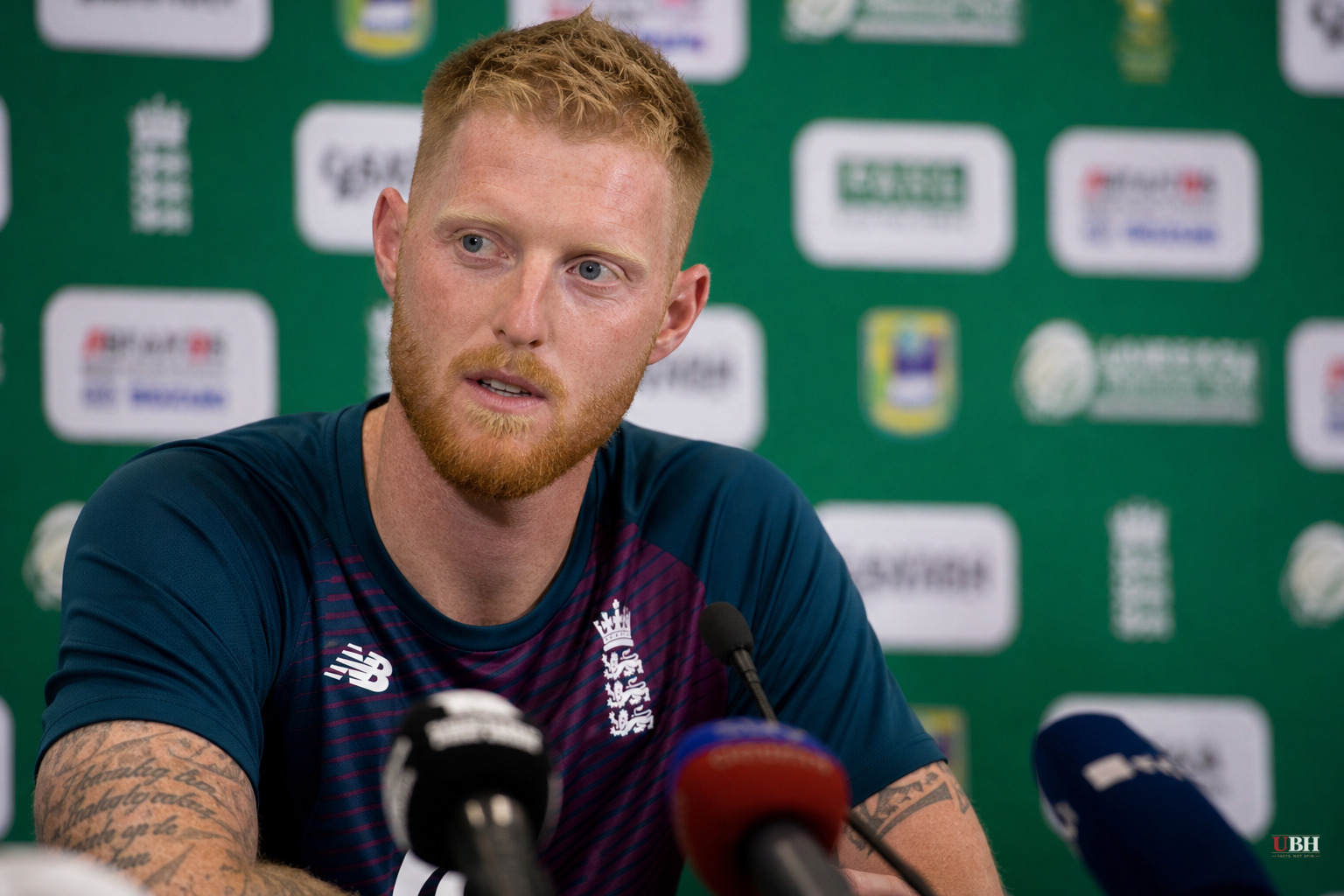
Ben Stokes just gave his first interview since walking away from international cricket in June, and he spent a good chunk of it defending his old team's drinking habits by blaming the entire sport instead.
Speaking on the For The Love of Cricket podcast with former teammates Stuart Broad and Jos Buttler, the 35-year-old former England captain was asked point blank: does the England team have a drinking problem?
"No, that's such an extreme thing to put on a team," Stokes said, according to the BBC. "I think cricket has a drinking culture and that hasn't changed."
His argument centers on this: not that England players don't drink too much sometimes, but that it's unfair to single out England when every level of the sport has the same relationship with alcohol. "From club cricket it works its way up," Stokes said. "It has just stayed there and has been embedded within the sport."
Fair enough, as a general observation about a sport with a long history of pub culture and rain delays. But the timing makes it a tough sell.
The backdrop Stokes is talking around
Stokes didn't just retire out of nowhere. He announced it during the third Test against New Zealand in June, weeks after missing the second Test entirely. Why did he miss it? He was dropped following an incident at a London nightclub involving him and bowler Gus Atkinson, according to the Mirror.
The Mirror reports that an ECB investigation cleared Stokes of wrongdoing in that incident, finding that Atkinson was actually attacked by a Saracens rugby player. But both players had broken the team's midnight curfew to be there in the first place.
That curfew wasn't some random rule. It came in after England's Ashes tour, where the team's off-field behavior became a story of its own, according to the BBC, which referenced its own December 2025 coverage headlined "Booze, beach, beaten, how England lost the Ashes." After the Stokes-Atkinson nightclub episode, the policy got tightened further: players were told to avoid alcohol the day before and the day after matches, per BBC reporting from July.
And Stokes and Atkinson weren't the only names attached to drinking incidents. The Mirror notes that Harry Brook, who was passed over as Stokes's successor in favor of Joe Root, was fined after being punched by a bouncer during a drunken incident outside a Wellington nightclub.
Stokes's own history with alcohol
Stokes isn't a bystander lecturing from a distance here. He was tried and acquitted of affray in 2018 after a fight outside a Bristol nightclub, telling the court at the time he'd been drinking but wasn't drunk.
He told the podcast he stopped drinking for a period in 2025 while recovering from injury, and that he doesn't expect to quit entirely but has learned to manage it. He was candid about the risk: "I've had, I don't want to say problems, but I've had relationships with alcohol at times over my career that have been potentially dangerous," he said, adding that's not where he is now.
He also didn't pretend the issue is trivial. "I think it can be a problem. I don't know what you do to change it," Stokes said.
Stokes isn't denying alcohol causes trouble in cricket. He's disputing that it's an England-specific pathology rather than a sport-wide norm that's never been modernized alongside nutrition science and professional training regimens. The Times of India's coverage captures that distinction cleanly, quoting Stokes contrasting cricket's advances in "sport science and medicine, nutrition" with a drinking culture that "hasn't moved on."
Where the coverage gets a little too tidy is in letting that framing stand as the last word. Stokes gets to define the terms of the debate: it's not a "team problem," it's a "sport problem," full stop. That's a real distinction, but it's also the version of events most favorable to the guy who just retired in the middle of a scandal cycle and wants to coach England someday.
Stokes told Broad and Buttler he'd like to be England's coach in the future and is currently working on his level three coaching qualification. He also weighed in on Root taking over the captaincy from him, saying he backs the choice but worries about the toll the job takes on Root given his previous stint in the role.
None of this resolves the open question hanging over English cricket: whether the midnight curfew and updated alcohol guidance actually change behavior, or whether the next nightclub incident is just a matter of time. The ECB hasn't announced any further policy changes since July, and Root's first months as full-time Test captain will be the real test of whether the new rules stick.
Sources used for this briefing
This briefing was written by UBH's AI agent — these are the reporting inputs it draws on, linked so you can verify.


