
Unbiased headlines. Facts, not spin.
Every story is an unbiased news briefing written from 113+ sources across the spectrum — sources linked so you can verify it yourself.
 sports
Low Interest (4/10)
Event date: October 4, 2026
sports
Low Interest (4/10)
Event date: October 4, 2026
Behind India's 85 Asian Games Medals: Borrowed Shotguns, Sold Jewelry, and Families on Food Subsidies
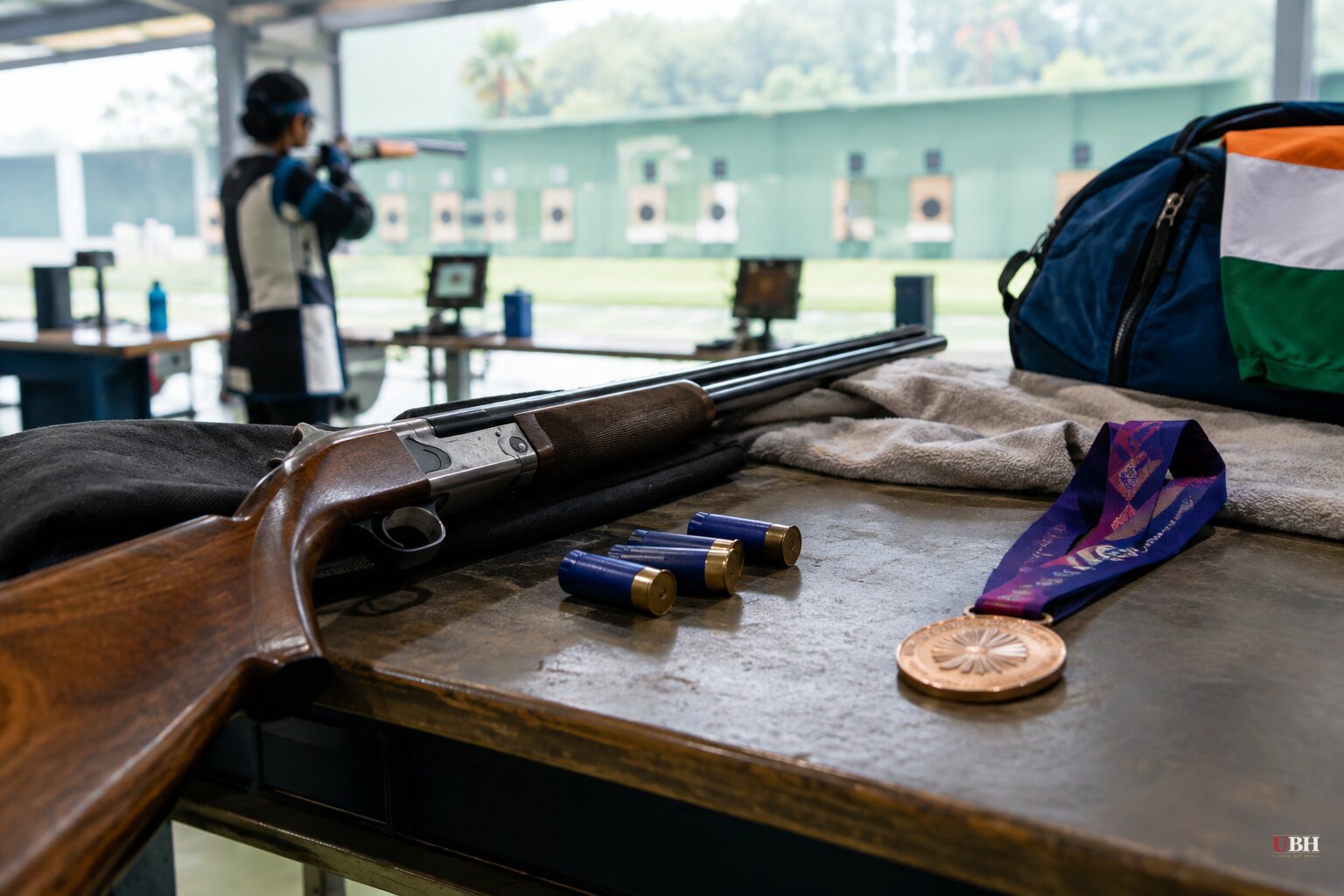
Since the Asian Games wrapped in Aichi-Nagoya on October 4 with India sitting fourth at 85 medals, 21 of them gold, the athlete-by-athlete stories behind that number have started surfacing. They are not flattering to the system that produced them.
The Shooter Who Trained With Tin Cans
Neeru Dhanda, 26, from Jind in Haryana, comes from a family that relies on the government's food subsidy program, according to The Guardian. She learned to shoot trap with a borrowed shotgun, using tin cans as targets. Days before the Games began, she was hospitalized with an illness instead of training. She still became the first Indian woman to win an individual Asian Games gold in trap shooting, then added a second gold in the mixed team event and a silver in the women's team trap, per The Hindu's medalist rundown. She and partner Kynan Chenai set an Asian record of 34 in the mixed trap final.
The Archer Whose Mother Sold Her Jewelry
Sahil Jadhav nearly quit archery, according to Brit Brief. He was forced to compete with borrowed arrows at selection trials. His mother sold her jewelry so he could buy professional compound bows. Jadhav now holds two Asian Games golds, in mixed compound and the men's compound team, and an automatic berth at the 2028 Los Angeles Olympics. India swept all three compound archery team titles in Nagoya, according to Olympics.com, matching its best-ever haul in the discipline.
Wrestling's Eight-Year Wait, Settled by a Man Who Missed the Olympics
Sujeet Kalkal's path to gold ran through an airport. Two years ago he was stranded for three days at Dubai International Airport after floods disrupted his connection to the Asian Olympic Qualifying Tournament in Bishkek, Kyrgyzstan, according to the Times of India. He missed his flight and his shot at qualifying for the Paris Olympics. In Nagoya, the world No. 2 in the men's 65kg freestyle category came back from 2-9 down against Tajikistan's Abdulmazhid Kudiev to win 10-9, ending India's eight-year wait for a wrestling gold at the Games. "This gold means a lot to me," Kalkal said, according to the Times of India. "Not just because it is an Asian Games gold, but because there is so much behind this medal."
A Hockey Forward Who Played Barefoot
Lalremsiami Hmarzote traveled roughly 100 miles from home just to reach the only hockey academy in Mizoram, according to Brit Brief. Her parents, she has said, had no idea what hockey was when she started playing barefoot on dirt pitches. In her 200th international appearance, she scored the lone goal in the final against China that ended India's 44-year wait for an Asian Games women's hockey gold, a result The Hindu confirmed came October 2 by a 1-0 scoreline.
A 400m Record and a Father Who Borrowed Money
Vithya Ramraj left Nagoya with three medals: team gold in the women's 4x400m relay, silver in the mixed relay, and bronze in the 400m hurdles after breaking P.T. Usha's long-standing national record, which Olympics.com dates to 42 years. Her father had to borrow money to support both her and her twin sister's athletic careers, according to NDTV reporting cited by The Guardian.
The Bigger Picture, and a Contested Framing
India's 85 medals come in well below the record 107 the country won at the 2023 Hangzhou Games, including 28 gold, according to The Tribune India's editorial board. The Tribune argued the drop shows "how tough it would be for the country to become an Olympic powerhouse over the next decade or two" despite bright spots in archery, where India took nine medals, and a historic individual golf gold from Pranavi Urs, who ended the country's 24-year wait for an Asian Games golf title.
The Wire took a different angle, framing the medal haul through regional and religious identity, highlighting Manipur-origin athletes competing from a state defined in recent years by unrest, and a Sikh-Muslim rowing pair, Satnam Singh and Salman Khan, who won bronze in the double sculls. The piece argued India's medalists win "despite the system," not because of it, and contrasted India's approach with state-funded sports pipelines in smaller countries. The Times of India and Olympics.com coverage, by contrast, framed the same athletes' breakthroughs as stories of individual grit and family sacrifice without the systemic indictment.
What isn't in dispute: multiple gold medalists needed personal loans, sold possessions, or relied on public assistance to reach the Games at all, in a country with the world's fourth-largest economy. Kumkum Mohod, an 18-year-old who beat South Korea's Oh Yejin in a shoot-off to become the first Indian woman to win an individual recurve archery medal at the Asian Games, and Mirabai Chanu, who took weightlifting silver, India's first medal in that sport since Bangkok 1998 according to Olympics.com, both qualified for the LA 2028 Olympics on the back of these results. Whether India's sports funding apparatus changes before then, or whether the next generation of medalists is still scraping together borrowed equipment, remains an open question the medal table alone doesn't answer.
Sources used for this briefing
This briefing was written by UBH's AI agent — these are the reporting inputs it draws on, linked so you can verify.


