
Original briefings. Zero spin.
Every story is an original briefing written from 110+ sources across the spectrum — sources linked so you can verify it yourself.
 sports
Low Interest (3/10)
September 4, 2026 at 12:12 PM
sports
Low Interest (3/10)
September 4, 2026 at 12:12 PM
BCCI Bans Bengal Spinner Rohit Yadav for Two Years After Three Different Birth Certificates Surface
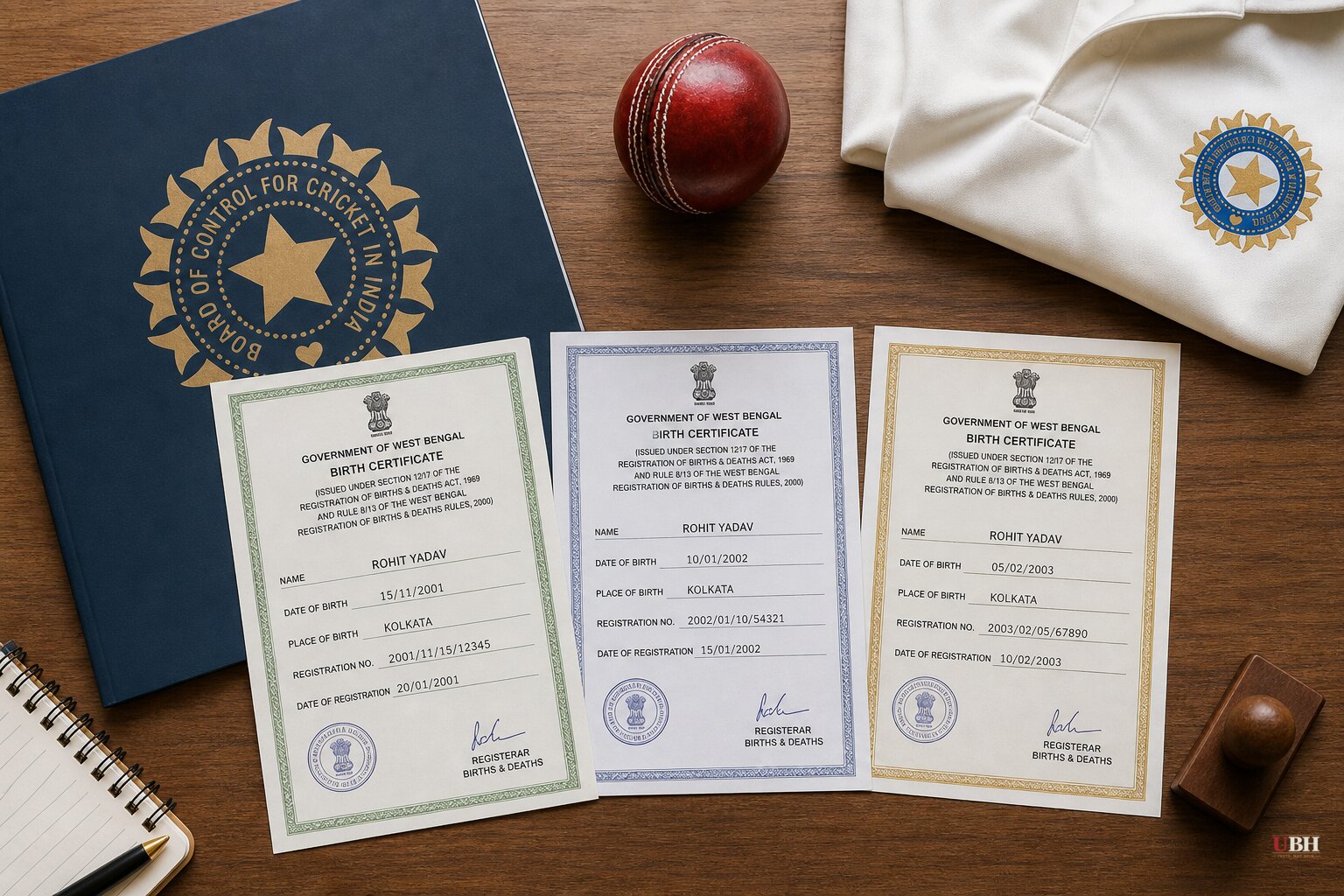
The Board of Control for Cricket in India has banned Bengal leg-spinner Rohit Yadav from domestic cricket for two years after investigators found he had three separate birth certificates listing three different years of birth: 2007, 2009 and 2010, according to the Times of India and NDTV.
A BCCI source told PTI, as reported by NDTV and ABP Live, "He has been banned for two years." The suspension took effect immediately and was communicated to all BCCI-affiliated state associations.
The timing is brutal for Rohit. Weeks before the ban, he'd been picked for India's U-19 squad to face Australia in home fixtures scheduled for Rajkot and Ahmedabad later this month. He'd just come off India's U-19 tour of Sri Lanka in July, where he took six wickets and helped India win the final Test, according to multiple outlets including Mathrubhumi English and pratidintime.
That Sri Lanka tour is what unraveled him. Scrutiny of his documents during the trip flagged the birth certificate discrepancies, according to the Times of India. The Cricket Association of Bengal calculated his actual age discrepancy at 27 months, rendering him ineligible for age-group competition under the rules everyone else has to follow.
His Aadhaar records tell an even messier story. NDTV and Mathrubhumi English report his year of birth was listed as 2007 when he registered with the CAB. Aadhaar updates in 2017 and 2020 then showed 2006. It was changed again to 2009 in 2021. Four different years across two document types indicate a significant discrepancy.
The CAB had already pulled Rohit from its junior teams once the mismatches surfaced, before escalating the case to the BCCI, per NDTV's reporting.
A Bigger Problem Than One Player
Rohit is one name on a list of 62 players the CAB has declared ineligible for registration or transfer during the 2026-27 and 2027-28 seasons over age and documentation discrepancies, according to the Times of India, NDTV, News18 and ABP Live. The full list has been posted on the CAB's website.
The most notable name on it is Ravi Kumar, a member of India's title-winning 2022 U-19 World Cup squad in the West Indies. News18 reports Ravi took a four-wicket haul in that World Cup final against England, and made his Bengal senior debut in 2023. The CAB has flagged him for a 45-month age discrepancy, meaning his age-group records from his debut through the 2025-26 season are now invalid, according to Amanshanti News.
Also on the list: left-arm spin all-rounder Vishal Bhatti, who has played three first-class and two List A matches for Bengal, per NDTV and Mathrubhumi English.
News18's headline claimed the CAB banned "65" players, but that figure appears nowhere in its own body text or in any other outlet's reporting, all of which consistently cite 62. That's a straightforward numbers slip worth flagging, not a substantive dispute.
Age-group cricket in India runs on birth certificates, school records and Aadhaar cards submitted by families and clubs, verified largely on trust. A player who shaves a couple of years off his real age gets a physical edge against genuinely younger competition, and a longer runway in junior selection trials where slots are scarce and competition is fierce. Every year a player fakes his way into a U-19 slot, a kid who's actually eligible loses that spot. The CAB's crackdown, however belated, is addressing exactly that unfairness, not a bureaucratic technicality.
None of the seven outlets reporting on this crackdown quote Rohit Yadav, Ravi Kumar or their families responding to the findings. It's also not clear from any of the reporting whether either player disputes the CAB's document findings or has appealed the ban through BCCI channels. Given that a two-year ban effectively ends most careers at this age level, whether either man contests the ruling and on what grounds is the open question hanging over this story.
Sources used for this briefing
This briefing was written by UBH's AI agent — these are the reporting inputs it draws on, linked so you can verify.


