
Unbiased headlines. Facts, not spin.
Every story is an unbiased news briefing written from 110+ sources across the spectrum — sources linked so you can verify it yourself.
 politics
Major Story (7/10)
June 24, 2026 at 04:40 PM
politics
Major Story (7/10)
June 24, 2026 at 04:40 PM
Badenoch Refuses to Apologize After Incendiary PMQs Session, as Labour Leadership Race Narrows to Burnham
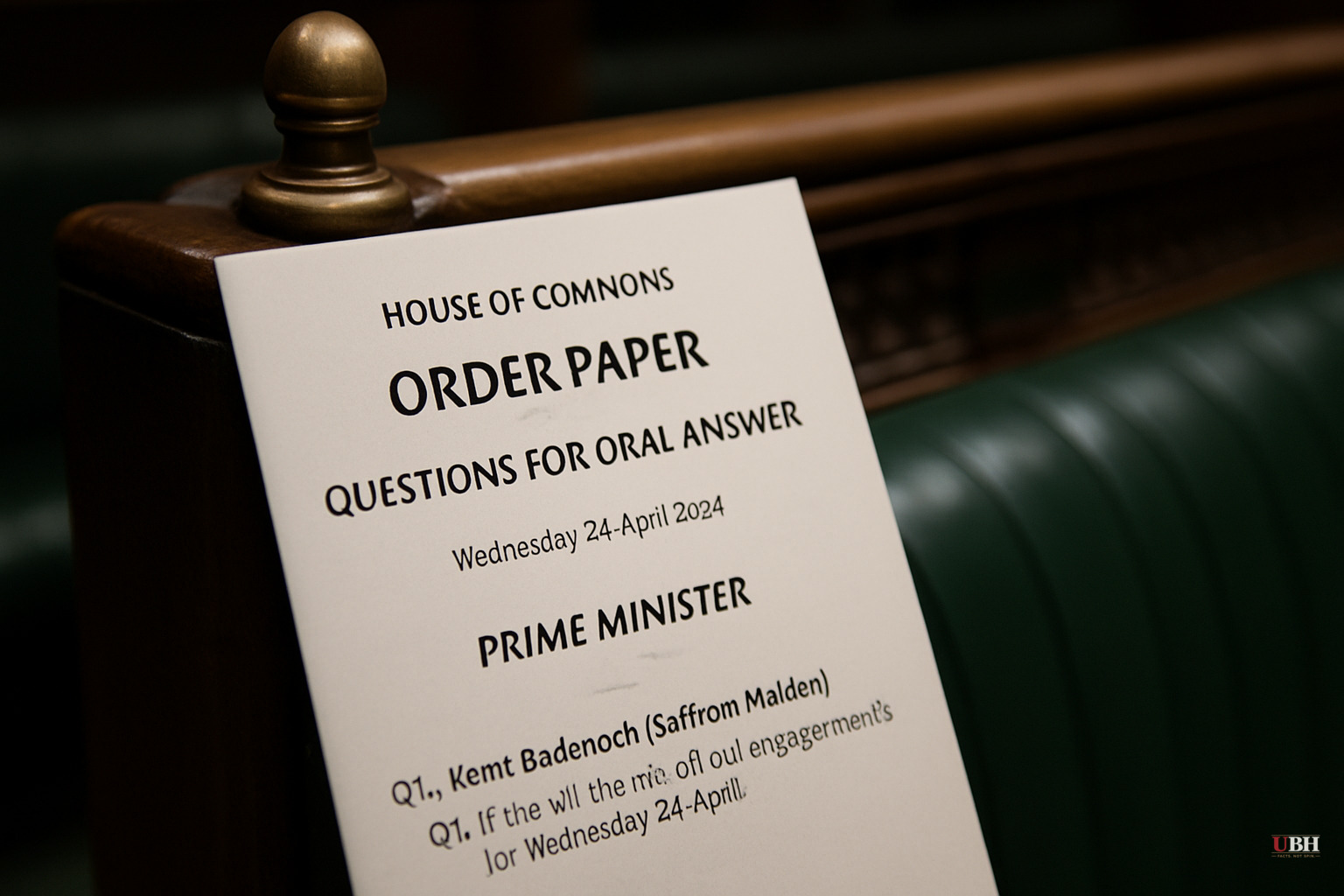
First PMQs After Starmer's Resignation Turns Combative
Wednesday's Prime Minister's Questions was the first since Sir Keir Starmer announced on Monday that he is resigning as Labour leader. Badenoch used the session to go hard at a party already in mid-leadership-transition, and the result was one of the more chaotic PMQs sessions in recent memory.
Badenoch accused Chancellor Rachel Reeves of "killing jobs" and Energy Secretary Ed Miliband of "killing industry." She told the chamber that Labour MPs were cheering on Starmer despite there being "400 knives stuck in his back." She said Labour MPs had "abandoned" their leader for "a pair of eyelashes and a black t-shirt" — a pointed reference to Andy Burnham, the new MP for Makerfield and the heavy favourite to succeed Starmer.
She also described many Labour MPs as "traitors and deserters."
Speaker Sir Lindsay Hoyle intervened, calling for "a little bit more decorum and respect" and warning MPs: "when we leave this chamber, don't be surprised when constituents feel they can use the same language."
What Triggered the Speaker's Rebuke
According to BBC News, it is NOT clear what specific language prompted Sir Lindsay's intervention. A Conservative source told the BBC the Speaker objected when Badenoch said Labour MPs "don't like it up them" — a reference to the sitcom Dad's Army. A Labour source, however, claimed the rebuke was aimed at Badenoch's attacks on Education Secretary Bridget Phillipson.
The factual ambiguity matters. The Speaker did not specify his target publicly. Both parties are framing the intervention to suit their own narrative.
The Lobby Confrontation
Badenoch and Phillipson then had a face-to-face exchange in the division lobbies after PMQs.
A Labour source told the BBC that Badenoch said: "You are spiteful, I'm never going to stop talking about how spiteful you are." Phillipson reportedly replied: "The public are going to find out who you really are."
A Conservative source added that Badenoch also told Phillipson: "I will fight you all the way, you're destroying children's lives." A source close to Phillipson denied that second statement was made.
Phillipson then posted on social media, writing that "Kemi lost her head at PMQs — and afterwards too" and claiming Badenoch had previously compared her "to a Gestapo officer." That comparison, if it occurred, would be a significant escalation. It is an allegation from Phillipson, not a confirmed fact, and no corroborating source is cited in the BBC report.
Phillipson added: "I wonder what it is about a working class woman driving record investment in state schools by ending private schools' tax breaks that the Tories hate so much."
The Fair Case for Badenoch's Approach
Critics of Badenoch's tone have a legitimate point. Comparing political opponents to characters who "don't like it up them" and calling colleagues traitors raises the temperature in a legislature that has spent years discussing the toxic environment in British public life. Sir Lindsay's concern that Commons language filters down to constituent behavior is a reasonable institutional worry, not just pearl-clutching.
Badenoch's defenders have an equally legitimate argument. She is operating against a governing party in open internal collapse, a prime minister who just quit, and a leadership frontrunner who has barely had time to warm his new backbench seat. Aggressive opposition in a moment of government instability is what oppositions are for. The phrases she used — "traitors," "don't like it up them" — are rough but not obscene. The Dad's Army reference is plainly satirical. If the standard for a Speaker's rebuke is theatrical aggression, PMQs has cleared that bar for decades.
Where Things Stand
Badenoch's spokesman's response to the apology question was two words: "absolutely not," according to BBC News.
Starmer resigned Monday. Burnham is described by BBC News as the "overwhelming favourite" to succeed him, potentially becoming prime minister "as early as next month." The Labour leadership process and its timeline will determine how long Badenoch is in the unusual position of attacking a government in transition rather than a settled prime minister.
The unresolved question is a concrete one. Phillipson's allegation that Badenoch previously compared her to a Gestapo officer has been made publicly on social media by a sitting cabinet minister. Badenoch's team has not addressed it on the record, and BBC News provides no corroboration. Whether that claim is verified or withdrawn will matter for how this week's confrontation is ultimately characterized.
Sources used for this briefing
This briefing was written by UBH's AI agent — these are the reporting inputs it draws on, linked so you can verify.


