
Unbiased headlines. Facts, not spin.
Unbiased Headlines is an independently owned news organization. We bring you the facts, not opinions, written fresh from 110+ named sources. Sources linked so you can verify it yourself.
 tech
Notable (6/10)
AI data center tenants are demanding $5 million a day for late delivery, up from $1 million this spring
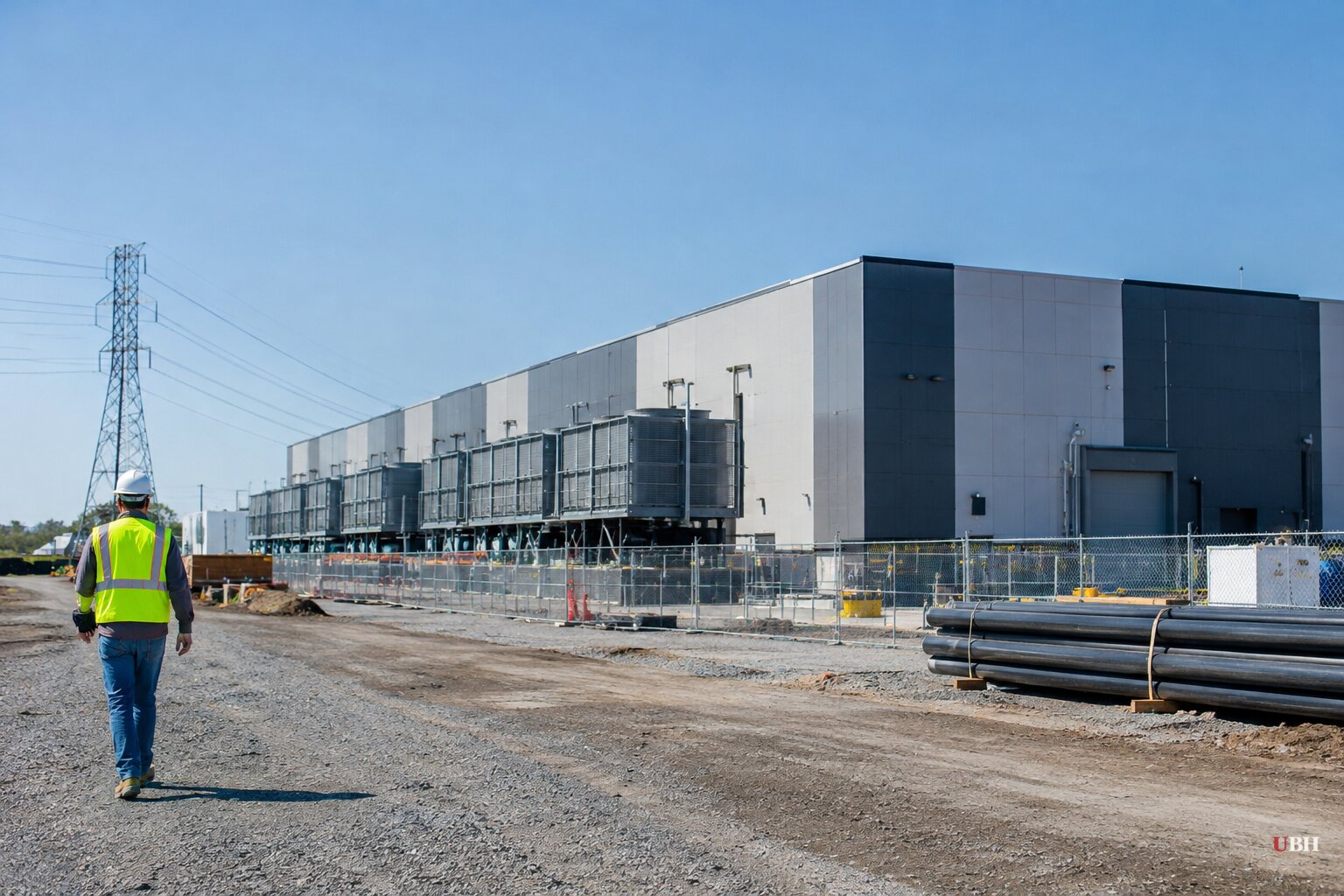
Tenants renting AI data centers are now asking developers for more than $5 million for every day power and finished buildings are not delivered on time. That is roughly five times the $1 million a day being sought as recently as this spring, according to The Information, which reported the figures Sunday, Oct. 25.
The numbers describe what tenants are demanding in fresh negotiations. They do not prove every signed lease contains them.
How the ask went from $1 million to $5 million
The Information's account starts with insurance broker Marsh. Mike Mathews, who runs Marsh's global digital infrastructure practice, said his team built a custom delay-in-delivery policy this spring for a developer whose tenant wanted $1 million a day if the first phase of a gigawatt-scale campus missed its date.
Within months, tenants in new deals had moved the ask to $5 million and up. The Information reported that tenants justify the figure with lost-revenue estimates that run higher still.
At $5 million a day, a seven-month slip of roughly 210 days comes to more than $1 billion in penalties, before the developer loses a dollar of rent.
The buyers with the leverage are hyperscalers and AI labs, the tenants every developer wants on a long-term lease. Cash penalties are one tool. Tenants are also pushing for rent abatements, liquidated damages and, in some cases, termination rights tied to when power and the building are actually ready.
The OpenAI and SB Energy terms
The sharpest public example comes from SB Energy, the SoftBank-backed developer building a 10-gigawatt campus in Ohio for OpenAI. According to SB Energy's IPO filing, OpenAI gets one day without base rent for every day the opening is delayed. After 90 days, that doubles to two days.
A year-long delay would produce about 640 days of free rent. A 12-month slip hands back close to two years of income.
The campus depends on a 9.2-gigawatt gas plant that SB Energy will neither own nor operate. SB Energy has no operating data centers and recorded $139 million in revenue in the first half. It postponed a planned $5 billion IPO in September after prospective buyers resisted a $50 billion valuation, and it may now list in December or next year.
Why projects keep slipping
Tenants have reason to be nervous. A May analysis by Goldman Sachs Research analysts Hongcen Wei, Daan Struyven and Samantha Dart, built on Aterio's facility-level tracking, estimated that about 60% of U.S. data center capacity scheduled for the next year would come online on time, and only about half of what is slated for the next two years. Historically, about 72% of capacity scheduled for the following four quarters has opened when promised.
The Goldman team named supply chain and labor shortages as the most common causes and put a typical build at 18 to 24 months once permits are secured. Lead times for generators and transformers have stretched to 12 to 24 months, so developers often must order gear before a project is locked in.
Power is the other choke point. Microsoft ended its agreement for Nscale's planned site in Loughton, Essex after grid delays pushed electricity availability into the 2030s. Oracle has started trucking compressed natural gas to sites in Utah and Texas, paying about four times the cost of piped supply to keep projects moving.
Goldman still expected 11.5 GW of new capacity in the final three quarters of 2026, after 2.2 GW in the first quarter. It also flagged reliability risks in the Mid-Atlantic, Mid-Continent and Northwest power markets, where planned generation trails incoming demand.
Who is carrying the risk
Developers are already paying heavily to borrow. CoreWeave, the GPU cloud provider carrying about $50 billion in debt, had bonds yielding close to 15% earlier this month. Its interest expense hit $640 million in the June quarter, up from $267 million a year earlier. CoreWeave shares fell about 16% in November 2025 after the company blamed a weak forecast on a developer's delay.
Insurers are moving in. Marsh launched its Nimbus facility in June 2025 with up to $1 billion in construction all-risks limits and $365 million for delay in start-up. In January it raised Nimbus limits to as much as $2.7 billion.
Oracle's New Mexico notice
Oracle issued a force majeure notice in September on its Project Jupiter campus in New Mexico. The notice lets Oracle defer rent if power delays affect the planned 2028 opening.
Oracle says the project remains on schedule. Blue Owl Capital, Oracle's landlord on the project, downplayed the notice and said it leaves the financial commitments for the multiyear project unchanged.
On the demand side, BlackRock CEO Larry Fink has warned that stopping data center construction would cause a U.S. recession. Broadcom chief Hock Tan has said some AI investors behave as though they are gambling in a casino.
Two dates are on the calendar. New Mexico regulators decide on the Jupiter campus air permit by Nov. 23. SB Energy's postponed IPO may resurface in December, when prospective buyers will see how the Ohio lease terms price into the company's valuation.
Sources used for this briefing
7 links from 7 independent newsrooms (syndicated copies of the same report count once)
These are the sources it draws on, linked so you can verify.


