
Unbiased headlines. Facts, not spin.
Unbiased Headlines is an independently owned news organization. We bring you the facts, not opinions, written fresh from 110+ named sources. Sources linked so you can verify it yourself.
 sports
Low Interest (3/10)
sports
Low Interest (3/10)
Venice Beach World Cup Fan Zone Draws 5,000-Plus Daily Crowds, Giving Struggling Merchants a Weekend Bounce
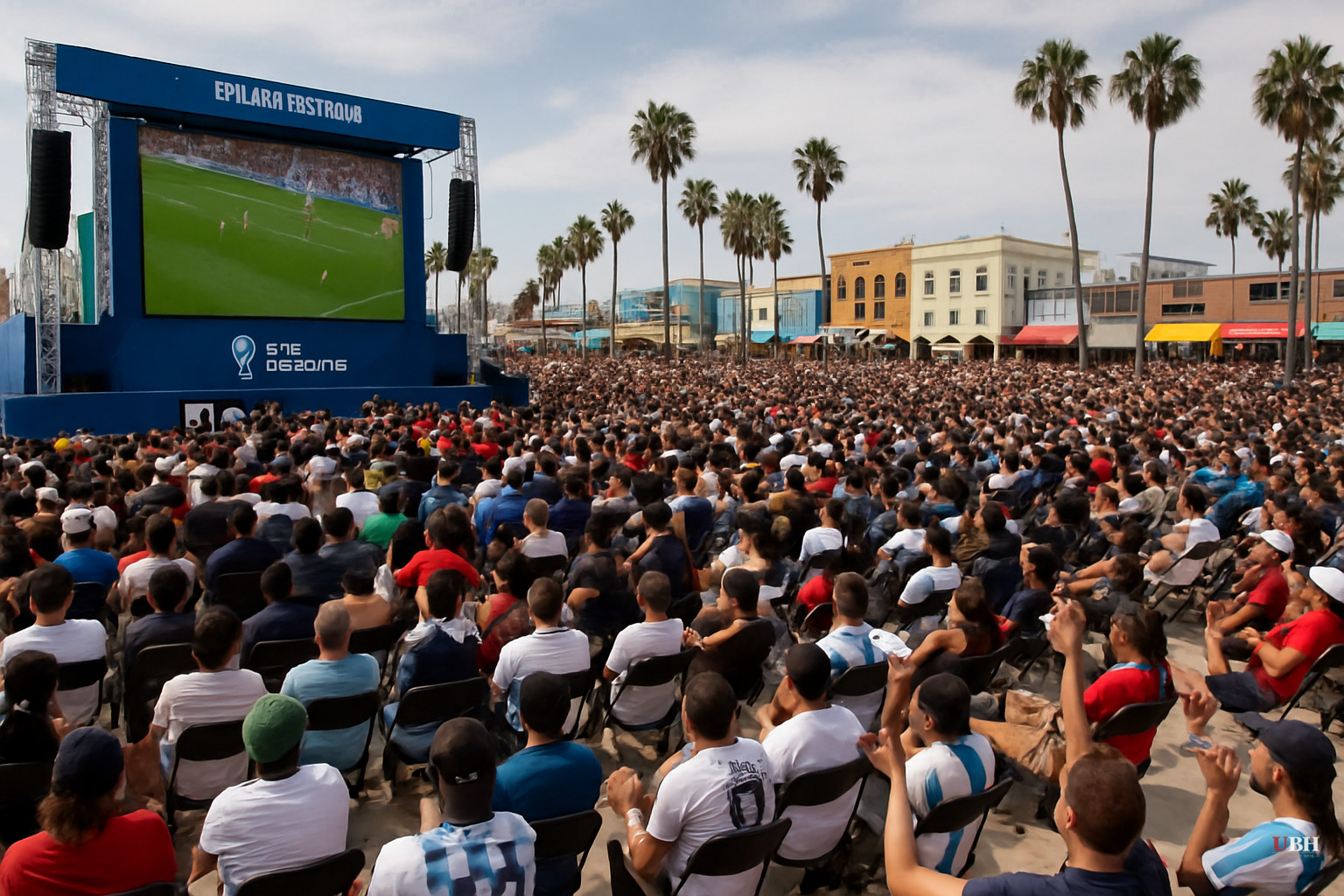
Since the Los Angeles World Cup 26 Fan Zone opened at Venice Beach for the tournament's quarterfinal matches on Friday, July 10, and Saturday, July 11, organizers say the two-day event drew more than 5,000 attendees each day, according to the California Post.
The Venice Beach location was one of ten official FIFA Fan Zones set up across Los Angeles County for the World Cup. Event producer Jon Besant told the OC Register the turnout matched expectations for both days, with a crowd that included former England defender Rio Ferdinand leading a singalong of "Sweet Caroline" from the stage.
A Test Run for 2028
Los Angeles City Councilmember Traci Park, whose district includes Venice, framed the weekend as proof of concept for the city's next mega-event. "Venice Beach just showed the world what's possible," Park wrote on Instagram, pointing to the Official FIFA World Cup Fan Zone as evidence the neighborhood can handle a crowd and turn it into economic activity ahead of the 2028 Games.
Los Angeles is set to host the 2028 Summer Olympics from July 14 through July 30, 2028, with the Paralympic Games to follow from August 15 through August 27, 2028. Whatever lessons the city draws from World Cup crowd management, transit coordination, and vendor turnout this month will have roughly two years to be refined before the real test arrives.
Why Merchants Are Paying Attention
Venice Beach has not had an easy stretch. One longtime business owner told the California Post they closed their store after nearly 20 years because of a sustained drop in tourist traffic. That owner said watching thousands of visitors return over the World Cup weekend was something "many local merchants have been waiting years to experience," while acknowledging "there are things we know we can improve."
That caveat matters. A two-day Fan Zone crowd, built around free entertainment and World Cup viewing screens, is not the same as durable, year-round foot traffic. Venice's tourism problems, driven by well-documented concerns over street conditions and public safety that have circulated in local coverage for years, don't disappear because FIFA set up a stage for a weekend. The skepticism a Venice small-business owner might reasonably raise is straightforward: does a temporary, heavily marketed event prove the neighborhood can sustain 2028-level crowds on its own, or does it just show what happens when a global broadcaster and a city council pour resources into one specific weekend?
What is on the record is a real attendance number, more than 5,000 people each day, and on-the-record enthusiasm from both a city councilmember and a business owner who watched foot traffic return after a long drought.
The Metro Angle
Besant also credited Metro, the county's transit agency, for its role in getting fans to Venice Beach without overwhelming street parking, part of a broader push by LA transit officials to prove the region's bus and rail network can handle Olympic-scale crowds without the gridlock critics have warned about for years. Whether Metro's July 10-11 performance scales to a full 17-day Olympic schedule with dozens of venues running simultaneously is untested.
None of the sourcing here comes from LA's transportation planners, county tourism boards, or independent economic analysts who could measure actual dollar impact on Venice merchants beyond the anecdotal. The California Post's account leans on organizer and councilmember statements plus one business owner's testimony, not audited sales figures.
The open question heading toward 2028 is whether LA28 organizing committee data, once released, shows a measurable bump in Venice-area business revenue tied to the ten Fan Zones, or the July 10-11 crowd turns out to be a one-weekend spike that fades once the World Cup broadcast ends and the neighborhood's underlying tourism challenges reassert themselves.
Sources used for this briefing
1 link from 1 independent newsroom (syndicated copies of the same report count once)
These are the sources it draws on, linked so you can verify.


