
Unbiased headlines. Facts, not spin.
Unbiased Headlines is an independently owned news organization. We bring you the facts, not opinions, written fresh from 110+ named sources. Sources linked so you can verify it yourself.
 sports
Low Interest (3/10)
sports
Low Interest (3/10)
Spain Beats France 2-0, Advances to World Cup Final
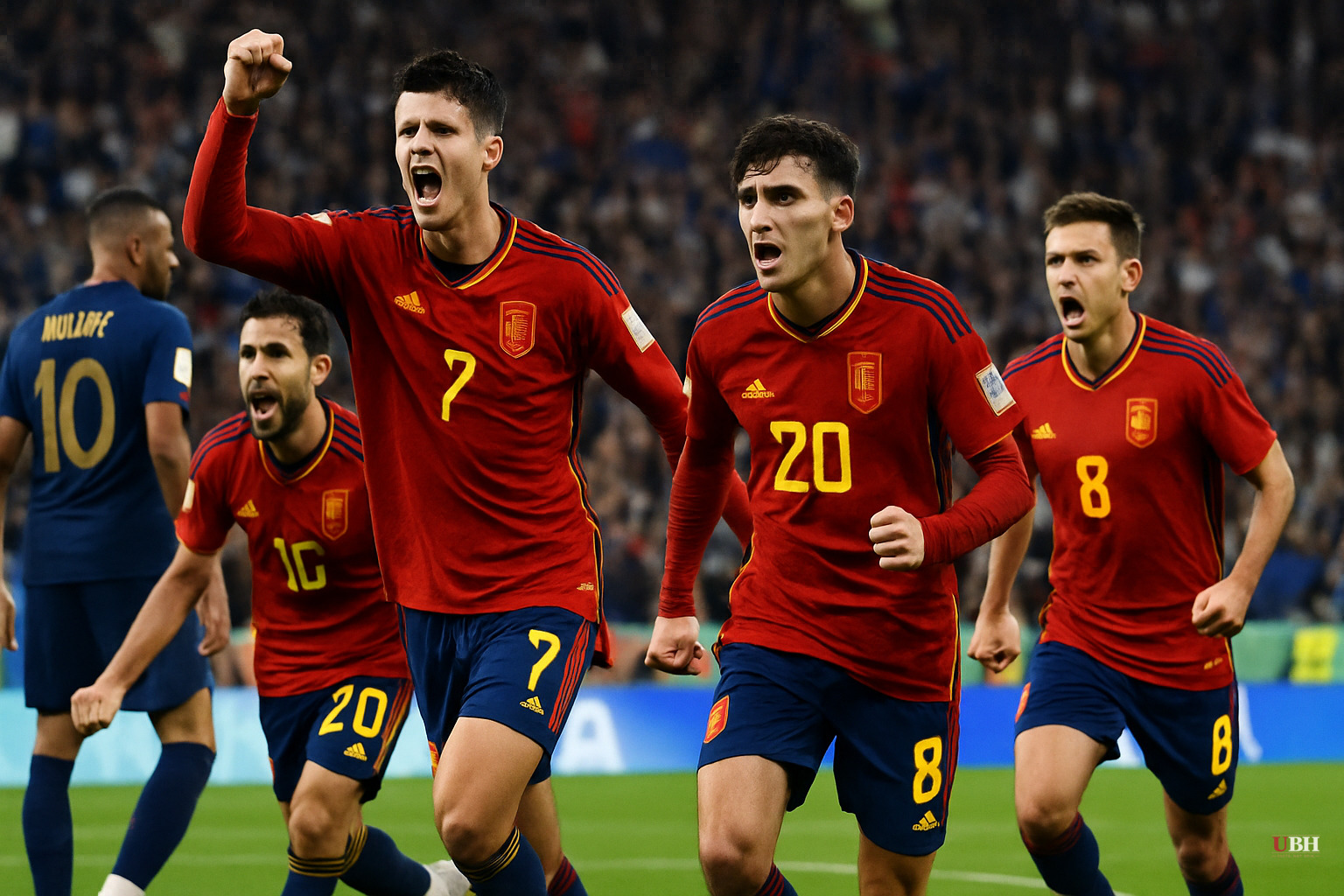
Spain is going to the World Cup final.
Spain beat France 2-0, according to AP News, ending Kylian Mbappe's tournament and setting up a wait to see who they'll face for the trophy. AP's coverage describes Spain shutting down France and Mbappe to advance with the 2-0 victory.
Spain now waits to learn its final opponent, which will be decided by the winner of the tournament's other semifinal.
A Tournament Built to Produce More Goals
While the on-field results are the headline, FIFA made a batch of rule changes ahead of the 2026 tournament specifically aimed at cutting down on time-wasting and diving, according to Reason's Eric Boehm.
The video-assistant referee can now flag simulation, meaning a player caught flopping can get carded even without the head referee spotting it live. Boehm pointed to a Swiss player who was ejected from a match specifically for flopping, a moment that went viral among American sports fans unfamiliar with the sport taking that kind of stand against diving.
Other tweaks: players receiving medical treatment on the field now have to sit out at least a minute in most cases, which removes the incentive to fake an injury just to run out the clock. Substituted players must leave the field within 10 seconds instead of strolling off for half a minute. Referees can also impose a five-second timer on goal kicks and throw-ins if they think a team is stalling.
Boehm's read, echoed by fan reaction he cited on social media, is that these changes are a direct answer to standard American complaints about soccer: too much flopping, too much clock-killing, not enough scoring. Whether the timing changes are the reason for more goals this tournament is unproven. Boehm himself says extra time in play "probably isn't why this World Cup has more goals, but it doesn't hurt either." He notes the tournament is averaging just under three goals per game — the most in over 50 years, according to beIN Sports — and that the group stage had 20 percent more goals per game than the 2022 group stage.
The Debate Over Deeper Rule Changes
University of Chicago law professor Richard Epstein has been pushing a more ambitious rewrite of soccer's rulebook, and it's sparked real debate among people who follow the sport closely. Epstein's core complaint, addressed in commentary from Reason, is that yellow and red card suspensions currently carry over from one match to the next, which he argues violates a basic principle of fairness by letting the fallout from one game contaminate the next.
His fix: handle fouls more like hockey, with a timed penalty box instead of a card that follows a player into their next match. He also wants red-card suspensions reviewed by a panel using clear standards before the next game, rather than upheld or overturned on what he calls vague reasoning.
Reason's own commentary on Epstein's proposal is split. It backs the card-reform idea, noting it would have mattered in a real case this tournament: a red card given to a player named Balogun, whose suspension was reviewed under criteria that struck the writer as inconsistent. Under Epstein's proposed review panel, that suspension might have been overturned.
But the commentary pushes back hard on Epstein's other two ideas: awarding two points for a run-of-play goal versus one point for a penalty kick, and gradually reducing the number of players on the field during overtime to force a result. The writer argues the two-points proposal would actually incentivize defenders to commit penalty fouls late in close games rather than risk conceding a two-point goal. Those proposals go further than anything FIFA has actually implemented or signaled it would consider, and they remain purely theoretical.
None of Epstein's proposals are official FIFA policy, and there's no indication FIFA is reviewing them. They're academic and commentary-driven, not something moving through FIFA's rulemaking process.
What's Next
Spain now waits in the final, needing only to see who wins the other semifinal to know its opponent for the title match.
Sources used for this briefing
16 links from 4 independent newsrooms (syndicated copies of the same report count once)
These are the sources it draws on, linked so you can verify.


