
30+ sources. Zero spin.
Unbiased news you can read, scroll, or listen to.
 health
Low Interest (2/10)
June 10, 2026 at 05:38 AM
health
Low Interest (2/10)
June 10, 2026 at 05:38 AM
NIH Political Influence Story Has No Usable Sources — Here's What We Know and Don't Know
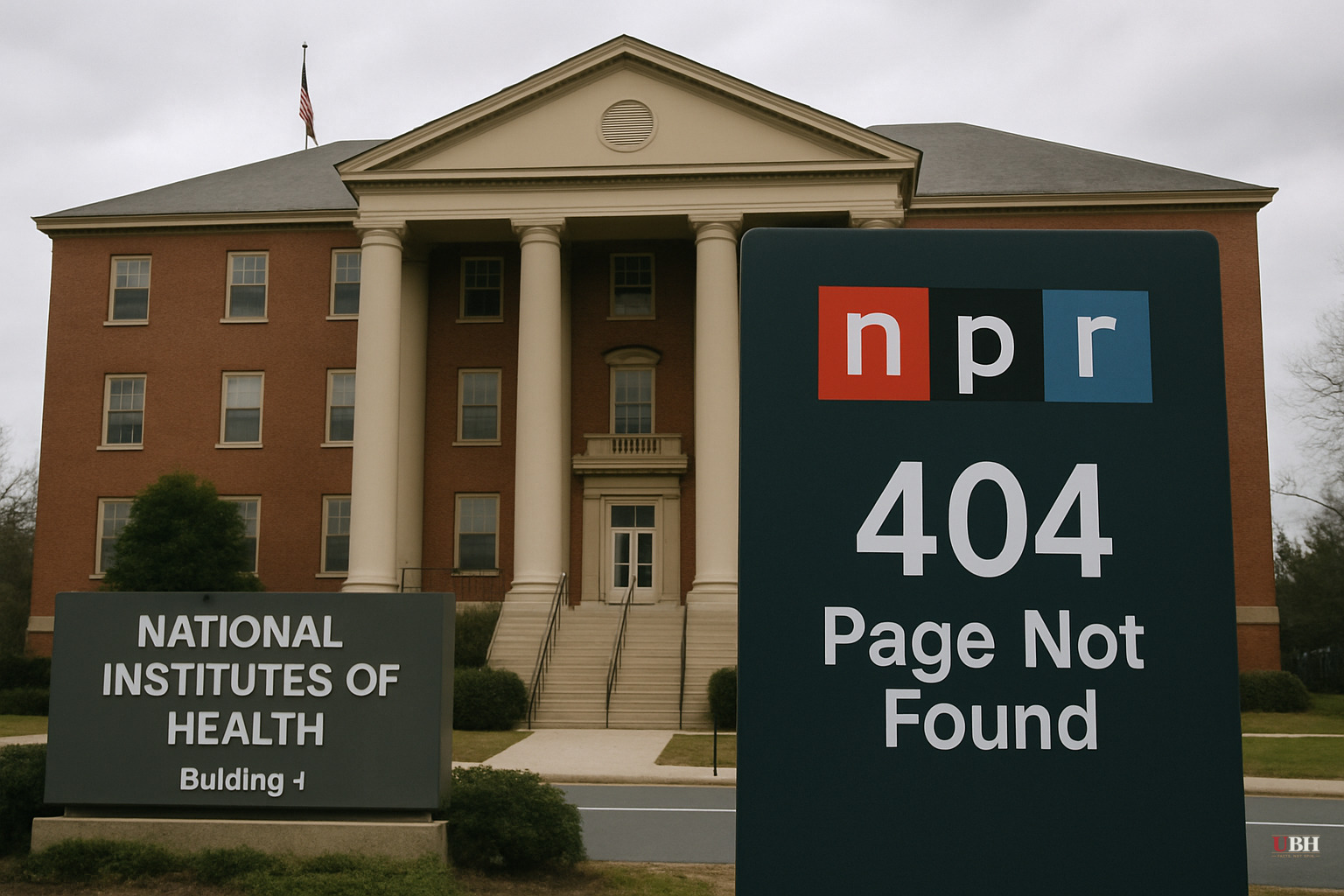
The Source Failed. The Story Didn't.
The source provided for this article — tagged as an NPR piece on political influence in NIH research decisions — returned a Page Not Found error. There is no article. No quotes. No named officials. No data.
What we can report is the publicly documented context surrounding NIH and political pressure as of June 10, 2026.
What the Documented Record Actually Shows
The National Institutes of Health, the federal government's primary biomedical research agency, has a $47 billion annual budget and funds roughly 300,000 researchers across more than 2,500 institutions, according to NIH's own published figures. With that scale of funding comes potential for both legitimate oversight and improper influence.
Since early 2025, NIH has been operating under significant administrative restructuring tied to the broader Department of Government Efficiency (DOGE) initiative under the Trump administration. Multiple grant terminations were reported by Science magazine and the journal Nature throughout 2025, with researchers at institutions including Harvard, Columbia, and Penn State publicly documenting funding cuts or freezes in specific research categories — particularly those involving diversity-focused health research and some areas of infectious disease study.
NIH Director Dr. Jay Bhattacharya, confirmed by the Senate in early 2025, has stated publicly that the agency's goal is to refocus research on scientific merit rather than ideological or identity-based criteria. Prioritizing scientific rigor over checkbox diversity metrics in grant allocation is a legitimate policy argument.
The Case FOR Concern
Critics raising alarms about political influence at NIH point to a specific mechanism: when a politically appointed director can terminate or redirect grants mid-cycle based on research topic categories — rather than peer-review outcomes — the independence of science may be compromised. Researchers at institutions like the University of California system have documented grant terminations that arrived without prior peer-review findings of inadequacy, according to reporting by Science and STAT News in 2025. If grant decisions are being made on the basis of whether a study's topic is politically inconvenient rather than whether the science is sound, that damages the integrity of the NIH process.
This concern applies regardless of political affiliation. A Republican-aligned NIH politicizing grants creates the same problem as a Democrat-aligned NIH doing so.
The Case AGAINST Panic
"Questions raised" is not a finding.
No investigation has been formally announced. No charges have been filed. No internal inspector general finding of improper influence has been publicly released as of June 10, 2026. The documented record shows policy changes — some of them aggressive and disputed — but policy change, even bad policy change, is not the same as illegal manipulation of science.
Bhattacharya and NIH leadership have consistently stated that grant terminations reflect a return to scientifically rigorous, non-ideological standards. Whether you agree with that framing or not, it is their on-record position.
What Mainstream Coverage Gets Wrong
Left-leaning outlets tend to treat any restructuring of NIH as inherently corrupt because the restructuring comes from a Republican administration.
Right-leaning outlets sometimes dismiss all concern about NIH independence as partisan whining from researchers who lost funding they were entitled to.
The real question — which neither side covers well — is procedural: Are grant terminations following documented, transparent, peer-review-based criteria? Or are topic categories being blacklisted by administrative fiat without scientific review? That's auditable. That's answerable. And that's the question journalists should be pressing NIH to answer on the record.
What We Know and Don't Know
What's documented: NIH is undergoing real restructuring, some grants have been terminated outside normal peer-review timelines, NIH leadership says it's about scientific merit, and critics say it's about politics. No formal investigation exists as of today.
When there are actual named officials, actual documents, and actual findings — those will be reported. Until then, unsubstantiated claims remain placeholder commentary, not news.