
Unbiased headlines. Facts, not spin.
Unbiased Headlines is an independently owned news organization. We bring you the facts, not opinions, written fresh from 110+ named sources. Sources linked so you can verify it yourself.
 sports
Notable (6/10)
·
sports
Notable (6/10)
·
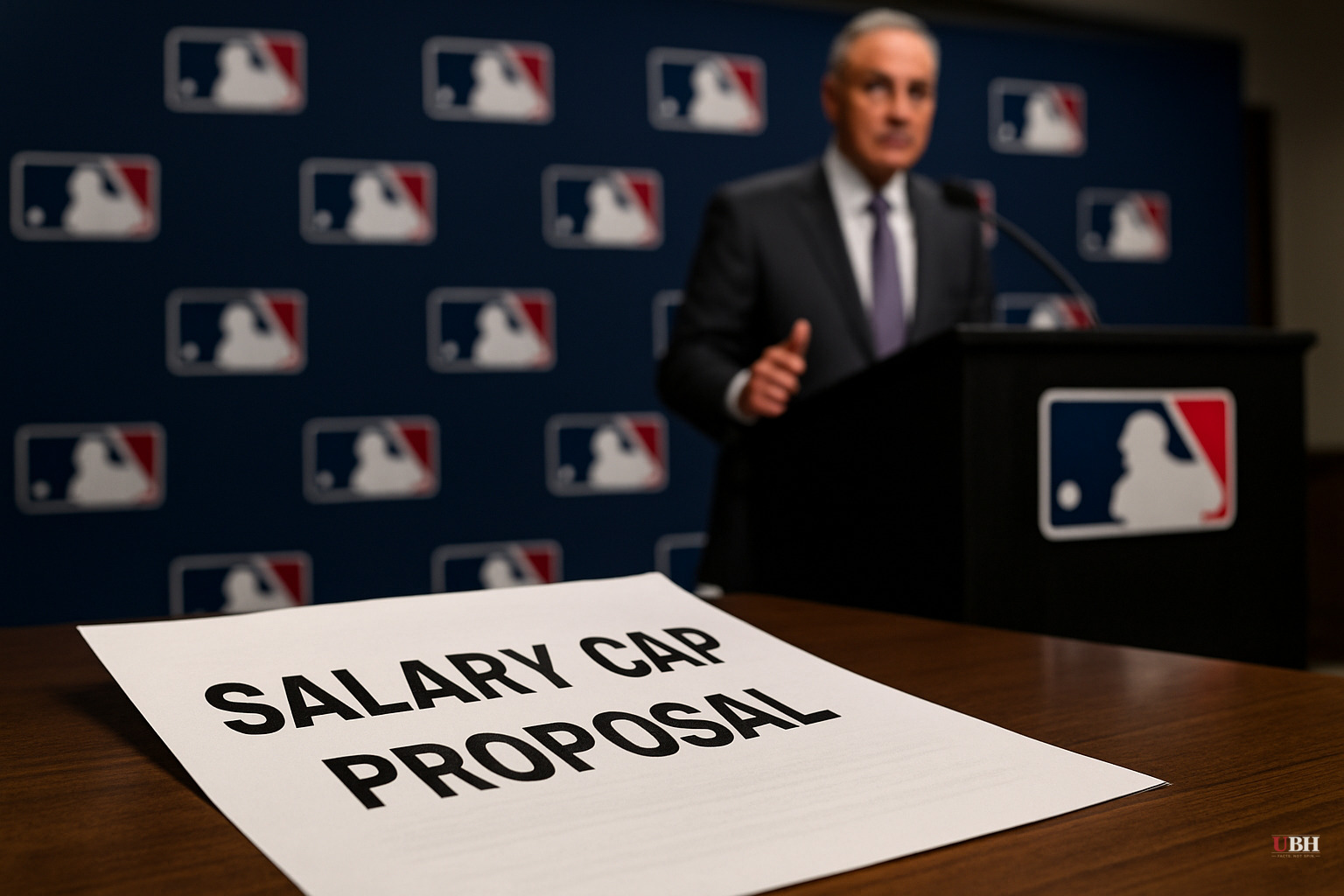
MLB's Real All-Star Story: A Salary Cap Fight That Could Cancel the 2027 Season
The games go on. The real fight is somewhere else.
Major League Baseball's second half is set to kick off Friday with the usual stuff: pitching probables, bullpen shuffling, injury updates. The Seattle Mariners, coming off a 1-5 road swing through Florida, are juggling six healthy starters and don't yet know who pitches when, according to The Spokesman-Review. Giancarlo Stanton, once again, has been cleared to run, a fact the New York Post couldn't resist mocking given his track record of getting hurt jogging to first base.
None of that is the story that matters this week.
At the All-Star festivities in Philadelphia, players including Paul Skenes, Juan Soto, Bryce Harper and Mike Trout spent as much time talking about labor economics as they did about baseball, according to reporting carried by The Vindicator. Baseball's collective bargaining agreement expires December 1. MLB is expected to lock out players immediately after. The real deadline that matters is late February or early March, when the league would have to decide whether to delay opening day 2027.
What the owners actually proposed
For the first time since players beat back a cap proposal with a 7 1/2-month strike in 1994-95, one that canceled the World Series for the first time since 1904, MLB owners are pushing a salary cap again. Commissioner Rob Manfred says it's necessary to fix payroll disparity across the league.
The numbers on the table: a 2027 cap of $245.3 million in luxury-tax payroll, including $20.1 million earmarked for benefits and a pre-arbitration bonus pool. There would also be a payroll floor of $171.2 million, meaning cheap teams would be forced to spend more, not just rich teams forced to spend less.
The floor detail matters. A hard cap paired with a hard floor is a different animal than a pure cost-cutting mechanism. It would, in theory, push bottom-feeder franchises to actually field competitive rosters instead of pocketing revenue-sharing checks and calling it a season. Small-market fans have legitimate reason to want that enforced.
But the Los Angeles Dodgers opened 2026 with a $415.2 million payroll, according to figures cited in the Vindicator report. That's nearly $170 million over the proposed cap. MLB has not said how it would phase a team like the Dodgers down to compliance, which is the single biggest unresolved question in this entire negotiation.
Players are not budging
Soto, who signed a $765 million, 15-year deal with the Mets in free agency after the 2024 season, said his own contract would have been capped at $265 million over six years under MLB's plan. His response, on the record: "Yeah, that sucks. It shouldn't be there."
Trout, in year eight of his $426.5 million, 12-year deal with the Angels, said the intent is obvious. "It's trying to minimize the years and obviously the totals. For sure, we see that," he said, adding, "I think baseball's in a good spot right now and we can't mess this up."
Harper, in year eight of a $330 million Phillies contract, went further, invoking the union's history dating back to Curt Flood challenging the reserve clause in the 1970s. "The opportunity for players to get paid is what this is all about," Harper said. "We owe it to the guys that have come before us to do the same thing."
Skenes, the Pirates ace and a member of the union's eight-man negotiating committee, was blunter about where this could end up: "Both sides kind of have their line that they're not going to cross. Whether that results in missing games or missing a season, we'll see."
The other fight nobody's talking about
Buried under the cap fight is a separate MLB proposal that would ban players from signing until age 20, specifically Sept. 1 of their signing year and two years removed from their high school graduating class.
Sources used for this briefing
4 links from 4 independent newsrooms (syndicated copies of the same report count once)
These are the sources it draws on, linked so you can verify.


