
Unbiased headlines. Facts, not spin.
Unbiased Headlines is an independently owned news organization. We bring you the facts, not opinions, written fresh from 110+ named sources. Sources linked so you can verify it yourself.
 sports
Notable (5/10)
sports
Notable (5/10)
FIFA's Infantino Says 64-Team World Cup for 2030 Will Be Reviewed by Committees
The Announcement
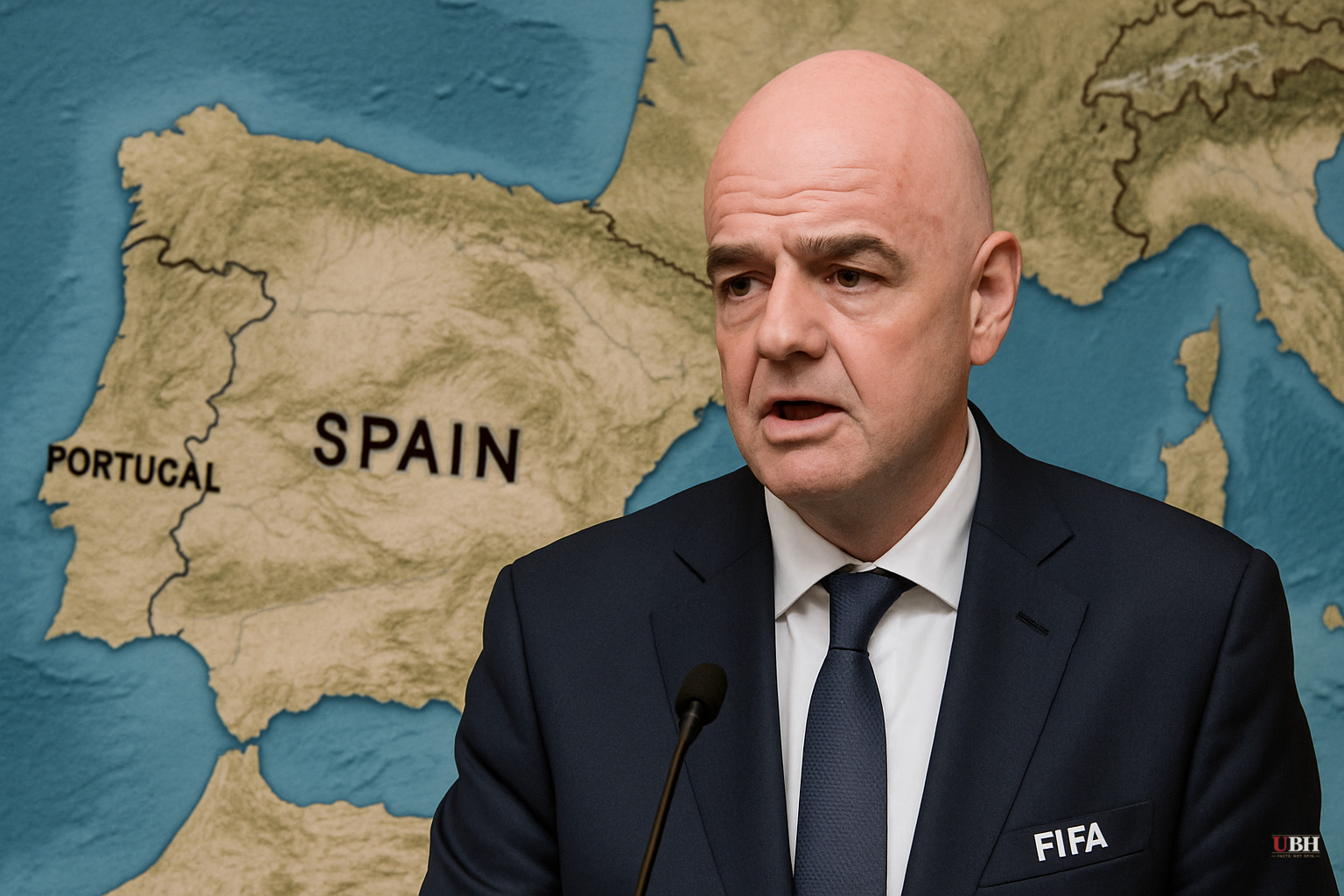
Since FIFA President Gianni Infantino told Swiss broadcaster Bluewin on Sunday, July 12, that a 64-team World Cup will be examined by FIFA's committees after the current tournament wraps, the idea has moved from rumor to an actual item on the federation's agenda. Infantino made the comments as the 2026 tournament, hosted across the U.S., Canada and Mexico, heads toward its closing weekend, with the France-Spain semifinal set for Tuesday, July 14 in Arlington, Texas.
Infantino called the jump from 32 to 48 teams this year "100 percent" the right call and a "huge success." According to Al Jazeera's translation of his Bluewin interview, he pointed to nine of ten African teams reaching the knockout stage, up from five African teams total at the last World Cup, as proof that widening the field doesn't wreck competitive quality.
Why FIFA Wants More Teams
Infantino's argument is straightforward: give more countries a shot, and more countries stay invested in developing the sport. "If you don't give smaller countries a chance to participate in the World Cup, they'll lack the incentive to keep improving," he said, per Al Jazeera.
This year's expanded field produced real drama. Cape Verde, a nation of roughly 500,000 people, advanced out of the group stage and pushed Argentina to the brink in the knockout rounds, a storyline Fox News highlighted as evidence the 48-team format already delivered on its promise. The U.S.-Belgium match also became the most-watched English-language soccer broadcast in American history, according to Fox News, underscoring the commercial upside FIFA is chasing.
Data analyst Nate Silver ran the numbers on what a 64-team field would have looked like in 2026, and found that of the 16 hypothetical additional qualifiers, seven would have ranked in the top 48 teams globally by FIFA's own rankings, according to Forbes. That suggests the competitive drop-off from adding more teams wouldn't be as steep as skeptics assume.
The Case Against It
The strongest pushback isn't about talent, it's about logistics and prestige. Forbes lays out the practical problem: a 64-team format built on 16 groups of four, with only the top two advancing, would push the tournament from 104 matches this year to roughly 128. That's nearly double the 64-match tournaments that ran from 1998 through 2022.
More matches means more strain on players who have to return to club seasons almost immediately after the World Cup ends, a concern NBC Palm Springs flagged directly. It also means more scheduling headaches, including the kind of awkward late-night or early-morning kickoff times that already frustrated fans and broadcasters during group play this year.
There's also a hosting problem. A 128-match tournament would be too big for any single country to run alone, according to Forbes, making co-hosting arrangements close to mandatory going forward. That's a real shift in what the World Cup has traditionally been, and it's a legitimate concern for fans who value the idea of one nation carrying the full weight and spectacle of hosting.
Critics also worry the tournament's prestige takes a hit if qualifying gets too easy. Part of what makes the World Cup matter is that most of the planet's national teams don't make it. Double the field twice in eight years and you risk turning the group stage into a formality before the tournament that counts even starts.
Where the Push Is Coming From
The loudest supporter of a 64-team format for 2030 is CONMEBOL, South America's governing body, according to both Al Jazeera and NBC Palm Springs. The timing argument is emotional as much as practical: 2030 marks the World Cup's centennial, and CONMEBOL wants a bigger stage to mark it. That tournament is set to be co-hosted by Spain, Portugal and Morocco, with a handful of ceremonial opening matches played in Argentina, Uruguay and Paraguay, the site of the original 1930 World Cup.
Fox News framed the story partly around whether the U.S. should become soccer's permanent World Cup host given this year's commercial success, citing Major League Soccer founder Alan Rothenberg's optimism about the sport's American growth. That's a separate question from the 64-team debate, and none of the other sources treat permanent U.S. hosting as something FIFA is actually considering. It's speculation layered onto the expansion story, not a reported FIFA position.
What Happens Next
No formal proposal exists yet. Infantino said the matter goes to FIFA's "relevant committees" once the 2026 tournament concludes, according to both Al Jazeera and NBC Palm Springs, and no timeline for a decision has been set. The open question is whether FIFA moves fast enough to implement a 64-team format by 2030, or whether the logistics push any real change further down the road toward 2034 or beyond.
Sources used for this briefing
4 links from 4 independent newsrooms (syndicated copies of the same report count once)
These are the sources it draws on, linked so you can verify.


