
Unbiased headlines. Facts, not spin.
Unbiased Headlines is an independently owned news organization. We bring you the facts, not opinions, written fresh from 110+ named sources. Sources linked so you can verify it yourself.
 sports
Notable (5/10)
sports
Notable (5/10)
Egypt Files FIFA Protest Over VAR Calls in World Cup Loss to Argentina, Data Shows Uneven Pattern
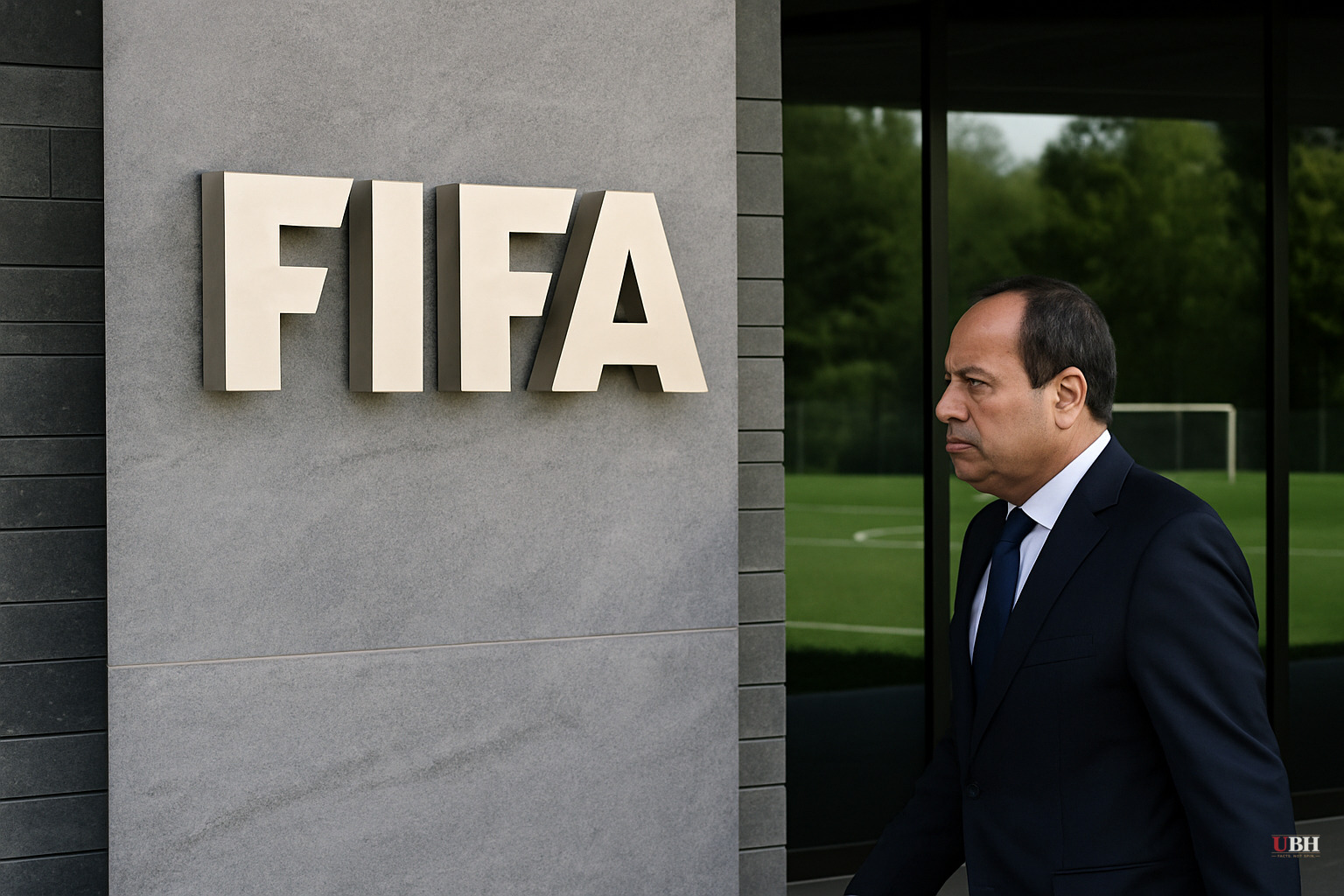
Egypt is out of the 2026 World Cup, and its soccer federation isn't going quietly.
The Egyptian Football Association filed a formal protest with FIFA after Egypt blew a 2-0 lead and lost 3-2 to Argentina in the Round of 16, according to Wired. The federation says the referee and VAR system got calls wrong that changed the outcome, and it wants an investigation.
In a statement posted on social media, the Egyptian FA said it "cannot remain silent regarding the refereeing decisions observed during the match against Argentina," per Wired's reporting. Egypt's coach and players separately called the tournament "rigged" to favor the defending champions, according to sports.ndtv.
FIFA has not announced any findings, disciplinary action, or independent review results tied to Egypt's complaint. No evidence has surfaced showing a referee or VAR official deliberately favored Argentina. What exists instead is a pattern in the data that's fueling the suspicion.
What the Numbers Actually Show
Northeastern Global News compiled VAR intervention data through the Round of 16, and sports.ndtv reported the breakdown. Argentina ranked second among teams that benefited most from VAR calls. More strikingly, not a single VAR intervention went against Argentina through that stage of the tournament.
Co-host Mexico topped the list of beneficiaries. On the other end, Croatia ranked dead last, with zero VAR decisions going in its favor for the entire tournament, according to that same data.
Croatia's tournament ended on a VAR reversal too. The LA Times detailed how a Croatian goal against Portugal was disallowed more than two and a half minutes after it was originally awarded, when a semi-automated offside sensor detected the ball had brushed a teammate's hair before reaching the scorer. The contact was invisible to the naked eye. The technology caught it anyway.
A system precise enough to detect hair-width contact was applied with wildly uneven outcomes across different teams.
The Fair Question Egypt and Skeptics Are Raising
If VAR interventions cluster this heavily around a handful of teams, in either direction, that's worth investigating even without proof of intent. A system marketed as neutral and object-based shouldn't produce outcomes this lopsided by chance alone, especially in a tournament with dozens of matches and hundreds of borderline calls.
sports.ndtv also flagged a specific incident feeding the suspicion: Lionel Messi avoided even a yellow card for a studs-up challenge against Algeria that many observers believed warranted a red. Separately, Switzerland's Breel Embolo was sent off against Argentina on a second yellow card that a commentary piece published by CNA called into question as unnecessary.
None of that proves collusion. It proves the pattern looks bad, and FIFA hasn't offered a public data-driven rebuttal.
The Counterargument: Judgment Calls, Not Conspiracy
Three academics writing in a commentary for CNA argued the deeper problem isn't corruption, it's that soccer's rules were never built for machine-level precision. Fouls, handballs, and penalty judgment calls involve discretion that technology can't fully remove. Pierluigi Collina, FIFA's head of referees, has said VAR reviewers still have to adjust their standard match by match, per that same CNA piece.
Mark Geiger, a former MLS referee who helped implement VAR in that league, told the LA Times the system's original mandate was narrow: catch "super-egregious errors," not adjudicate every borderline call. "Minimum interference but maximum benefit" was the mantra, he said. That mission has clearly drifted. The World Cup saw more than 100 VAR interventions through the Round of 16 alone, according to the LA Times.
FIFA's process is opaque enough that lopsided outcomes are hard to explain away with data FIFA itself hasn't released in full. There's no verified evidence in these sources that any official intentionally rigged a match for Argentina, Mexico, or anyone else.
What Happens Next
FIFA has not said whether it will formally respond to Egypt's protest or release its own intervention statistics for outside review. Until it does, federations like Egypt's are left arguing pattern over proof, and fans are left deciding whether a system built to remove doubt has instead multiplied it.
Sources used for this briefing
4 links from 4 independent newsrooms (syndicated copies of the same report count once)
These are the sources it draws on, linked so you can verify.


