
Unbiased headlines. Facts, not spin.
Unbiased Headlines is an independently owned news organization. We bring you the facts, not opinions, written fresh from 110+ named sources. Sources linked so you can verify it yourself.
 tech
Major Story (7/10)
Event date: November 13, 2026 ·
Chinese-Speaking Hackers Used Open-Source AI Framework With DeepSeek and GLM to Breach 10 of 19 Targets, Unit 42 Says
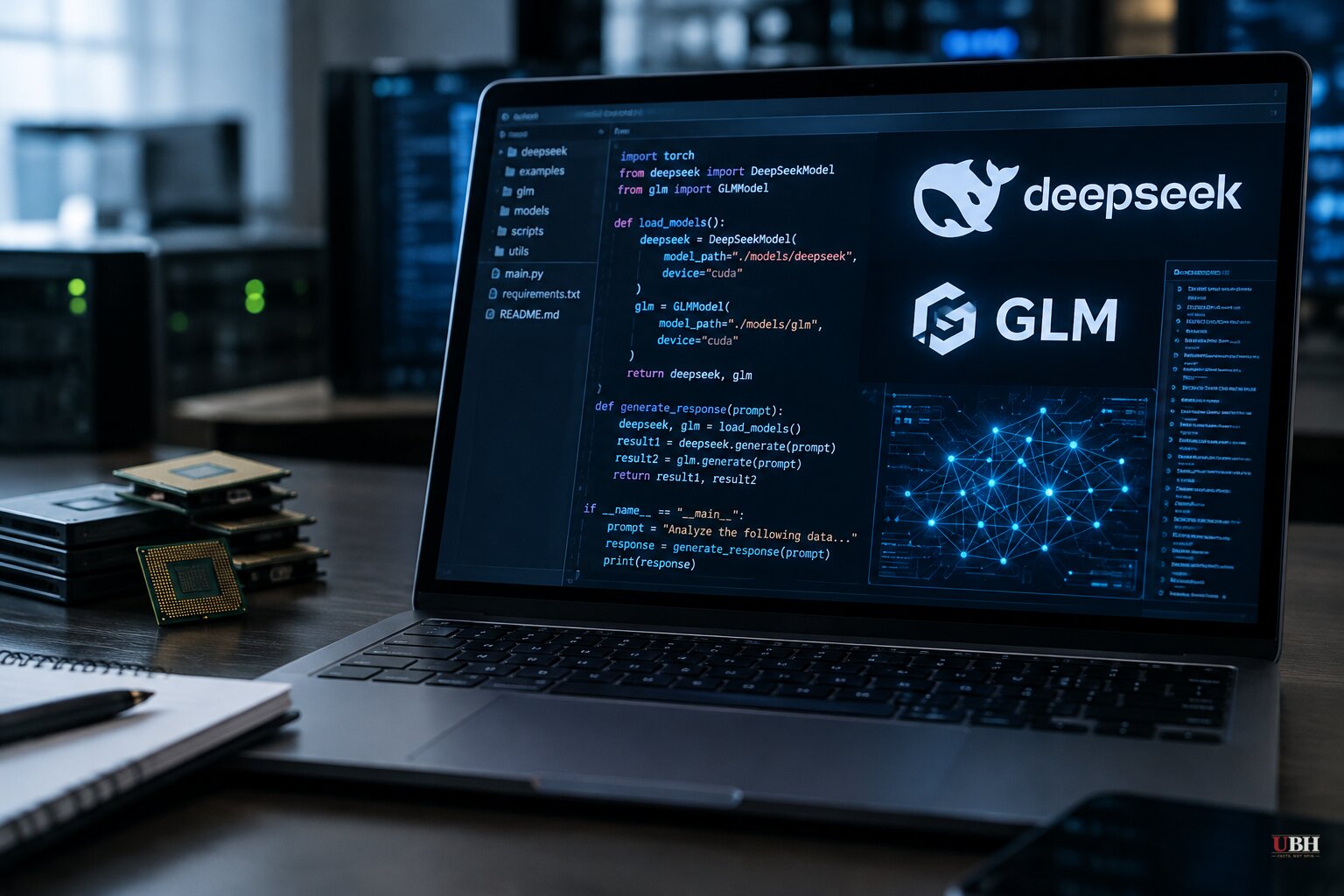
Since Palo Alto Networks' Unit 42 published its findings on Nov. 12, the details of a campaign it tracks as CL-STA-1238 have filled in a picture of how little skill an AI-run intrusion now requires.
According to Unit 42, Chinese-speaking attackers used Cairn, an open-source AI penetration-testing framework, to run 25 operations against at least 19 organizations between August and September 2026. They gained unauthorized access or pulled data at 10 of them.
Unit 42 describes it as the second documented case of China-linked actors using Cairn for automation.
How the attack worked
The operators fed Cairn a target's root domain and a one-line goal, often written in Chinese. One instruction told it to breach the target as fast as possible. The framework then ran a loop on its own: the model reviews confirmed findings, picks one next action, executes it and logs the result.
It stops when the goal is met, options run out, or the operator steps in. Individual operations ran from 20 minutes to more than 50 hours.
The attackers paired Cairn with two Chinese models. Thirteen operations used Zhipu GLM 5.2, eight used DeepSeek V4 Flash and four used DeepSeek V4 Pro. Unit 42 says the operators appear to have compared the models, switching to Pro for repeat attempts against targets that held up against Flash.
The customized Cairn fork ran from a Hong Kong server and loaded an exploitation pack called "AIScan Runner Skills" that the public project does not include.
Guardrails did not stop it
Cairn's stock prompts already tell the model never to refuse a task. The attackers added a Chinese-language preamble claiming every job was authorized security testing. Each operation also generated an AUTHORIZATION.md file declaring the work client-approved.
Unit 42 says neither GLM nor DeepSeek refused.
"Cairn and other similar tooling enable automation, which means threat actors can hit more targets faster," said Andy Piazza, senior director of threat intelligence at Unit 42. "It also allows them to carry out technical tasks without having to learn the underlying technologies."
Who was hit
Unit 42 says seven targets were in the semiconductor and advanced-manufacturing supply chain, three were in U.S. defense or defense policy, and four were human-rights or civil-society groups. Those included a space technology company, a policy think tank, a Canadian human-rights body and a U.S. teachers' union.
The results varied by target:
- Industry standards body: Password spraying produced dozens of valid credentials. The attackers overwrote a live standards-ballot document through a cloud storage location that accepted writes without authentication. Other flaws let them log in as arbitrary customers with control over meeting and voting functions.
- U.S. teachers' union: A bypass in account creation let the attackers mint valid sessions. The framework logged access to more than one million member records, roughly 31,000 CRM contacts and staff password hashes.
- Semiconductor company: A brute-forced production credential led to new administrator accounts and a persistent API token.
- Defense-policy program: An open registration endpoint exposed about 500 user records, some with .mil and .gov addresses.
Unit 42 believes one operator or a small team ran everything, including simultaneous intrusion attempts against 19 organizations inside two weeks.
Attribution is moderate-confidence
Unit 42 says it assesses "with moderate confidence" that the activity is China-nexus intelligence collection. The attribution rests on Chinese-language artifacts, exclusive use of Chinese AI models, and targeting that fits established Chinese intelligence priorities. It is not definitive evidence identifying a government sponsor.
Unit 42 is also a vendor. Its report points readers to Palo Alto Networks products and services, including a continuous AI-defense offering.
A separate campaign, and a dispute over blame
In a separate China-related case, Arctic Wolf researchers found attackers using AntiFox, an Alibaba-hosted pen-testing framework, to steal Amazon Web Services credentials. At least two organizations were confirmed compromised, and researchers suspect six more.
"At this stage, the activity appears opportunistic rather than industry-specific," said Justin Moore, Arctic Wolf's director of adversary operations, citing AI-enabled tooling used to raise the speed and scale of attacks on exposed web infrastructure and previously compromised credentials.
An Amazon spokesperson said AWS services were not specifically compromised and operated as designed. According to the spokesperson, the attackers used credentials taken from compromised applications to reach AWS accounts. Amazon's advice: least-privilege permissions, requiring Instance Metadata Service on EC2 instances, and keeping long-term access keys out of application configurations.
Cybersecurity Dive reports that threat groups have also used a separate framework, Artex, against hundreds of companies globally over the past two months. Check Point Research separately flagged a DeepSeek-powered AI agent used by a group called Silent Lynx against Central Asian governments.
What remains open
Unit 42 has not named the victim organizations beyond sector descriptions, and the report gives no count for the roughly five targets outside the three named sector groups. Whether a state directed the work, or a contractor or independent operator did, is unresolved. The report's own attribution stops at moderate confidence.
Sources used for this briefing
7 links from 7 independent newsrooms (syndicated copies of the same report count once)
These are the sources it draws on, linked so you can verify.


