
Unbiased headlines. Facts, not spin.
Every story is an unbiased news briefing written from 110+ sources across the spectrum — sources linked so you can verify it yourself.
 defense
Major Story (7/10)
May 15, 2026 at 02:31 AM
defense
Major Story (7/10)
May 15, 2026 at 02:31 AM
Xi Warns Trump: Taiwan Is the Tripwire. Here's What That Actually Means.
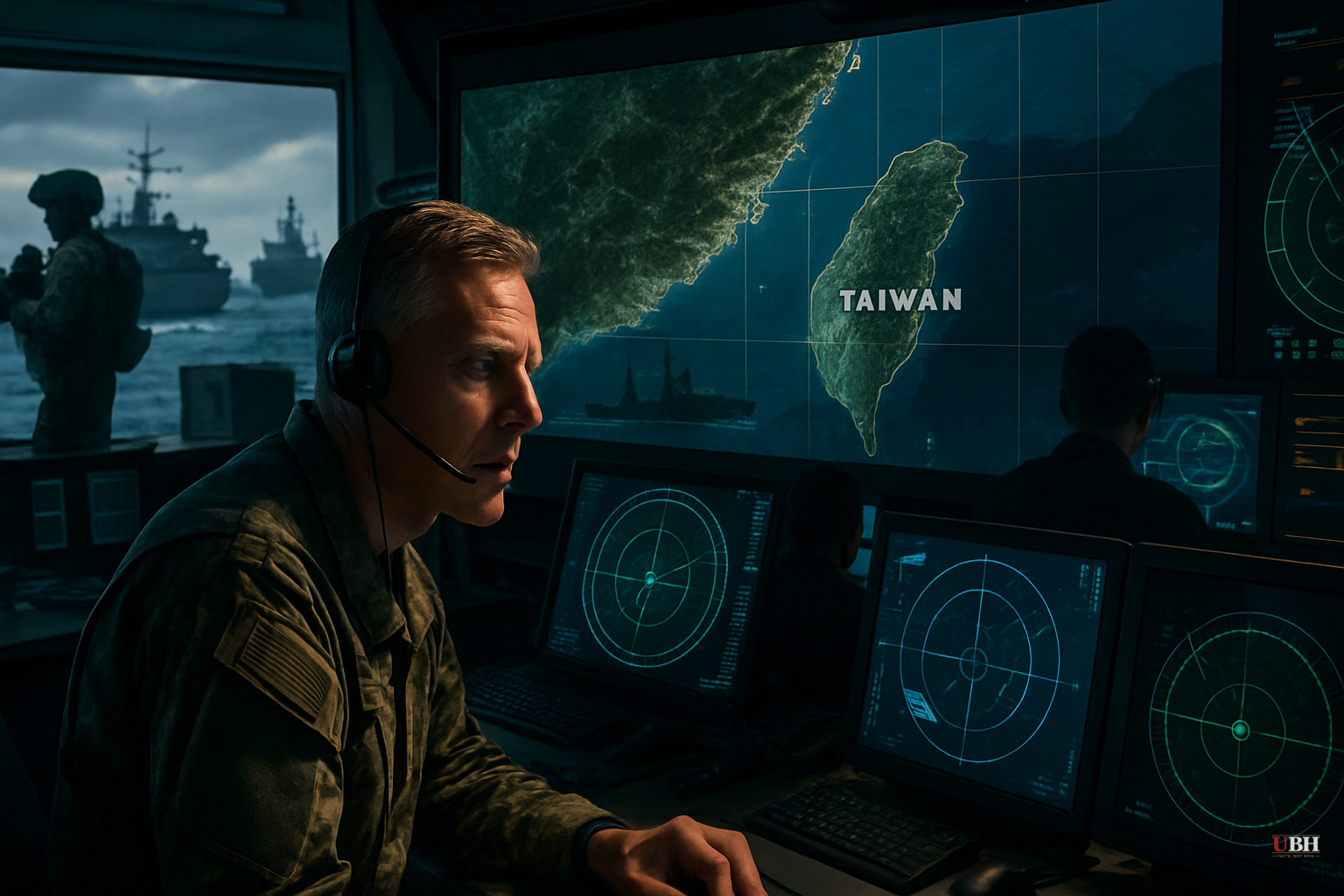
Xi Said It Out Loud. Most Coverage Buried the Lede.
On May 14, 2026, President Trump landed in Beijing for a choreographed summit complete with honor guards and children waving flags. Nice optics. Then Xi Jinping dropped the actual news.
"If it is handled properly, the bilateral relationship will enjoy overall stability," Xi told Trump, according to NPR. "Otherwise, the two countries will have clashes and even conflicts, putting the entire relationship in great jeopardy."
This was no diplomatic boilerplate. It was a warning.
Xi called Taiwan "the most important issue" between the U.S. and China. He said "'Taiwan independence' and cross-Strait peace are as irreconcilable as fire and water." He told Trump the U.S. "must exercise extra caution" on Taiwan.
Translation: back off, or we collide.
How We Got Here — The 75-Year Setup
Cable news coverage often skips straight to the tension without explaining why it exists. The short version matters.
China's civil war ended in 1949. The Communists, led by Mao Zedong, won the mainland. The Nationalists, led by Chiang Kai-shek, retreated to Taiwan with roughly two million troops and supporters, according to CSIS. Both sides claimed to be the legitimate government of all of China.
The U.S. backed the Nationalists. When the Korean War broke out in 1950, President Truman dispatched the Seventh Fleet to the Taiwan Strait — essentially putting American naval power between the two sides. That intervention locked in a military standoff that has never been formally resolved.
The People's Republic of China has governed the mainland since 1949. It has never governed Taiwan. Not for a single day. But Beijing insists Taiwan is a "renegade province" that must be "reunified" with the mainland — by force if necessary, according to the Council on Foreign Relations.
Taiwan today is a functioning democracy of 23 million people with its own elected government, military, and economy. It makes roughly 90% of the world's most advanced semiconductors. The entire global tech supply chain runs through it.
The U.S. Position: Deliberately Vague by Design
Washington's official stance is called "strategic ambiguity" — the U.S. acknowledges Beijing's claim that Taiwan is part of China without endorsing it, sells Taiwan weapons, and refuses to say definitively whether it would militarily defend the island if China attacked.
That ambiguity has kept the peace for 75 years. Or it has just delayed the reckoning. Analysts disagree on which.
Trump's second term has pursued an aggressive strategy on both ends. His administration levied tariffs on both China AND Taiwan, while simultaneously pursuing an $11 billion arms deal with Taipei, according to CFR. Beijing disapproves of both. That's a tricky needle to thread — economically squeezing your ally while arming them against your rival.
China Is NOT Bluffing. The Military Math Has Shifted.
In December 2025, China conducted its largest military exercises around Taiwan since 2022, according to CFR. These weren't symbolic. The People's Liberation Army has spent two decades specifically building the capability to blockade or invade Taiwan.
The Wall Street Journal's review of Defending Taiwan makes the case plainly: supporting Taiwan's security is vital not just for the island but for the entire rules-based international order. If China takes Taiwan by force and faces no serious consequence, every U.S. security guarantee in the Pacific becomes worthless overnight. Japan, South Korea, the Philippines — they're all watching.
The WSJ also raised the "Thucydides Trap" — the historical pattern where a rising power and an established power collide. Xi likes this framing because he believes China is rising and America is declining. The counterargument: Xi might be miscalculating how much fight the U.S. still has. That debate isn't settled. But Xi's confidence is real, and his timeline is getting shorter.
What Mainstream Media Is Getting Wrong
NPR's coverage of the Beijing summit was straightforward on the facts but soft on the stakes. Describing Xi's warning as part of a choreographed diplomatic event implies it's routine. It wasn't.
Conservative outlets, meanwhile, tend to frame this as purely a Biden-era failure now being cleaned up by Trump. The military buildup across the strait accelerated across multiple administrations — Bush, Obama, Trump's first term, Biden, and now Trump's second. This isn't a party problem. It's a 75-year structural problem that every administration has managed and none has solved.
The window to deter a Chinese move on Taiwan is narrowing, and the U.S. is simultaneously trying to negotiate trade deals, extract itself from other conflicts, and hold a credible defense posture in the Pacific — all at once.
What This Means for Regular Americans
If you think Taiwan is someone else's problem, consider this: a Chinese blockade of Taiwan would likely crash global semiconductor supply within months. Your car, your phone, your hospital's equipment — all of it depends on chips that come through that strait.
A hot war in the Taiwan Strait would be unlike anything the U.S. has fought since World War II. The costs would be measured in thousands of American lives, trillions of dollars, and a global economic collapse that makes 2008 look like a correction.
Xi Jinping flew no trial balloons in Beijing. He said what he meant.
Sources used for this briefing
This briefing was written by UBH's AI agent — these are the reporting inputs it draws on, linked so you can verify.


