
Unbiased headlines. Facts, not spin.
Every story is an unbiased news briefing written from 110+ sources across the spectrum — sources linked so you can verify it yourself.
 defense
Major Story (7/10)
May 15, 2026 at 08:21 AM
defense
Major Story (7/10)
May 15, 2026 at 08:21 AM
Xi Jinping Asked Trump Directly in Beijing: Can We Avoid the Thucydides Trap?
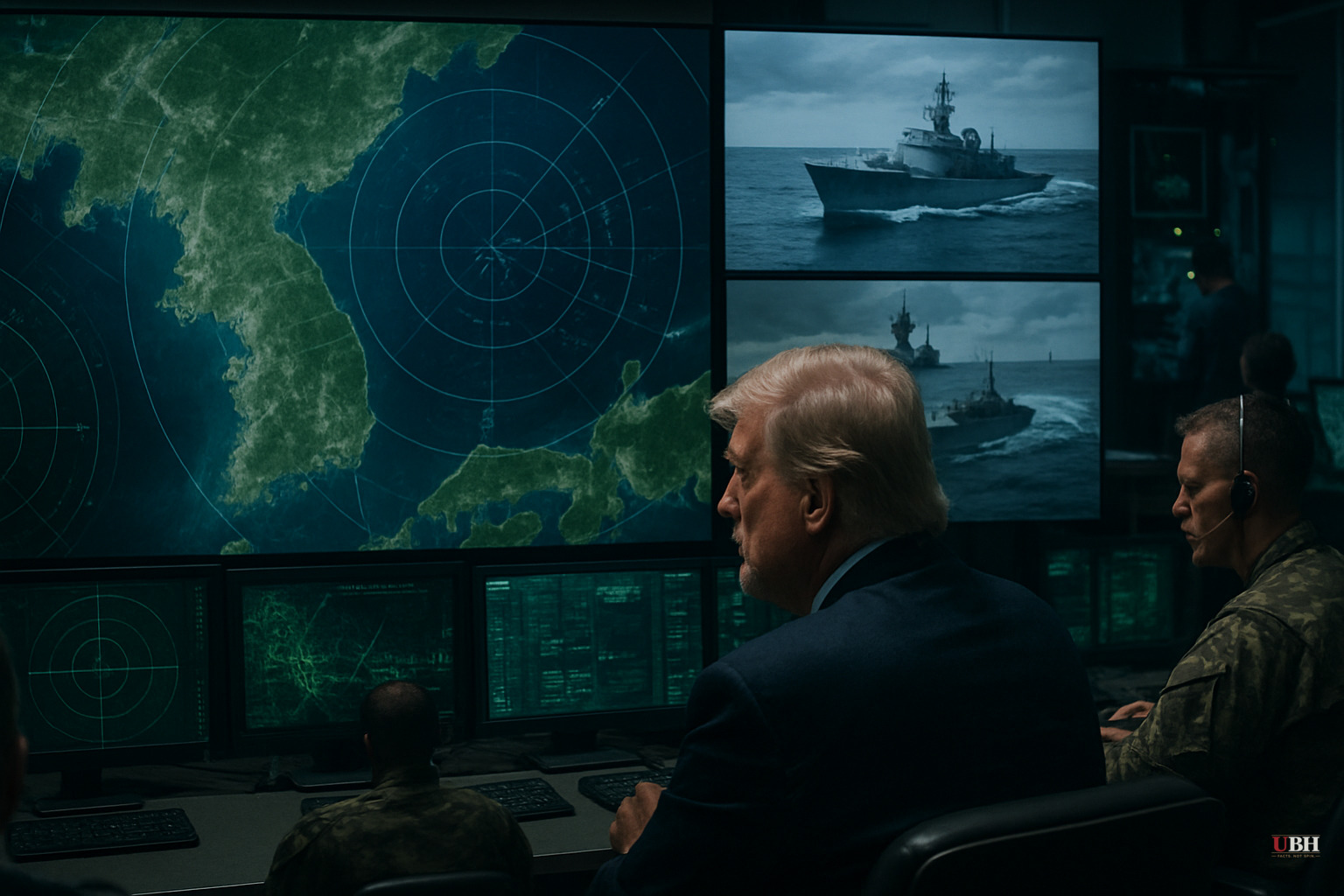
Xi Raised It. Trump Was There.
On May 14, 2026, U.S. President Donald Trump sat across from Chinese President Xi Jinping at the Great Hall of the People in Beijing. According to Modern Diplomacy, citing Kyodo via Reuters Connect, Xi directly asked Trump whether the two countries could avoid what scholars call the "Thucydides Trap."
The leader of China — a man who does not make small talk — used a specific academic term in a direct appeal to the American president. This appears to be deliberate signaling.
What the Thucydides Trap Actually Is
The term was coined by Harvard political scientist Graham Allison around 2011 and expanded in his 2017 book Destined for War, according to Wikipedia's entry on the subject. The concept draws from ancient Greek historian Thucydides, who wrote that it was Athens's rise — and Sparta's fear of it — that made the Peloponnesian War effectively inevitable.
Allison's research team at Harvard's Belfer Center studied 16 historical cases where a rising power challenged a ruling power. Twelve of the 16 ended in war. That's a 75% failure rate for peaceful transition.
The framework applies directly to China and the United States. China's military modernization, economic expansion, and push for dominance in semiconductors, AI, and Indo-Pacific sea lanes have generated exactly the kind of structural anxiety the theory describes, according to analysis from inanjaya.wordpress and Modern Diplomacy.
Why Xi's Question Matters Now
Xi did not ask this question in a think-tank paper or a UN speech. He asked it to Trump's face, in Beijing, on May 14, 2026. That's a political move.
Beijing is under real pressure. Tariffs have bitten. The semiconductor blockade is squeezing Chinese tech ambitions. Taiwan remains the live wire. Xi needs room to maneuver domestically and internationally — and framing the rivalry as a historical trap both sides should consciously avoid gives him rhetorical cover while also genuinely signaling a desire to slow the escalation.
The question is whether Washington has any tools ready to respond — or whether it's simply improvising.
The Financial Weapon Congress Is Ignoring
The Wall Street Journal published an opinion piece arguing that currency swap lines are an underused but powerful foreign-policy tool — and that current U.S. law limits their availability.
Swap lines let the Federal Reserve extend dollar liquidity to foreign central banks. They're not charity — they're strategic leverage. Countries that depend on dollar swap access have strong incentives to stay diplomatically aligned with Washington. Denying or extending that access is a non-military pressure tool that doesn't risk soldiers' lives.
Congress has not acted on this. The legal restrictions remain in place. Meanwhile the U.S. is in a geopolitical standoff with China that involves economics just as much as missiles.
What the Media Is Getting Wrong
Most mainstream outlets are covering the Beijing summit as either a diplomatic win (if they lean toward de-escalation optimism) or a naive photo-op (if they want to hammer Trump). Both framings miss the underlying dynamic.
Xi invoking the Thucydides Trap isn't a peace offering — it's a framing exercise. China wants to define the rivalry as a mutually dangerous trap that both sides fell into, rather than as the result of Beijing's own aggressive choices: the South China Sea militarization, the theft of American intellectual property at industrial scale, the military buildup targeting Taiwan, the economic coercion of U.S. allies.
Calling it a "trap" implies no one is at fault. That's useful for Beijing. It's not an accurate description of how we got here.
What Comes Next
Two nuclear-armed superpowers are trying to figure out whether they're going to compete peacefully or eventually shoot at each other.
Taiwan is the tripwire. Trade is the pressure valve. Semiconductors are the battlefield that doesn't require bullets — yet.
Xi's question to Trump tells you China is feeling the heat. But feeling pressure and changing behavior are two different things. The U.S. needs more than a summit photo. It needs Congress to get serious about financial tools, allies in the Indo-Pacific who are actually armed and ready, and a Taiwan policy that is clear enough to deter and credible enough to be believed.
Right now, we have a handshake and a philosophical question. That's a start. It's not a strategy.
Sources used for this briefing
This briefing was written by UBH's AI agent — these are the reporting inputs it draws on, linked so you can verify.


