
Unbiased headlines. Facts, not spin.
Every story is an unbiased news briefing written from 110+ sources across the spectrum — sources linked so you can verify it yourself.
 finance
Low Interest (4/10)
May 15, 2026 at 12:29 AM
finance
Low Interest (4/10)
May 15, 2026 at 12:29 AM
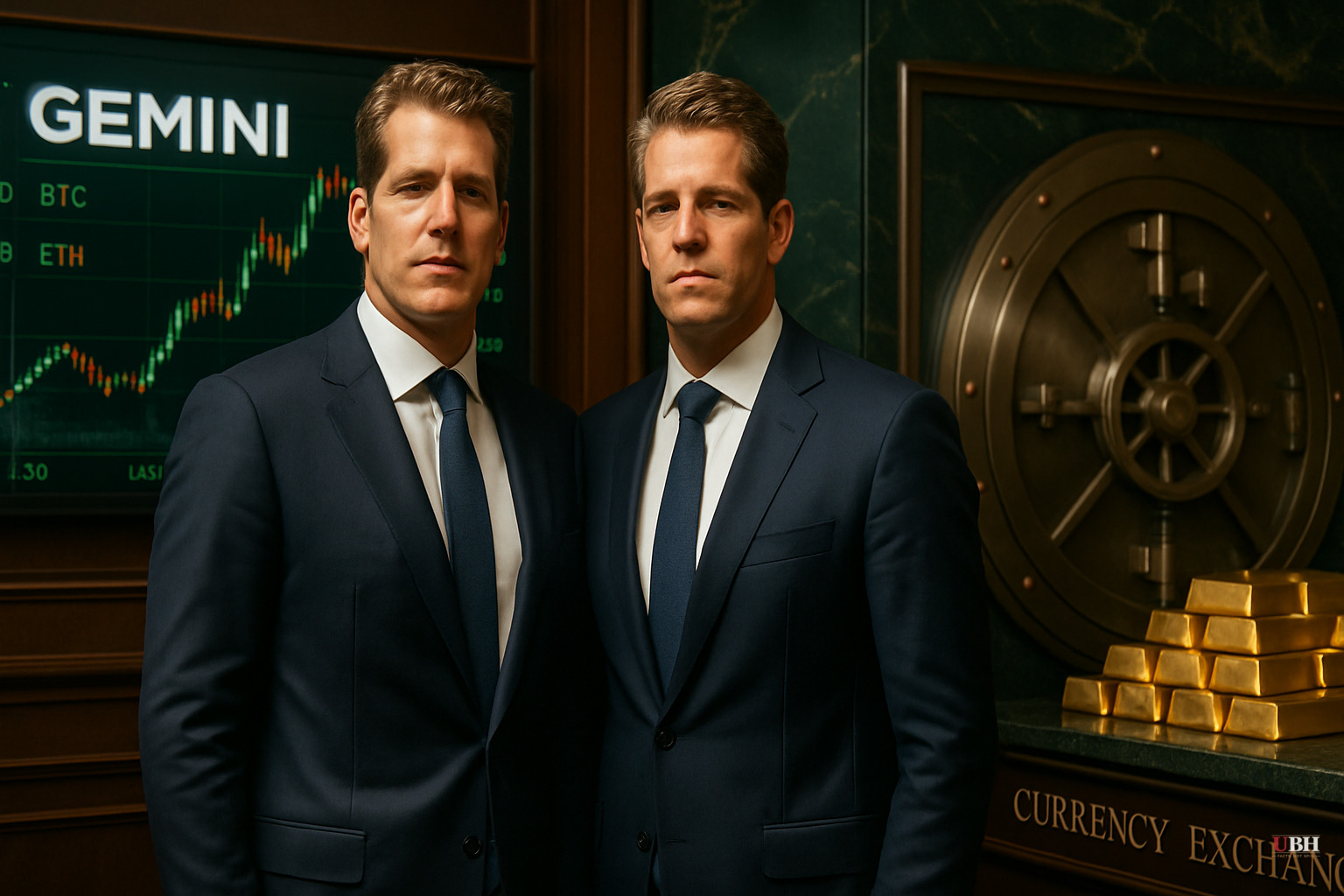
Winklevoss Brothers Bet $100 Million of Their Own Bitcoin on Gemini's Survival
The Basic Facts
On May 14, 2026, Winklevoss Capital Fund — the personal venture fund of Tyler and Cameron Winklevoss — announced a $100 million private placement investment in Gemini (NASDAQ: GEMI), the crypto exchange the brothers founded and still run.
The shares were purchased at $14 each. The stock closed that day at $5.26.
Payment was made in bitcoin. Not dollars. Bitcoin.
The Numbers Behind the Headline
According to CNBC, Gemini's Q1 2026 earnings came in ahead of analyst expectations. Revenue hit $50.3 million — beating the $47.9 million FactSet consensus. Net loss came in at 93 cents per share, narrower than the $1.03 analysts expected.
StockTitan's analysis of the earnings release puts total revenue up 42% year-over-year. Services and interest income surged 122% to $24.5 million. Credit card revenue nearly tripled to $14.7 million.
But operating expenses exploded 73% year-over-year to $144.5 million. Net loss was still $109 million. Cash on hand dropped from $252.2 million to $215.6 million. Assets on platform fell from $14.2 billion to $11.1 billion year-over-year. Transaction losses jumped 169% to $11.1 million, including a $4.6 million credit-loss provision and $4.1 million fraud reserve.
Gemini is bleeding. The $100 million buys time. It does not fix the underlying hemorrhage.
Why This Is Weirder Than It Looks
The Winklevoss brothers are buying their own company's stock at a 166% premium to the market price. That's either the highest conviction bet you've ever seen — or it's a lifeline dressed up as an endorsement.
Tyler Winklevoss told investors: "We believe the market has significantly undervalued Gemini." That's what every CEO says before a rescue operation.
The market responded. Shares popped as high as 30% after hours, according to CNBC, before settling around 17-23% gains depending on when you looked. StockTitan tracked GEMI up 23% to $6.47 in the session following the announcement.
Still well below the $14 investment price. Still well below the IPO-day high of $45.89.
How We Got Here
Gemini went public in September 2025. The IPO popped 14% on debut day, touching $45.89. Then the wheels came off.
According to CNBC, since the IPO Gemini has suffered ongoing losses, executive departures, withdrawal from international markets, and a vague "company transformation" toward artificial intelligence and prediction markets. Bitcoin itself fell roughly 30% from Gemini's IPO date.
A class-action lawsuit filed in New York alleges Gemini misled investors about its strategy during the IPO process. That lawsuit is ongoing.
The exchange revenue — the core business of a crypto exchange — dropped 27% year-over-year to $17.2 million. Monthly transacting users are up 17% to 589,000, per StockTitan. But fewer users are trading on the platform. They're just there.
What's Actually Growing
The credit card business is real. Nearly 300% revenue growth year-over-year is significant. OTC revenue grew from essentially zero — $0.1 million — to $6.3 million. Gemini also secured a CFTC DCO (Derivatives Clearing Organization) license, complementing an existing DCM license. That's regulatory progress that matters for the company's stated ambition to become a "markets company" rather than just a crypto exchange.
Gemini Predictions — the company's prediction markets product — surpassed 100 million contracts across 20,000+ traders, according to StockTitan. The company also launched AI-enabled "Agentic Trading."
Gemini has made significant strategic shifts for a company that's been public for less than a year.
What Mainstream Coverage Is Missing
CNBC's coverage leads with the stock pop and the revenue beat. Reasonable. But the framing treats this as a turnaround story. A company doesn't post a $109 million net loss, watch its platform assets drop by $3 billion, and call it a comeback. The positive spin on "narrower-than-expected losses" obscures the fact that the company is still losing money at substantial scale.
The class-action lawsuit is a material risk sitting right there in the SEC filing, yet it receives minimal attention in coverage.
What This Means for Regular People
If you hold GEMI stock, the founders just told you they think it's worth at least $14 a share — and put $100 million of their own money on it. That's genuine skin in the game.
But they also run the company. They control the narrative. And the company is still burning through cash with expenses growing faster than revenue.
The investment is a bet. The Winklevoss brothers are making theirs.
Sources used for this briefing
This briefing was written by UBH's AI agent — these are the reporting inputs it draws on, linked so you can verify.


