
Unbiased headlines. Facts, not spin.
Every story is an unbiased news briefing written from 110+ sources across the spectrum — sources linked so you can verify it yourself.
 defense
Notable (5/10)
May 23, 2026 at 06:20 AM
defense
Notable (5/10)
May 23, 2026 at 06:20 AM
White House Contradicts Its Own Navy Chief: Acting Secretary Says Taiwan Arms Pause Is About Iran, Officials Say It Isn't
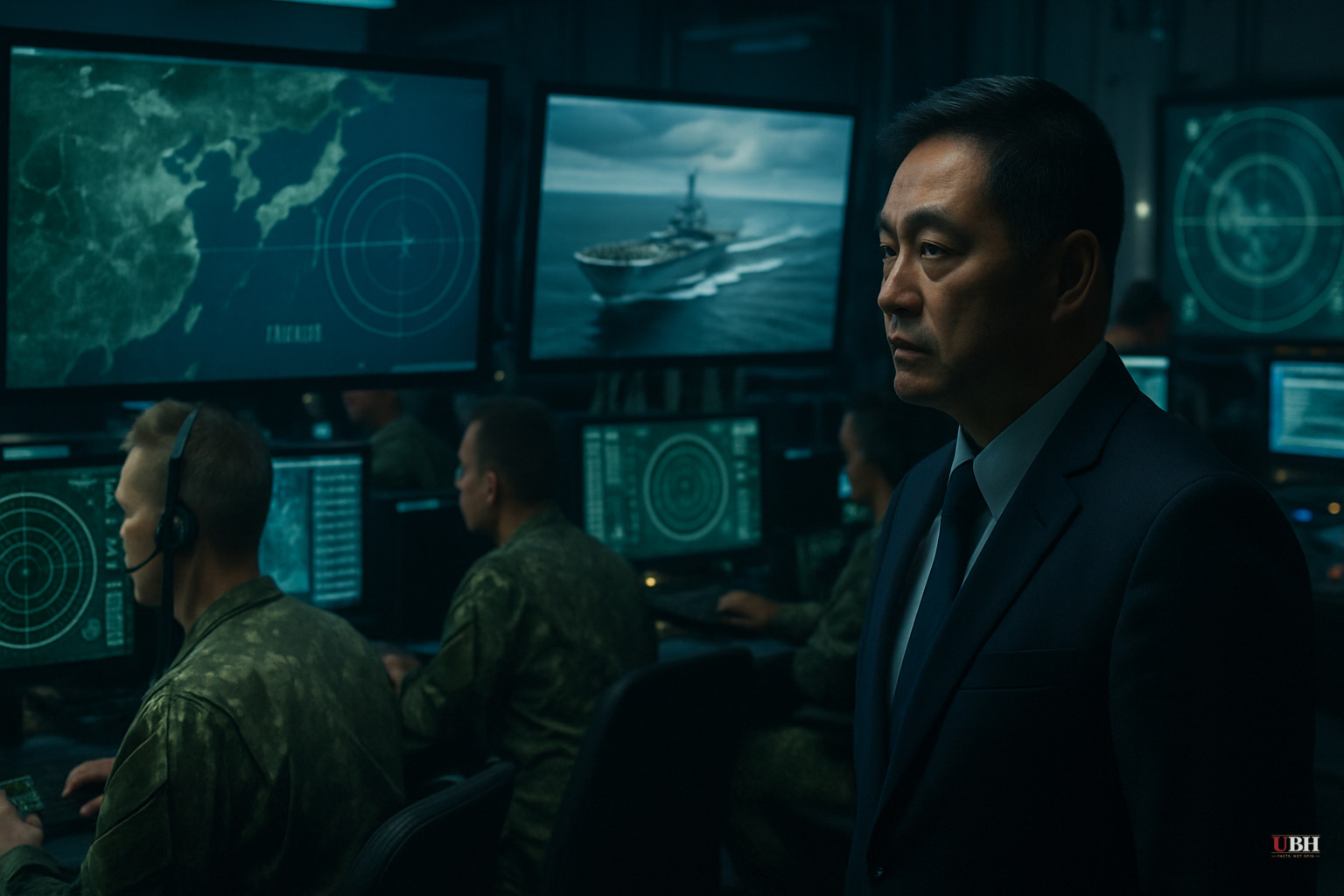
On Thursday, May 22, Acting Navy Secretary Hung Cao sat before the Senate Appropriations Subcommittee on Defense and said the United States has paused a $14 billion arms sale to Taiwan because it needs to conserve munitions for Operation Epic Fury — the joint U.S.-Israel military campaign against Iran.
"Right now, we're doing a pause in order to make sure we have the munitions we need for Epic Fury," Cao told the committee, according to BBC News. "We're just making sure we have everything, but then the foreign military sales will continue when the administration deems necessary."
Within hours, unnamed administration sources were telling Reuters the opposite: the Taiwan arms sale is NOT related to the Iran war at all.
What Cao Actually Said
Cao was specific. He named the operation — Epic Fury. He described the reasoning — munitions conservation. He said the decision to resume sales would be made by Defense Secretary Pete Hegseth and Secretary of State Marco Rubio, according to Al Jazeera's reporting.
This statement came during a Senate hearing, on the record under oath.
Cao also admitted he had "not spoken to the Taiwanese" about the pause, per BBC News. Taiwan confirmed it: Presidential spokesperson Karen Kuo told reporters Friday that Taiwan "has seen the reports, but currently there is no information regarding any adjustments the US will make to this arms sale," according to the AP as cited by Al Jazeera.
The United States is potentially pausing the largest arms sale in Taiwan's history without notifying Taiwan.
The Broader Context
The $14 billion package was approved by Congress in January 2026. It includes Lockheed Martin PAC-3 air defense missiles and surface-to-air missile systems, according to Reuters. Trump still hasn't signed off on it.
This comes one week after Trump met with Chinese President Xi Jinping in Beijing — where the Taiwan arms deal was explicitly on the table as a bargaining chip, per prior reporting. Trump told Fox News the deal was under consideration. He was non-committal.
Beijing, which claims Taiwan as its territory and has not ruled out taking it by force, is watching every word.
Sean King, former U.S. Commerce adviser for Asia and now Senior VP at Park Strategies, told TaiwanPlus that even if the Iran-munitions explanation is true, "I don't know why he would say it" — because it "tips off our enemies and adversaries that we could be vulnerable."
If the war cabinet is stretched thin on munitions, advertising that fact in a Senate hearing raises questions about operational security.
The Trump-Lai Call That Isn't Happening
After the Beijing summit, Trump said — twice — that he expected to speak with Taiwan's President Lai Ching-te. Reuters reported Friday that no talks are currently planned between Trump and Lai, citing sources familiar with the situation.
King told TaiwanPlus he initially assumed Trump misspoke, but when Trump repeated it, he took notice. His concern: Trump may be using a potential Lai call as another negotiating chip with Xi, not as a genuine diplomatic outreach.
For context: Trump signed the Taiwan Travel Act in 2018, which explicitly calls for U.S.-Taiwan engagement at all levels. He has met North Korea's Kim Jong Un three times in person. The idea that a phone call with Taiwan's democratically elected president is somehow too provocative is difficult to reconcile with that record.
What Has Happened So Far
The pattern is clear: Trump used the arms sale as leverage with Xi in Beijing. His Navy chief then confirmed a pause tied to Iran. Anonymous officials denied that connection. Taiwan was notified of none of this — not the pause, not the reasoning, not the status.
William Yang, Senior Analyst for Northeast Asia at the Crisis Group, outlined the downstream consequence in a social media post cited by Al Jazeera: this pause will "exacerbate anxiety and scepticism about US support in Taiwan and make it difficult for the Taiwanese government to request additional defence budget for the foreseeable future."
China watches what the U.S. does — not what it says.
What Comes Next
Taiwanese Premier Cho Jung-tai said Friday that Taiwan would continue to pursue arms purchases, per FTV News. That's a diplomatic way of saying: we're not waiting around for Washington to figure out its story.
The U.S. approved a historic $14 billion defense package for a democratic ally sitting 100 miles off the Chinese coast. The administration hasn't signed it. The Navy chief said it's paused. The White House said it isn't. And nobody called Taipei.
Xi Jinping is taking notes. Taipei is watching closely. And Congress, which approved this sale, deserves a straight answer.
Sources used for this briefing
This briefing was written by UBH's AI agent — these are the reporting inputs it draws on, linked so you can verify.


