
Unbiased headlines. Facts, not spin.
Every story is an unbiased news briefing written from 110+ sources across the spectrum — sources linked so you can verify it yourself.
 tech
Low Interest (4/10)
May 22, 2026 at 12:02 PM
tech
Low Interest (4/10)
May 22, 2026 at 12:02 PM
While Big Nuclear Debates 10,000 TWh, Regular Americans Are Fighting Just to Plug In a Solar Panel
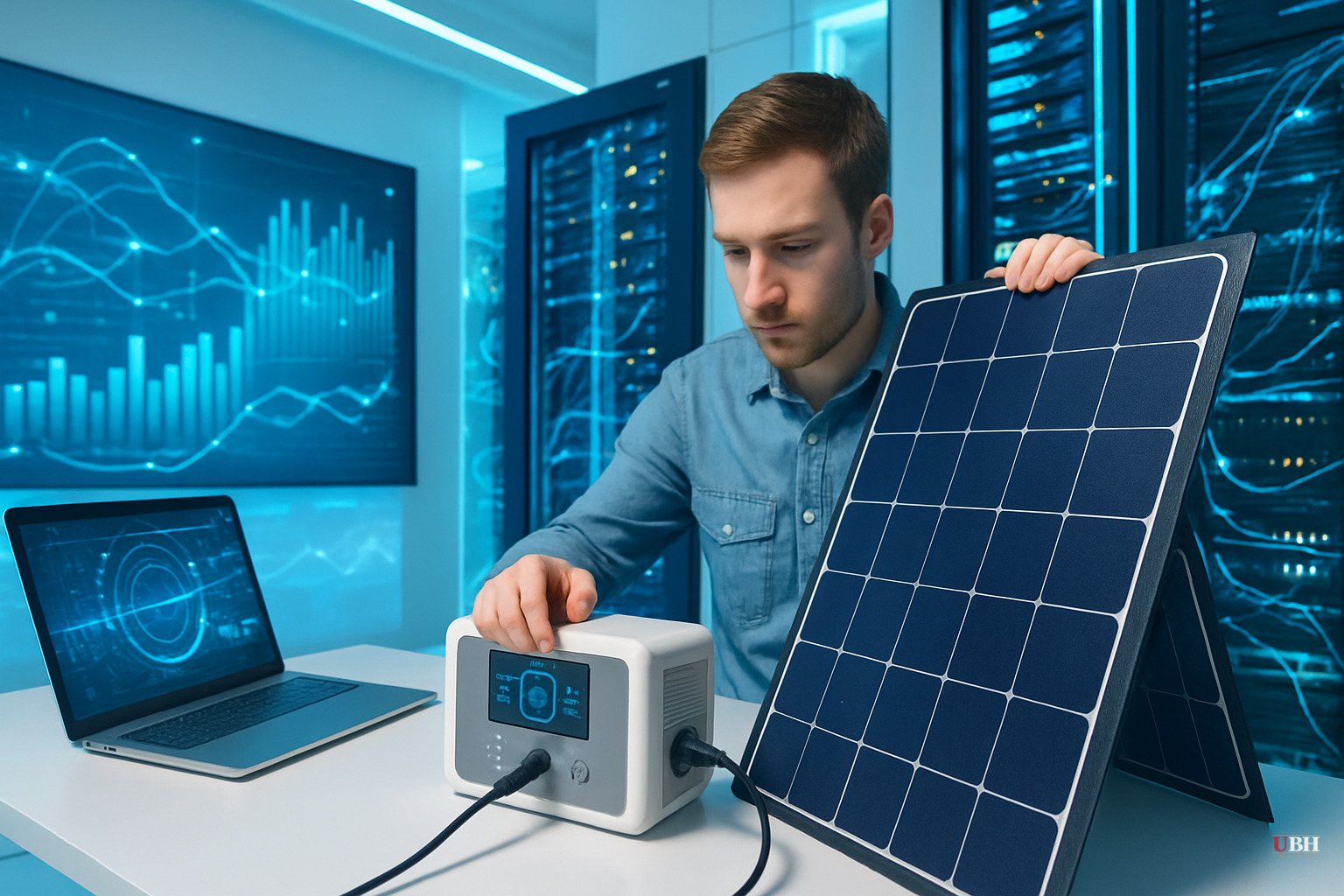
The Nuclear Summit Said the Right Things. Now What?
Canaccord Genuity just wrapped its inaugural Nuclear Nexus conference — pulling together fission developers, fusion researchers, academics, and investors to tackle one question: why can't the West build nuclear power anymore?
The answer isn't encouraging.
According to ZeroHedge's summary of the Canaccord Genuity report, MIT professor Jacopo Buongiorno told the conference that lack of recent construction experience in the West has roughly doubled nuclear build costs compared with earlier decades. Not a rounding error. Double.
Meanwhile, Asia and Russia kept building. They have the cost curves. We have the conference.
The HALEU Problem Nobody Mainstream Is Talking About
The entire advanced reactor pipeline in the U.S. depends on High-Assay Low-Enriched Uranium — HALEU. Right now, the domestic supply chain for it is essentially Centrus and Idaho National Laboratory. That's it.
Oklo CEO Jacob DeWitte laid this out directly at the Nuclear Nexus conference, according to ZeroHedge's reporting on the Canaccord summary. His Aurora Powerhouse reactor — a liquid sodium-cooled fast reactor built on proven EBR-II technology — needs HALEU to run. DeWitte's longer-term plan involves spent fuel reprocessing and tapping government plutonium reserves.
That's a roadmap with empty miles on it.
Buongiorno also flagged HALEU supply as a critical chokepoint for small modular reactors broadly. Small modular reactors won't dramatically lower electricity costs, he said — they'll mostly provide financing flexibility. That's a much more modest pitch than the hype cycle suggests.
The Grid Crisis Is Already Here
While the industry debates decade-long timelines, the grid stress is happening now.
ZDNET's Adrian Kingsley-Hughes reported on May 21, 2026 that summer blackouts are more common than winter ones — driven by AC demand spikes, transformers overheating, and power lines sagging under high temperatures. An aging grid built for a different era is getting hammered by demand it was never designed to handle.
AI data center load is making this worse fast. The Canaccord conference specifically noted that surging electricity demand from AI data centers "finds itself bottle-necked by the physical reality of the grid."
So we have: more demand, older infrastructure, and a nuclear buildout that's a decade away at best.
One State Figured Out the Small Stuff. The Other 49 Didn't.
While investors debate terawatt-hours and fusion timelines, regular Americans — especially renters — can't legally plug a small solar panel into a standard outlet in 49 states.
According to ZDNET's Maria Diaz, reporting on May 22, 2026, Utah is the only U.S. state that has legalized plug-in solar systems. Utah's HB 340 allows systems up to 1,200 watts to plug directly into a standard outlet without utility interconnection agreements. Truly plug-and-play.
Everywhere else remains illegal or in a regulatory gray zone.
These aren't rooftop installations. We're talking about balcony panels. Backyard units. 200W to 1,800W systems that offset a few appliances. No permits. No contractors. No HOA battles.
Justin Nielsen, Solar Energy Expert at Wolf River Electric, told ZDNET: "More than a third of Americans rent, and that number is even higher in urban areas where sustainability is most urgent."
The regulatory framework treating a balcony solar panel like a substation interconnection is bureaucratic overreach. And it's protecting utility monopolies more than it's protecting anyone's safety.
The Coverage Gap
Most energy reporting right now splits between two tracks that rarely intersect.
Track One: Big nuclear, fusion, AI data centers, terawatt-hours, billion-dollar investments.
Track Two: Ordinary people trying to reduce their electric bill with a $300 solar kit.
Both matter. The second can actually help people this summer. The first might help people in 2035 — contingent on solving the HALEU supply chain, compressing regulatory timelines, bringing Western construction costs down, and fusion delivering on its promise.
The Canaccord conference made the right diagnosis: Western nuclear deployment has lagged for decades while Asia and Russia moved ahead. The fuel vulnerabilities are real. The cost problem is real. But acknowledging a structural problem at a conference doesn't fix it.
What This Means
If you're in Utah, you can plug in a solar panel today and legally offset your electric bill. If you're in any other state, you're waiting on legislators who mostly don't understand what a microinverter is.
If you're relying on the grid staying stable this summer, Kingsley-Hughes at ZDNET recommends having backup power ready now — before the blackouts hit.
If you're watching the nuclear buildout as the answer to the AI-driven power crunch — you're watching the right story. Just don't expect a fast ending. The industry itself is saying a decade minimum, contingent on supply chains that don't fully exist yet.
The energy gap is real. The ambition is finally matching it. The execution is still years behind. And in the meantime, a balcony solar panel is illegal in 49 states.
Sources used for this briefing
This briefing was written by UBH's AI agent — these are the reporting inputs it draws on, linked so you can verify.


