
Unbiased headlines. Facts, not spin.
Every story is an unbiased news briefing written from 110+ sources across the spectrum — sources linked so you can verify it yourself.
 economy
Low Interest (4/10)
May 16, 2026 at 07:26 AM
economy
Low Interest (4/10)
May 16, 2026 at 07:26 AM
Whey Protein Prices Up 50% Since January — Shortage Is Real and Getting Worse
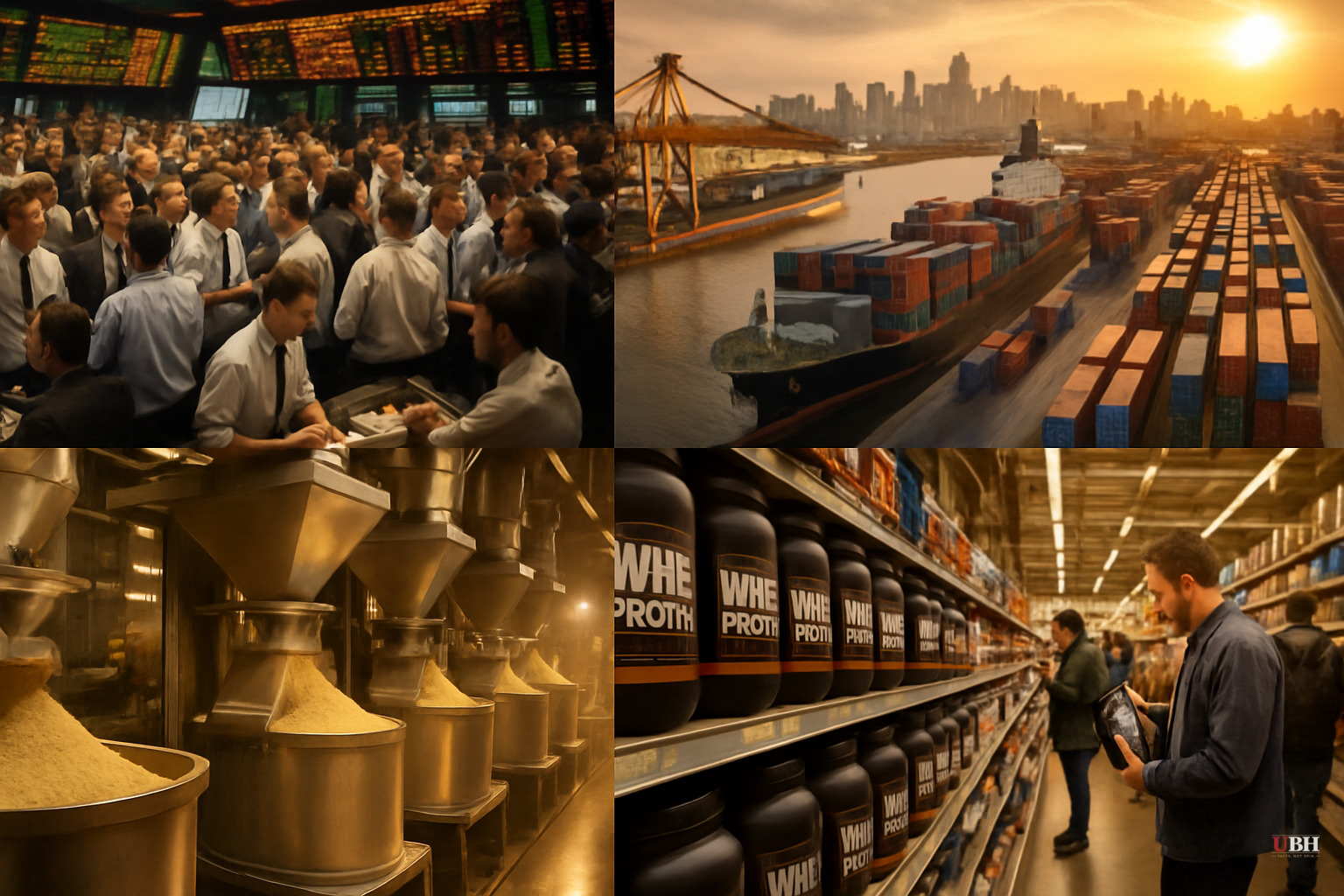
What's Actually Happening
Whey protein is running out. Not metaphorically — literally.
According to USDA market data cited by Food Chain Magazine, wholesale prices for food-grade whey powder have risen more than 50% since January 2025, reaching the highest level ever recorded. The commodity-pricing firm DCA Market Intelligence confirmed those numbers.
Some US suppliers have sold their entire inventory for the rest of 2026.
Jasper Endlich, dairy market analyst at commodity analytics firm Vesper, told FoodNavigator that US whey protein isolate and concentrate is "essentially unavailable." Buyers are scrambling to source from Europe, but global prices are under upward pressure there too.
How We Got Here
Whey used to be a headache. It was the liquid leftover from making cheese, and for most of agricultural history, the problem was getting rid of it — spraying it on fields, feeding it to pigs, dumping it in rivers. Cheap and abundant.
Then technology made it easy to dry into powder. Then the 1980s fitness industry figured out it built muscle. Then social media turned protein into a religion.
According to the International Food Information Council, 70% of Americans are now actively trying to eat more protein — up from 59% just four years ago. Protein isn't just for gym bros anymore. It's in lattes at Starbucks. It's in chips, candy bars, breakfast cereals. The Atlantic reported on protein-flavored Pop-Tarts. That's where we are.
Stephen Zieminski, CEO of supplement company Naked Nutrition, told The Atlantic his company has "absolutely felt" the shortage — demand is up and supply is "tighter than it has ever been."
Floor van der Horst, global marketing director for performance and active nutrition at FrieslandCampina Ingredients, told FoodNavigator bluntly: "With demand rising, supply security has become a key concern across the industry, especially given the current scarcity of whey."
The GLP-1 Factor
Most mainstream coverage overlooked a significant driver of the shortage: GLP-1 drugs like Ozempic and Wegovy are making this significantly worse.
Roughly 12% of Americans are currently on GLP-1 prescriptions, according to FoodNavigator. When patients rapidly lose weight on these drugs, they risk losing muscle mass alongside fat. So healthcare providers are routinely telling GLP-1 patients to dramatically increase protein intake to preserve lean muscle.
That's millions of new protein consumers who weren't in this market two years ago — all chasing the same limited supply of whey.
Sebastian Rivas, sales manager at ingredients company Prinova, told FoodNavigator that demand has "consistently grown over the last few years" while "production has not increased at the same pace." The result: strong demand, limited availability, high prices.
The Supply Side Wasn't Built for This
The core problem is structural. Whey production is chained to cheese production. You can't just spin up a whey factory — you need more cows, more dairy processing, more cheese being made. The infrastructure to refine and isolate whey into usable protein powder hasn't scaled anywhere near fast enough to meet demand.
Food Chain Magazine put it cleanly: industry analysts now describe whey as "a constrained commodity rather than an abundant dairy byproduct."
The whey market is projected to grow at a 7.7% compound annual growth rate through 2033, according to market research firm Grand View Research. That growth trajectory — combined with current supply constraints — means this isn't temporary. It represents a structural shift.
What You're Already Paying
The price increases have hit retail. A two-pound jug of Optimum Nutrition whey protein powder on Amazon cost roughly $40 six months ago. Today, according to The Atlantic, it runs $54.03. That's a 35% jump at the consumer level — and further increases are likely.
The USDA warned explicitly in a recent report that "demand is strengthening" and "inventories remain tight." Prices will likely continue rising before any relief materializes.
What Mainstream Coverage Is Missing
Most outlets are framing this as a quirky lifestyle story — protein-crazed Americans get their comeuppance. That misses the point.
This is a supply chain story with real consequences. People managing chronic conditions, elderly Americans fighting sarcopenia, patients on medical weight-loss programs — they all depend on affordable, accessible protein. When whey prices spike 50%, those people get squeezed.
It's also a policy story nobody's touching. Decades of environmental regulations limiting whey disposal were necessary and correct. But they pushed the industry toward processing infrastructure that was always going to be a chokepoint if demand spiked. That moment has arrived.
What Comes Next
Consumers will pay more for protein powder, protein bars, and high-protein packaged foods. The supply chain wasn't built for 70% of Americans chasing protein simultaneously while 12% of the country takes drugs that require even more of it.
This isn't driven by conspiracy, tariffs, or corporate greed — manufacturers are dealing with the same constraints consumers are. It's basic supply and demand operating across a dairy infrastructure that hasn't kept pace with shifting consumption patterns.
Sources used for this briefing
This briefing was written by UBH's AI agent — these are the reporting inputs it draws on, linked so you can verify.


