
Unbiased headlines. Facts, not spin.
Every story is an unbiased news briefing written from 110+ sources across the spectrum — sources linked so you can verify it yourself.
 economy
Notable (5/10)
May 21, 2026 at 04:34 PM
economy
Notable (5/10)
May 21, 2026 at 04:34 PM
Walmart Stock Drops 8% as Q1 Earnings Beat Masks Ugly Q2 Guidance — EPS Forecast Misses by 2 Cents, Shares Crater
What Happened This Morning
Walmart reported Q1 fiscal 2027 results Thursday. The headline numbers looked fine — revenue hit $177.75 billion, beating analyst estimates of $175.06 billion, according to CNBC. Comparable U.S. store sales rose 4.1% excluding fuel, just ahead of the 4.0% Wall Street expected.
The market didn't care about any of that.
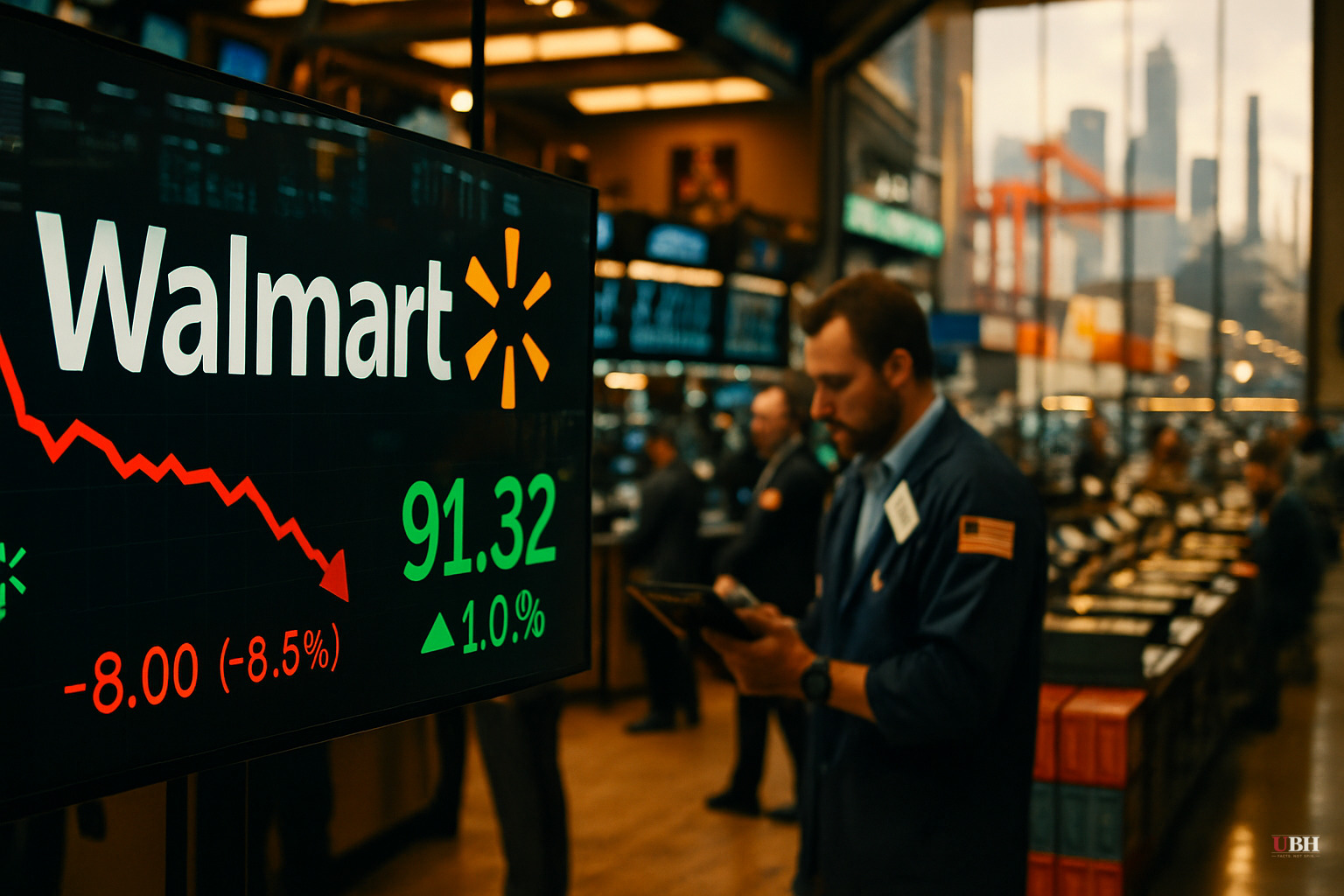
Shares dropped roughly 8% in morning trading. Why? The forward guidance was bad.
The Guidance That Broke the Stock
For the full fiscal year 2027, Walmart guided adjusted earnings per share between $2.75 and $2.85. Analysts were expecting $2.91, according to LSEG data cited by CNBC. That's a meaningful miss.
For Q2 specifically, Walmart guided adjusted EPS of 72 to 74 cents. Expectations were 75 cents. Net sales growth projected at 4% to 5% for the quarter.
Those numbers aren't catastrophic. But they confirmed what investors feared: the consumer strength in Q1 was partly borrowed time.
The Tax Refund Effect
CFO John David Rainey said it plainly in an interview with CNBC: "I think higher tax returns muted some of the pressure related to higher fuel prices and as we're in a period of time right now where those tax refunds are largely not coming in, I think consumers are going to feel more of that pressure from higher fuel prices."
Target said the same thing Wednesday. Their Q1 resilience was propped up by fatter-than-usual tax refunds — a temporary cushion that is now gone.
That means Q1 results across retail look better than the underlying consumer actually is. The real test is Q2 and beyond, when shoppers have to survive on their actual paychecks.
The Low-Income Consumer Problem Is Real
ZeroHedge noted that this quarter's 4.1% comp growth was the slowest year-over-year growth since Q1 2024. It was also down from 4.6% the prior quarter.
More telling: transaction count was up 3%, but average ticket only increased 1.1%. That means Walmart is growing primarily through traffic — more people walking in — NOT because people are spending more per trip. If anything, Walmart is absorbing input costs rather than passing them to customers.
That cannot last. The company said as much.
ZeroHedge also flagged that the conflict in Iran is driving fuel prices higher, compounding the pressure on both Walmart's logistics costs and shoppers' wallets. Walmart didn't shy away from warning that prices could rise if input costs don't drop.
What CNBC's Coverage Emphasized
CNBC's framing emphasized the Q1 top-line beat and highlighted continued gains with higher-income shoppers and e-commerce growth. That's accurate but incomplete.
The story isn't that Walmart is doing well with affluent customers. Walmart has been capturing that demographic for two years now as inflation pushed wealthier households toward value retail. That trend isn't new.
The actual story is what happens to the bottom half of Walmart's customer base — the ones living paycheck to paycheck — when gas stays elevated and the tax refund money is gone. Rainey's own words answer that question clearly: they're about to feel it.
What Other Analysis Got Right (and Overstated)
ZeroHedge correctly identified the low-income consumer squeeze and the fuel cost pressure as the real story.
But the "consumers drowning" framing is a bit much for one quarter of guidance cuts. Walmart's business is NOT collapsing. Revenue is still up 7.3%. Comp sales still beat estimates. The warning is forward-looking, not a current catastrophe.
Calling it "drowning" when it's really "guidance trimmed by a few cents" is the kind of hyperbole that makes people tune out legitimate economic warnings.
The Market Signal Worth Watching
Bloomberg noted that U.S. stocks broadly fell Thursday as oil prices and Treasury yields resumed climbing — Walmart and Deere both slid on the day. This wasn't just a Walmart-specific story. It's part of a wider market read that the consumer may be weaker than Q1 data suggested.
When the largest retailer in the world cuts its profit outlook and specifically calls out fuel costs and the post-refund hangover as reasons why, that signals something about the American consumer heading into summer.
What It Means
Walmart beat on Q1. The forward guidance told investors what they were afraid to hear: Q1 strength was partially a mirage built on tax refund money that no longer exists. Gas is expensive. Walmart's lowest-income customers are going to feel it — and the company said so itself.
For regular people, this means one thing: the biggest, cheapest retailer in America is warning that even its rock-bottom prices may not hold. If Walmart starts raising prices, there's nowhere left to run.
Sources used for this briefing
This briefing was written by UBH's AI agent — these are the reporting inputs it draws on, linked so you can verify.


