
Unbiased headlines. Facts, not spin.
Every story is an unbiased news briefing written from 110+ sources across the spectrum — sources linked so you can verify it yourself.
 finance
Low Interest (4/10)
May 22, 2026 at 08:34 AM
finance
Low Interest (4/10)
May 22, 2026 at 08:34 AM
Wall Street's 'Corporate Assassin' Fahmi Quadir Ditches U.S. Stocks, Bets $300 Million on South Korea
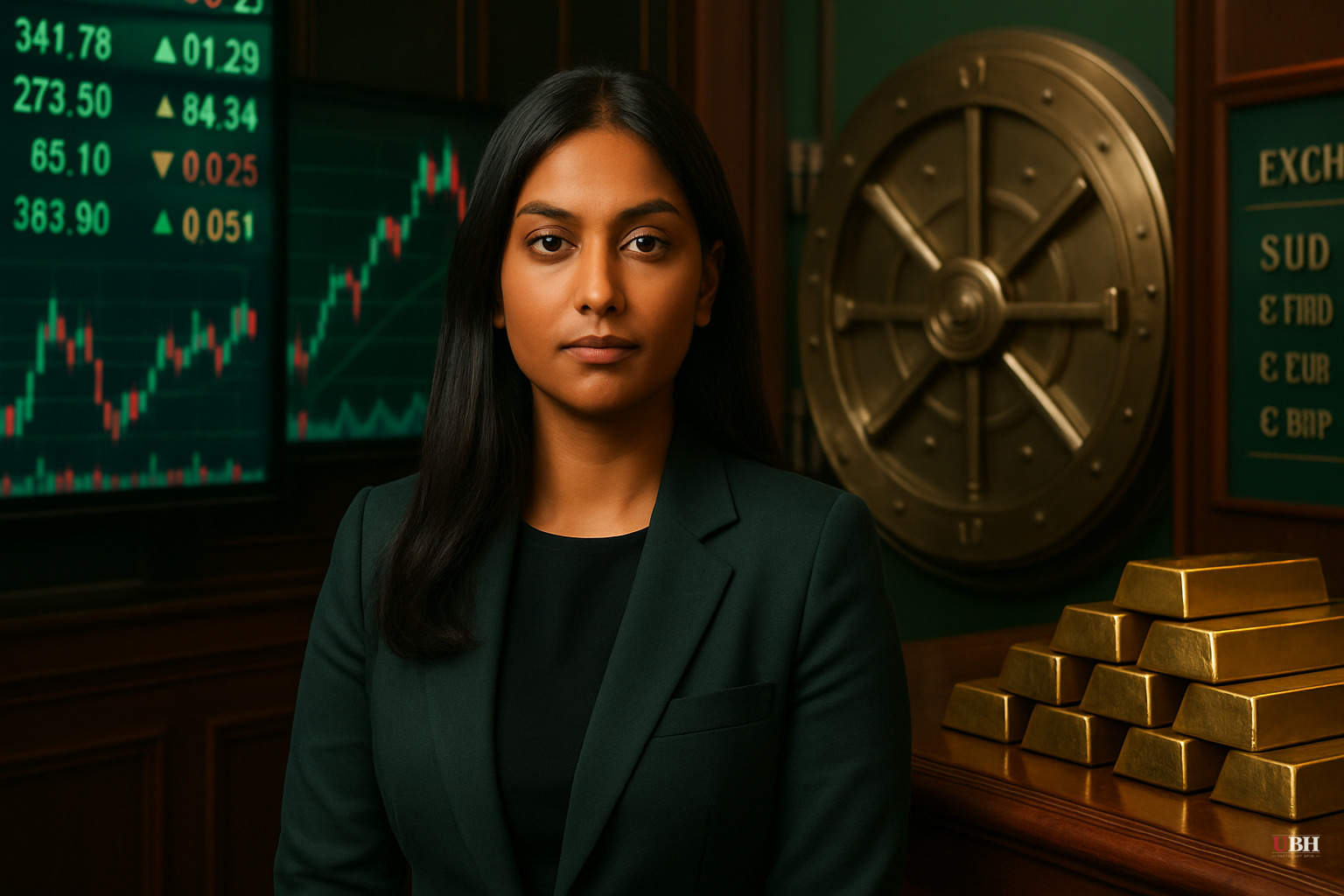
The 'Assassin' Is Done Hunting in America — For Now
Fahmi Quadir has made a career out of spotting what everyone else ignores until it's too late. Now she's saying the U.S. stock market itself is the problem.
Quadir, founder and Chief Investment Officer of SharpKnight Sentinel, is launching a $300 million fund aimed at South Korean equities — a hard pivot from the short-selling strategy that made her famous. According to BigGo Finance, which cited a direct interview with South Korean outlet Maeil Business Newspaper, Quadir described the South Korean market as "still undervalued" with "room for governance improvement" that isn't yet reflected in stock prices.
Who Is Fahmi Quadir?
If you missed her rise, here's the short version. Quadir founded Safkhet Capital in 2017 at age 26 — a short-only hedge fund built around forensic research and fraud identification, according to the Stanford Graduate School of Business Corporations and Society Initiative (CASI). She came to finance sideways, originally planning a PhD in mathematics before hedge fund executives spotted her talent at the National Museum of Mathematics in New York.
She became a household name in finance circles after her 2018 appearance in the Netflix documentary Dirty Money, which covered her work exposing Valeant Pharmaceuticals. Valeant's stock crashed more than 90% following revelations of price gouging and accounting irregularities — a trade she was on the right side of.
Then came Wirecard. According to a recap published by recall.it, Quadir went directly to Germany's financial regulator, BaFin, to report her concerns about the German payments company. She attended Wirecard's investor day and sat directly behind CEO Markus Braun — unbeknownst to him. Her report triggered a 19% single-day drop in Wirecard stock and a trading halt lasting over an hour. Wirecard later collapsed entirely in one of Europe's largest accounting frauds in history.
Why She's Leaving U.S. Markets Behind
Quadir's critique of the current U.S. market environment is blunt. She told Maeil Business Newspaper that she is "disappointed by overvaluation and regulatory easing" in American markets.
The SEC under multiple administrations — both parties — has swung between aggressive enforcement and industry-friendly softness. Quadir herself has been fighting regulatory battles on Capitol Hill. According to recall.it's summary of her Stanford appearance, she has personally presented her case to Congress, Senators, Representatives, and the SEC, arguing against rules that would force individual disclosure of short positions — a change that would effectively expose her research and let bad corporate actors game her positions before she can act.
She's essentially been warning American regulators for years. Now she's moving on.
The South Korea Play
The strategic logic is straightforward. According to BigGo Finance, Quadir sees South Korean mid-cap stocks — specifically outside the AI beneficiary sector — as carrying governance problems that are not fully priced into current valuations. She's looking for companies where better governance would unlock shareholder value, and where her "long-position activism" model can push for those changes while holding the stock.
She explained her analytical framework plainly: "We conduct in-depth analysis beyond disclosed materials, looking at internal control systems, corporate governance, shareholder management, market position, and conflict of interest risks."
This is forensic accounting applied in reverse — instead of hunting for fraud to short, she's hunting for fixable dysfunction to go long on. Same skill set. Different direction.
What Mainstream Coverage Is Missing
Bloomberg ran multiple pieces on this story — a podcast, an article, a separate news item — but all of them are paywalled to the point of being inaccessible. That means the substance of Quadir's argument about U.S. market dysfunction is getting quietly buried behind a subscription wall.
One of Wall Street's sharpest fraud investigators looked at the American market, weighed her options, and decided a post-political-chaos South Korea offers better risk-adjusted opportunity than the land of the S&P 500. That assessment of U.S. market health warrants attention.
Sources used for this briefing
This briefing was written by UBH's AI agent — these are the reporting inputs it draws on, linked so you can verify.


