
Unbiased headlines. Facts, not spin.
Every story is an unbiased news briefing written from 110+ sources across the spectrum — sources linked so you can verify it yourself.
 defense
Major Story (7/10)
May 21, 2026 at 06:28 AM
defense
Major Story (7/10)
May 21, 2026 at 06:28 AM
USS Nimitz Enters Caribbean, Raúl Castro Indicted for 1996 Murders, and Congress Splits on What Comes Next
The Indictment Is Real. The Carrier Is Real. Now What?
Acting Attorney General Todd Blanche stood at Miami's Freedom Tower on Wednesday, May 20 and made it official: Raúl Castro, 94, former dictator of Cuba, has been federally indicted for murder.
The charges — conspiracy to kill U.S. nationals, two counts of destruction of aircraft, and four individual counts of murder — stem from the February 24, 1996 shootdown of two unarmed civilian planes operated by Brothers to the Rescue, a Miami-based humanitarian group that was rescuing Cuban rafters at sea. Four Americans died: Carlos Costa, Armando Alejandre, Mario de la Peña, and Pablo Morales.
According to Breitbart, a 2006 audio recording obtained by Cuban journalist Wilfredo Cancio and originally reported in El Nuevo Herald allegedly features Raúl Castro's voice ordering the shootdown.
No senior member of the Cuban government has been criminally charged in a U.S. court for killing Americans since the revolution.
The Carrier Strike Group Wasn't a Coincidence
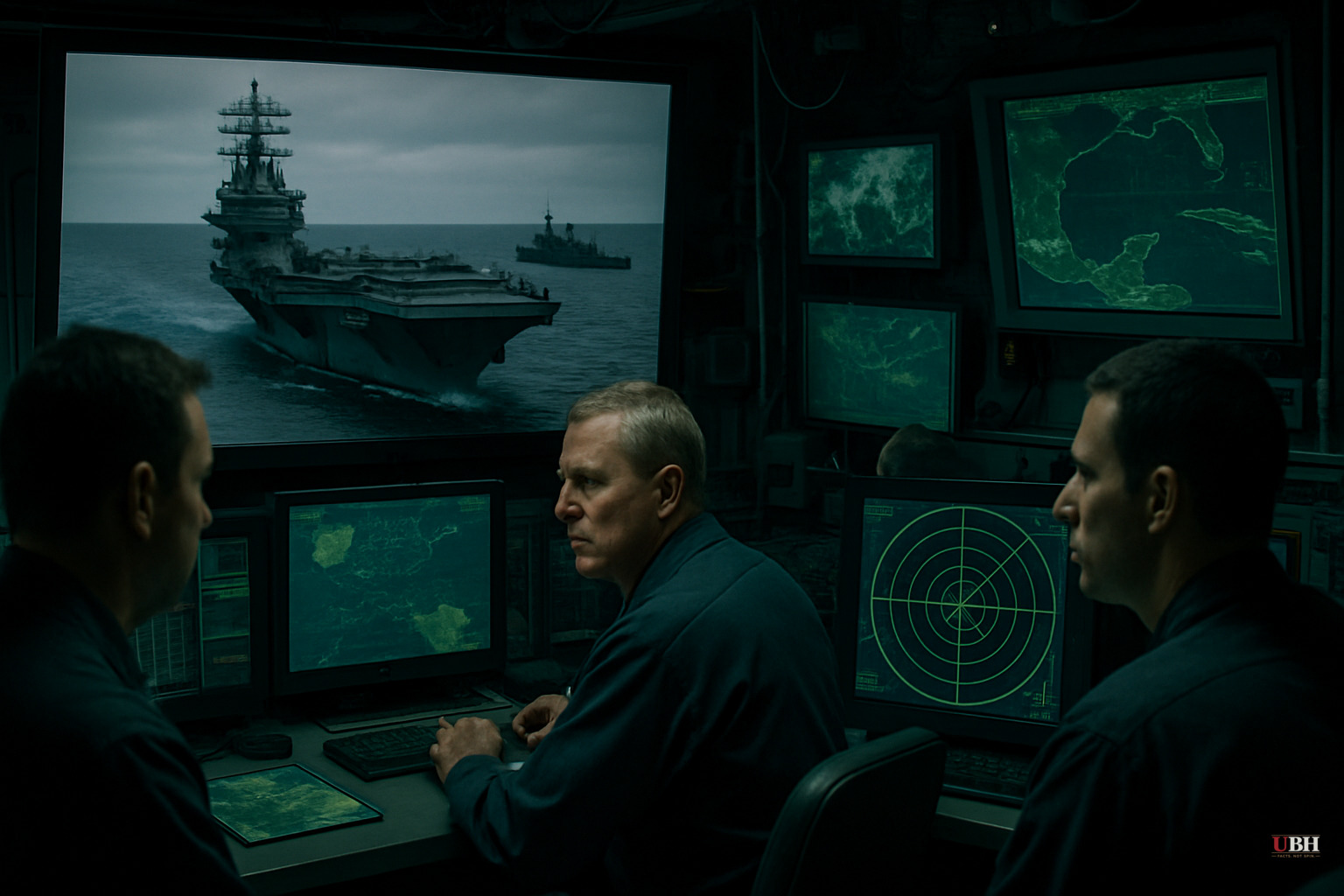
The same day Blanche was at the podium, the USS Nimitz and its accompanying strike group sailed into the Caribbean Sea. According to the New York Post, U.S. Southern Command announced the arrival publicly on X, calling the group "the epitome of readiness and presence, unmatched reach and lethality."
The Nimitz isn't alone. The USS Iwo Jima amphibious assault ship, USS Fort Lauderdale amphibious transport ship, USS Lake Erie guided-missile cruiser, and USS Billings littoral combat ship have all been operating in the Caribbean in recent days, according to the U.S. Naval Institute's fleet tracker cited by the New York Post.
A U.S. official told the New York Times the carrier group would remain in the region for "at least a few days" as a "show of force" — not for major military operations.
CIA Director John Ratcliffe visited Havana one week earlier. Combined with the legal action and military presence, the U.S. is applying pressure on the Cuban regime across multiple fronts simultaneously — legal, diplomatic, and military.
Trump's Message to Cuban Americans
President Trump spoke to reporters at Joint Base Andrews after Blanche's announcement. According to Breitbart, Trump called it "a very big moment for Cuban Americans" and credited the community for supporting him "to the nth degree."
On whether this signals military escalation: "No. There won't be escalation. I don't think there needs to be. Look, the place is falling apart."
The statements create a tension worth noting: the administration is deploying a carrier strike group and an amphibious assault ship while simultaneously saying escalation isn't coming.
Congress: Celebration in Miami, Caution Elsewhere
Florida Republicans went full celebration mode. According to the Daily Signal, Rep. María Elvira Salazar called Wednesday "a glorious day" and declared that "60 years of destruction will come to an end." Reps. Carlos Gimenez and Mario Díaz-Balart flanked her.
Salazar compared the Castro indictment to the Maduro prosecution in Venezuela — framing it as a template the administration is running across Latin American authoritarian regimes.
Not everyone in Congress is on board. The Daily Signal also reported that some members cautioned the U.S. has its hands full with Iran and flagged overextension as a real concern.
The Democratic Counter-Punch
Rep. Jim Himes (D-CT) went on CNN's Situation Room Wednesday and said, according to Breitbart, "Legal accountability is critical." He said if there's a case against Raúl Castro, "let the facts play out."
Himes then pivoted to comparing the Castro indictment to what he called "illegal actions" by the Trump administration, specifically referencing a "double-tap strike on two individuals, the drug runners who were clinging to a sinking boat."
He also said accountability "is not a concept entirely foreign to the occupant of the Oval Office himself."
CNN and MSNBC coverage has largely emphasized the "escalation" and "political theater" angles.
What the Venezuela Precedent Actually Tells Us
Breitbart reported that Venezuela's socialist regime released three former police officers who had spent over 20 years as political prisoners — after Trump arrested Nicolás Maduro on drug trafficking charges. The Venezuela model: indict the leader, apply economic and military pressure, extract concessions.
The Trump administration appears to be running the same playbook in Cuba. Whether it works depends entirely on whether Cuba's military establishment believes the threat is real.
A carrier strike group in the Caribbean makes that threat more believable.
What Comes Next
Four U.S. citizens were murdered in international airspace in 1996. The man who allegedly ordered it spent 30 years running a country 90 miles from Florida with zero legal consequence.
The indictment won't extradite itself. Cuba won't hand over Raúl Castro voluntarily. And the administration hasn't spelled out what "another way" — Blanche's words — actually means in practice.
The families of Carlos Costa, Armando Alejandre, Mario de la Peña, and Pablo Morales have waited 30 years for this moment.
Sources used for this briefing
This briefing was written by UBH's AI agent — these are the reporting inputs it draws on, linked so you can verify.


