
Unbiased headlines. Facts, not spin.
Every story is an unbiased news briefing written from 110+ sources across the spectrum — sources linked so you can verify it yourself.
 defense
Major Story (7/10)
May 22, 2026 at 03:20 AM
defense
Major Story (7/10)
May 22, 2026 at 03:20 AM
USS Nimitz Enters Caribbean as Cuba Publishes Military Defense Guide and Russia Pledges 'Active Support'
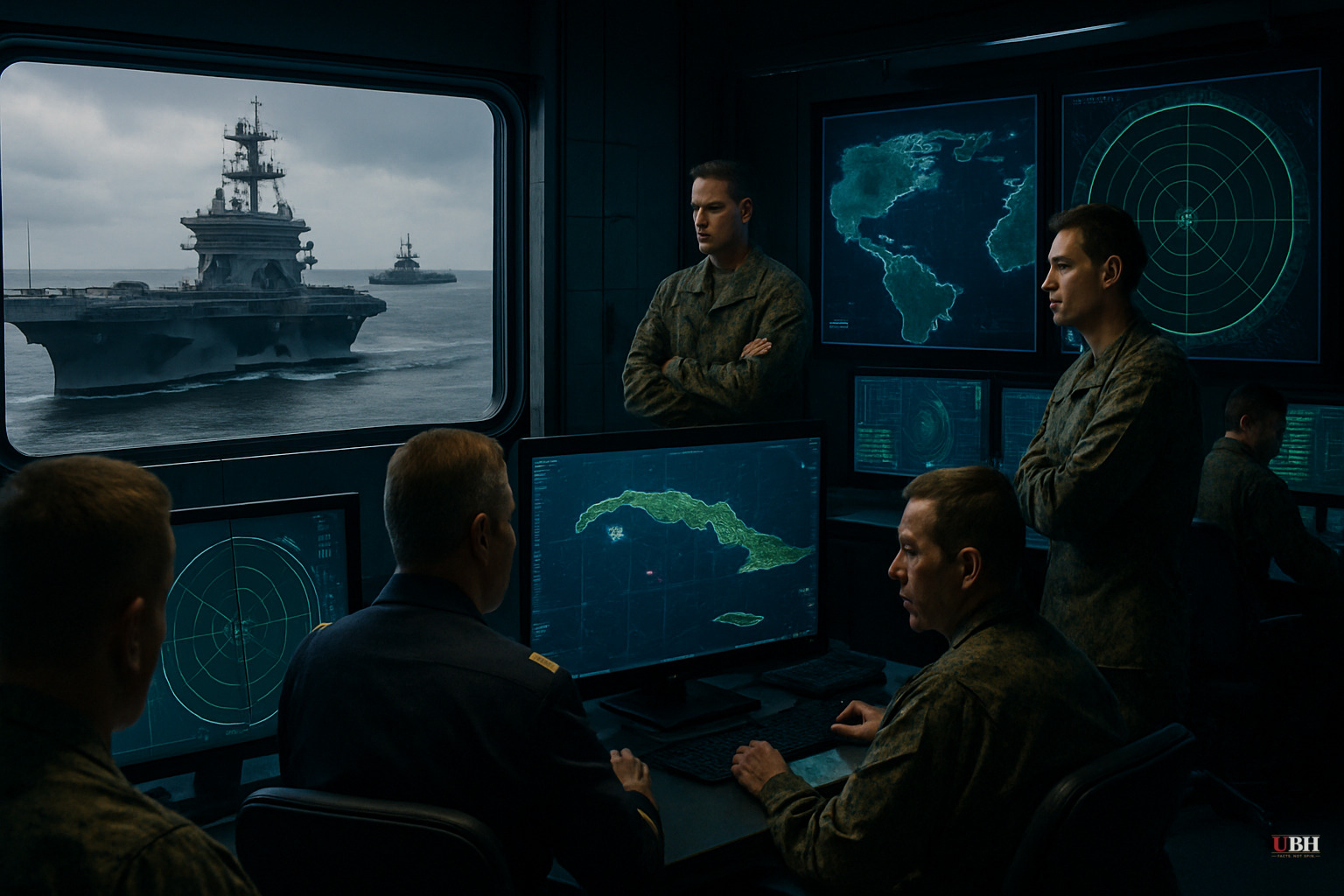
The Hardware Showed Up
The USS Nimitz carrier strike group entered the Caribbean this week, according to The Hill. Federal prosecutors indicted former Cuban President Raúl Castro on murder charges tied to the 1996 downing of civilian aircraft the same week.
Trump told reporters there would be no escalation — Cuba is "falling apart" and is "on our mind." He did not explicitly rule out future action.
Cuba Is NOT Standing Down
On Saturday, Cuba's Civil Defence released a multi-page guide titled The Family Guide for Protection Against Military Aggression, according to Al Jazeera. The document lists family responsibilities in the event of a U.S. attack and outlines safety protocols.
The guide is based on Cuba's existing defence doctrine called War of All People — adopted after the Soviet Union collapsed — which calls for total civilian mobilization through guerrilla warfare, local militias, and civil defence networks.
Helen Yaffe, a professor of Latin American political economy at the University of Glasgow and host of the podcast Cuba Analysis, told Al Jazeera: "Everyone in Cuba is trained militarily and incorporated into this system of national defence."
Cuba faces significant economic challenges, including rolling blackouts. The island has spent more than 60 years preparing for military confrontation.
Russia Just Made It More Complicated
Russian Foreign Minister Sergei Lavrov publicly promised "active support" for Cuba and "full solidarity" with Havana, criticizing what he called the U.S. "sanctions noose," according to The Hill.
Russia's intervention comes as the U.S. manages multiple international challenges simultaneously, including ceasefire negotiations and tensions in the Middle East.
Cuba's Foreign Minister Goes After Rubio Directly
Cuban Minister of Foreign Affairs Bruno Rodríguez named Secretary of State Marco Rubio specifically, accusing him of lying "to instigate a military aggression," according to The Hill.
Rodríguez flatly rejected the claim that Cuba poses a national security threat to the United States.
Rubio is Cuban American, with family connections to the island dating back to the revolution.
The Timeline You Need
According to PBS News, here's how events have unfolded:
- January 4 — After the U.S. captured Venezuelan President Nicolás Maduro, Rubio declared Cuba was "in a lot of trouble."
- January 11 — Trump warned Cuba to "make a deal BEFORE IT IS TOO LATE."
- January 30 — Trump signed an executive order imposing tariffs on any country selling oil to Cuba.
- February 27 — Trump raised the possibility of a "friendly takeover of Cuba" and said Rubio was in high-level talks with Cuban leaders.
- Sometime in February — Raúl Guillermo Rodríguez Castro, Raúl Castro's grandson known as "Raúlito," met with Rubio at a Caribbean summit.
- Last week — CIA Director John Ratcliffe met with Cuban officials on the island, emphasizing the negotiating window was finite.
- Wednesday, May 20 — Castro indictment unsealed on Cuba's Independence Day.
- This week — USS Nimitz enters Caribbean.
Congress Is Already Calling for Invasion
Sen. Rick Scott (R-Fla.) said Wednesday, "Same thing that happened to Maduro should happen to Raul Castro. But I'm not going to get ahead of whatever the Trump administration wants to do," according to The Hill.
Rep. Maria Elvira Salazar (R-Fla.) was more direct: "I think that's exactly what should happen," she said at a press conference, referring to a U.S. invasion.
Elected officials have publicly called for military action against a sovereign nation.
What Mainstream Coverage Is Getting Wrong
Left-leaning outlets have framed this almost entirely as U.S. aggression, downplaying Cuba's history of hosting foreign military assets, documented ties to drug trafficking networks, and efforts to undermine U.S. interests in the hemisphere.
Right-leaning coverage has treated the Castro indictment as a clean moral victory without examining whether a 1996 incident is the primary reason for current pressure or a legal justification for regime change. The Venezuela playbook — capture first, justify second — offers a comparison.
Few outlets have seriously examined what comes after military action. Cuba has 11 million people and a defense network built over decades.
What This Means for Regular Americans
A carrier strike group in the Caribbean, a civilian war manual circulating in Havana, Russia pledging solidarity, and U.S. senators calling for invasion have all occurred in the same week.
A military operation would likely be extended and costly. American taxpayers would bear both financial and potential human costs.
The administration may be conducting maximum-pressure negotiations designed to force a regime collapse. Alternatively, escalation may be underway. A carrier group deployment typically signals serious intent.
Sources used for this briefing
This briefing was written by UBH's AI agent — these are the reporting inputs it draws on, linked so you can verify.


