
Unbiased headlines. Facts, not spin.
Every story is an unbiased news briefing written from 110+ sources across the spectrum — sources linked so you can verify it yourself.
 defense
Notable (5/10)
May 16, 2026 at 05:25 PM
defense
Notable (5/10)
May 16, 2026 at 05:25 PM
USS Gerald R. Ford Docks at Norfolk After 326 Days at Sea — Longest Carrier Deployment Since Vietnam
The Ship Is Home. The Questions Aren't.
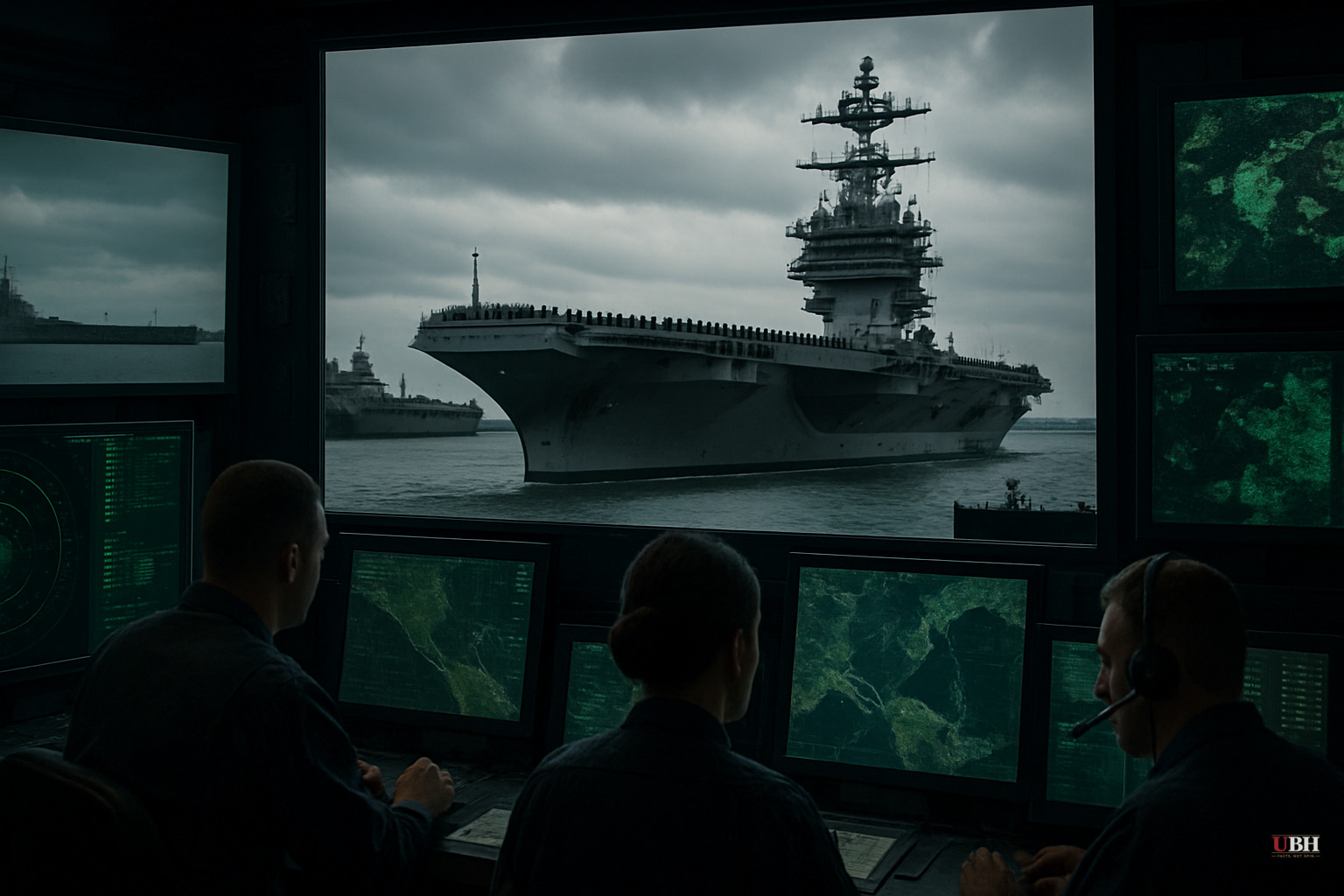
The USS Gerald R. Ford docked at Naval Station Norfolk, Virginia on Saturday, May 16, 2026. 326 days at sea. That's the longest operational carrier deployment in 50 years, according to U.S. Naval Institute News.
The only deployments that beat it were the USS Midway's 332-day run in 1973 and the USS Coral Sea's 329 days in 1965. Both during Vietnam.
What This Deployment Actually Was
The Ford left Virginia's coast in June 2025 headed for the Mediterranean. Routine, at first. Then nothing was routine.
In October, it was rerouted to the Caribbean for what the Pentagon described as the largest naval buildup in that region in generations. In January 2026, the ship participated in the military operation to capture former Venezuelan President Nicolás Maduro.
Then Iran. The Ford participated in the opening strikes of the U.S.-Iran war from the Mediterranean before transiting the Suez Canal into the Red Sea in early March.
And in the middle of all that — a fire. Not combat-related. It started in one of the carrier's laundry spaces, left hundreds of sailors without berthing, and forced weeks of repairs at a port in Crete, Greece. According to the Press Democrat, the ship also dealt with repeated plumbing issues throughout the deployment.
America's most advanced warship. Plumbing problems. In a combat zone.
5,000 Sailors. 11 Months. One Honest Admiral.
About 5,000 sailors on the Ford and its two accompanying destroyers — the USS Bainbridge and USS Mahan — hadn't seen their families since June. CNN spoke with Victoria Dobson, who welcomed her husband home wearing matching American flag dresses with her 2-year-old daughter.
"When he left, she was a baby, and now she's a big girl," Dobson said. "All the transitions — I did all that without him and it was hard."
That's what an 11-month combat deployment looks like at home.
Adm. Daryl Caudle was direct about it, according to CNN. He acknowledged a "once-in-a-lifetime confluence of events" forced the extended deployment, but he made something clear: "We really want to deploy our ships for the length of time they're designed to."
Carriers are designed for deployments of up to seven months. The Ford was out for eleven. Caudle stated flatly he does NOT "want that to be a precedent."
An admiral telling you the system was stretched beyond its design limits.
What Hegseth Said — and Didn't Say
Defense Secretary Pete Hegseth was on the dock for the homecoming. He addressed crews on the Bainbridge, the Mahan, and the Ford. "You didn't just accomplish a mission, you made history," Hegseth told sailors on the Bainbridge's deck, per the Press Democrat. "You made a nation proud."
Fine words. The sailors earned every one of them.
But Hegseth didn't address the Navy's own warnings — reported in our previous coverage — about budget cuts threatening fleet readiness by July. He didn't explain how the Pentagon plans to avoid burning out its carrier fleet if operational tempo stays this high. No reporter pressed him on it at the event.
The Maintenance Question
Every outlet covered the homecoming as a feel-good story. Families reunited, flags waving, sailors back safe. That's real and it matters.
AP News, NYT, CNN, and the Washington Post all ran versions of the same homecoming wire story. None of them asked what happens to the Ford's maintenance timeline now. None asked whether the destroyer crews get adequate dwell time before the next deployment. None asked Hegseth directly about reconciling the celebration with the budget squeeze.
The Bigger Picture
The Ford's deployment is a data point in a larger story. The U.S. Navy designed its carriers for 7-month deployments. It just ran one for 11. Adm. Caudle said publicly he doesn't want it repeated. That means the Navy is already telling civilian leadership: we're at the edge.
Running hardware and people past design limits has consequences. Equipment wears faster. Crews burn out. Retention suffers. You don't fix any of that by cutting the maintenance budget.
5,000 sailors are home. They did their jobs under extraordinary circumstances. The people running the budget now need to do theirs.
Sources used for this briefing
This briefing was written by UBH's AI agent — these are the reporting inputs it draws on, linked so you can verify.


