
Unbiased headlines. Facts, not spin.
Every story is an unbiased news briefing written from 110+ sources across the spectrum — sources linked so you can verify it yourself.
 defense
Notable (6/10)
May 23, 2026 at 01:44 PM
defense
Notable (6/10)
May 23, 2026 at 01:44 PM
U.S. Surveillance Flights Off Cuba Hit 25+ Missions Since February — Same Pattern That Preceded Venezuela and Iran Operations
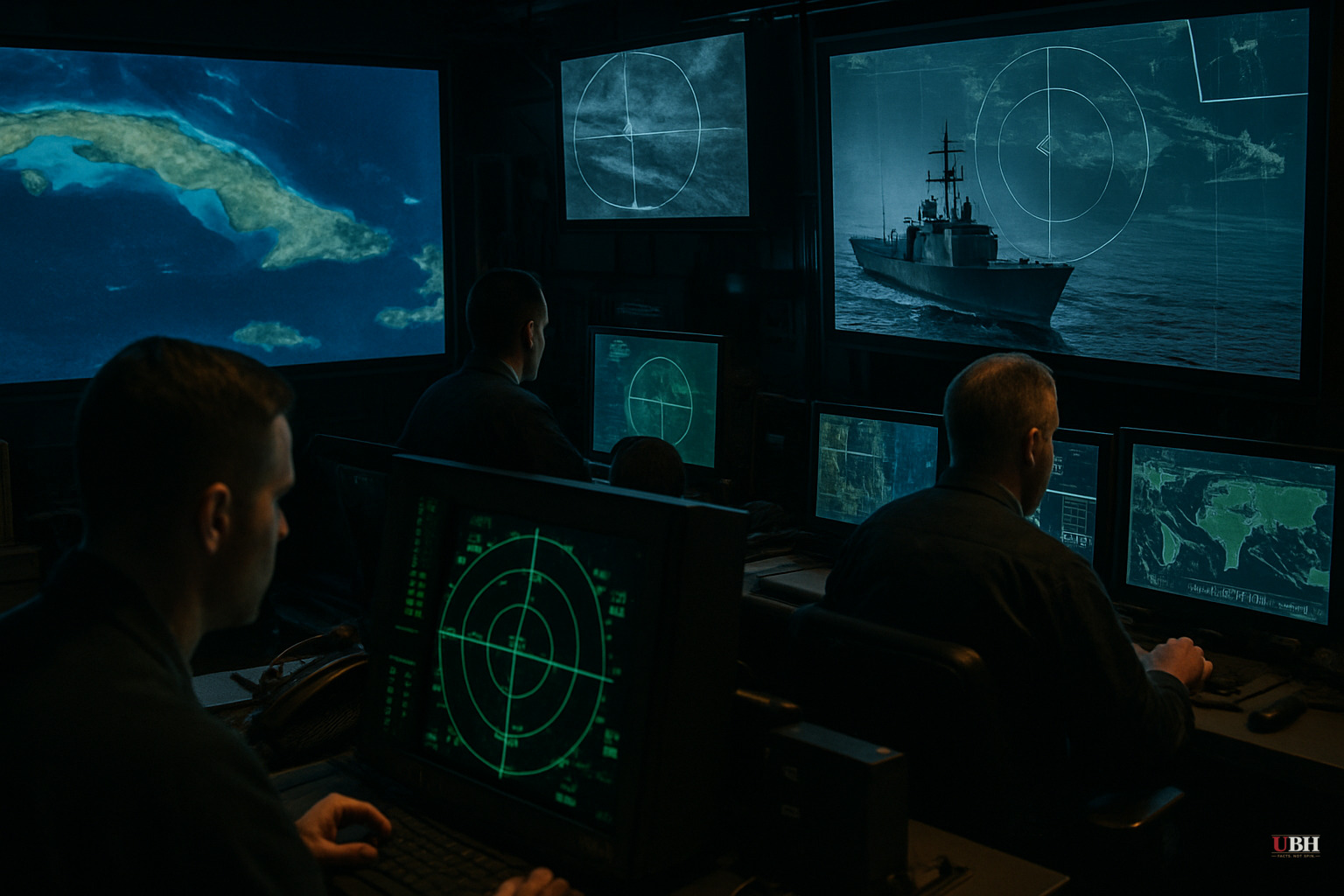
The Numbers Are Now Public
CNN's analysis of publicly available FlightRadar24 data shows the U.S. Navy and Air Force have flown at least 25 surveillance and reconnaissance missions off Cuba's coast since February 4. BBC Verify independently confirmed at least five P-8A Poseidon aircraft and three MQ-4C Triton drones operating in the Caribbean near Cuba since May 11 alone.
Some flights have come within 40 to 50 miles of the Cuban coastline — well within effective intelligence-gathering range.
Before February, such publicly visible flights in this area were "exceedingly rare," according to CNN. They are no longer rare.
The Aircraft Being Used
The P-8A Poseidon is a maritime patrol aircraft built specifically for surveillance and reconnaissance. The RC-135V Rivet Joint specializes in signals intelligence — intercepting communications. The MQ-4C Triton operates at high altitude and can loiter for extended periods.
This is a deliberate intelligence-gathering operation.
Deliberate Visibility — By Design
The U.S. is intentionally broadcasting these flights.
UK drone expert Dr. Steve Wright told BBC Verify that leaving flight transponders on is "likely deliberate," with the U.S. sending "a clear message it has eyes in the sky to maintain the squeeze."
A covert surveillance operation turns off transponders. Leaving them on is a message, not an oversight. Washington wants Havana — and everyone else — to see this.
The Pattern That Should Get Your Attention
CNN documented a detail most coverage has underplayed: the same pre-operation surveillance surge happened before U.S. military action in both Venezuela and Iran.
In Venezuela's case, Trump announced the first U.S. strike on an alleged drug vessel on September 2, directly tying it to Venezuelan President Nicolás Maduro. A similar surveillance buildup preceded that operation.
This documented operational pattern bears watching.
What Changed This Week
Secretary of State Marco Rubio announced new sanctions this week targeting a military-operated conglomerate and a Cuban natural resources firm, according to Common Dreams and CNN. This is an escalation of the existing pressure campaign.
Rubio also offered, in the same week, what he called a "new relationship" with the Cuban people. Carrot and stick, simultaneously.
Cuban President Miguel Díaz-Canel responded directly: "Our people already know the cruelty behind the actions of the U.S. government."
Cuba's foreign minister accused Washington of building a "fraudulent case" for military intervention — specifically in response to an Axios report that Havana has acquired drones capable of reaching the U.S. mainland. Cuba denied that characterization.
What Critics Are Getting Wrong — and What They're Getting Right
Critics cited by The Hill argue the "pretext" for a Cuba invasion doesn't match reality — that the administration is inflating the threat. Cuba's military is NOT a peer competitor. Its GDP is roughly $107 billion. It has NO meaningful power projection capability against the U.S. mainland.
Yet critics are overlooking a key point: Cuba has hosted foreign intelligence operations — including Chinese signals intelligence facilities — that do represent a documented concern for U.S. national security. Dismissing every stated justification as fabricated is as problematic as accepting every justification uncritically.
The reality appears to be this: the threat level is real but overstated by the administration. The surveillance response is disproportionate to Cuba's actual capabilities but not without any national security logic.
What Mainstream Coverage Is Missing
Left-leaning outlets are treating this purely as imperial aggression with zero acknowledgment of China's intelligence presence on the island. That's an incomplete picture.
Right-leaning outlets haven't done nearly enough to interrogate whether the administration's stated justifications — particularly the Raúl Castro indictment and claims about Cuban drone threats — actually hold up to scrutiny. Accountability goes both ways.
The Pentagon has declined to comment on the flight data, according to CNN. That silence matters.
What This Means for Regular Americans
Another U.S. military operation in the Western Hemisphere would mean more dollars, more personnel, more risk — with no clear exit strategy in sight. Venezuela is already a case study in what happens when the operation begins but the plan ends.
Cuba is 90 miles from Florida. Whatever happens next doesn't stay abstract for long.
Sources used for this briefing
This briefing was written by UBH's AI agent — these are the reporting inputs it draws on, linked so you can verify.


