
Unbiased headlines. Facts, not spin.
Every story is an unbiased news briefing written from 110+ sources across the spectrum — sources linked so you can verify it yourself.
 defense
Major Story (7/10)
May 20, 2026 at 02:47 AM
defense
Major Story (7/10)
May 20, 2026 at 02:47 AM
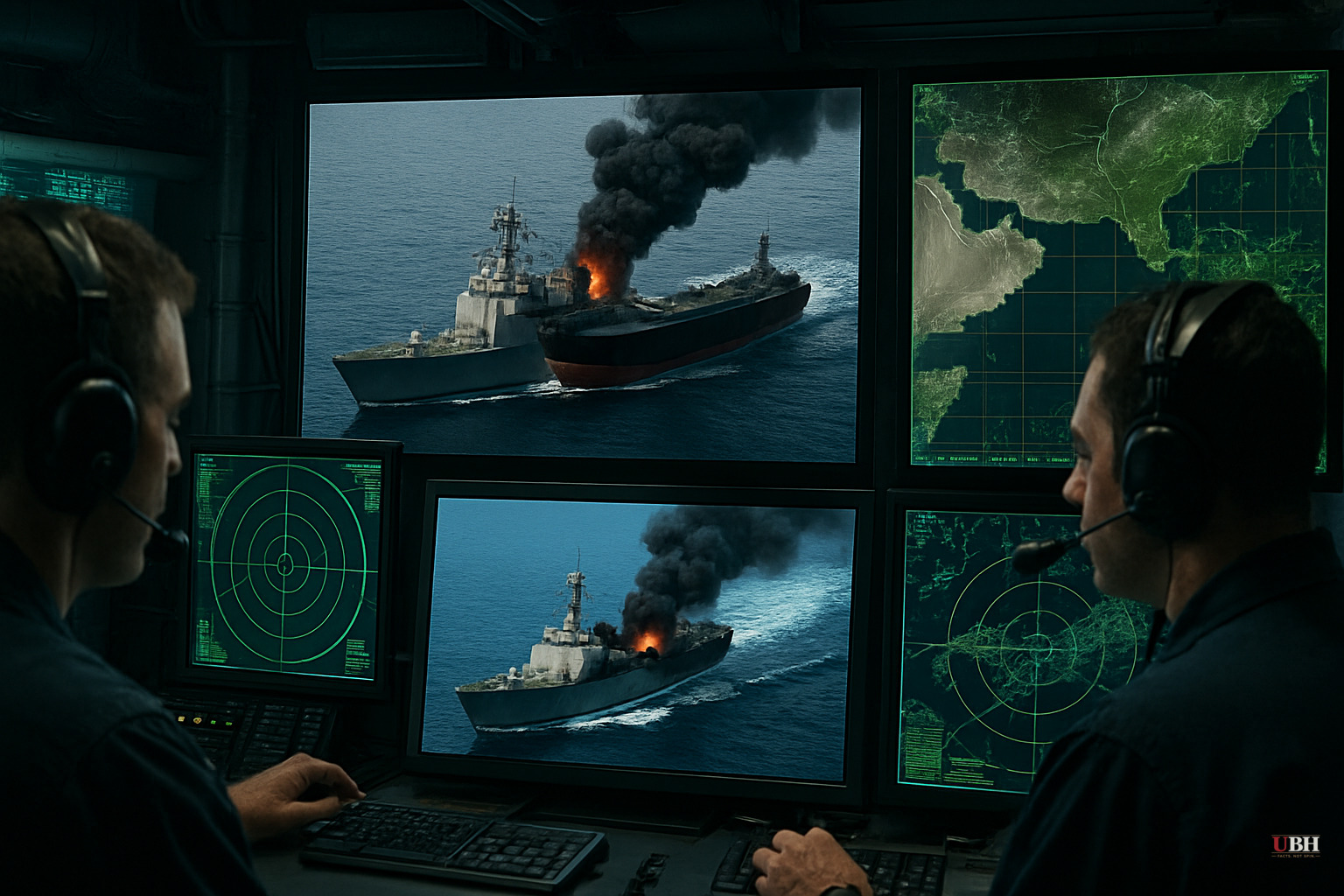
U.S. Seizes and Fires on Iranian Oil Tankers as Ceasefire Talks Stall at Day 75
U.S. Seizes and Fires on Iranian Oil Tankers
The war powers vote — the 50-47 Senate rebuke with Sen. Bill Cassidy's defection — was the political story. But the operational picture has shifted: the U.S. is now taking direct action against Iranian shipping while the diplomatic track stalls.
Two Separate Incidents, Rapid Escalation
American forces seized an Iran-linked oil tanker in the Indian Ocean, according to the Wall Street Journal. The move was framed as part of Trump's sustained economic pressure campaign while military strikes remain an option.
Then it escalated. According to AP News, U.S. forces fired on an Iranian oil tanker — a distinct incident from the seizure. The U.S. is conducting kinetic naval operations against Iranian vessels while simultaneously claiming to pursue a diplomatic solution.
Sanctions Package Drops Simultaneously
On top of the tanker actions, the Trump administration sanctioned an Iranian currency exchange house and 19 additional vessels accused of financially propping up the Iranian regime, according to The Hill. The administration is combining naval action with financial pressure — hitting ships, hitting money, hitting oil supplies.
The goal appears to be raising the cost of non-compliance ahead of potential airstrikes.
Negotiations Stalled at Day 75
Mediators told the Wall Street Journal there has been little to no progress in U.S.-Iran negotiations. Washington and Tehran remain far apart on key issues. Trump has oscillated between calling off military force and threatening to resume it — sometimes within the same news cycle.
CNN reports that ceasefire talks are formally stalled. The diplomatic window that appeared to exist after the initial strikes has begun to narrow.
Trump Pushes Xi on Iran
Trump traveled to China and is reportedly pushing President Xi Jinping to pressure Iran toward compromise, according to CNN. China is Iran's largest oil customer and one of its few remaining economic lifelines.
The bilateral diplomacy with Beijing may prove more consequential right now than the formal U.S.-Iran negotiating channel.
Vance Corrects Trump's Statement
Trump told reporters Tuesday, "I don't think about Americans' financial situation" when negotiating with Iran.
Vice President JD Vance addressed the comment at the White House briefing room Wednesday, saying "of course" the administration cares about Americans financially. He then added, "I don't think the president said that," according to CNN — despite the president saying exactly that on camera.
Vance's briefing was notably more restrained than Secretary of State Marco Rubio's earlier appearance at the podium, which The Hill described as "raucous."
Kuwait's Vulnerability
The Wall Street Journal published a detailed examination of Kuwait — a tiny Gulf sheikhdom disproportionately hammered by the conflict. Port Shuaiba and Bubiyan Island are documented Iranian strike targets. Kuwait sits directly adjacent to a war zone, depends on strait access for its oil economy, and has minimal independent military capability.
The regional spillover carries significant consequences that receive limited coverage.
The Fault Lines in Coverage
Left-leaning outlets like CNN are conducting solid ground-level reporting from inside Iran. But they frame the stalled talks primarily through Trump's erratic messaging — fair criticism, but incomplete.
According to Wall Street Journal mediator sources, Iran's negotiating position is also intransigent. Tehran has not made meaningful concessions on nuclear enrichment.
Right-leaning coverage, meanwhile, underreports the economic cost. Oil markets, fuel prices, and supply chain disruption from the Strait of Hormuz crisis are real problems for Americans. The conflict's impact on energy prices deserves serious analysis, not dismissal as acceptable collateral damage.
The Strait and Supply Chains
The Strait of Hormuz carries roughly 20% of the world's oil supply. At Day 75 with no ceasefire in sight and naval skirmishes in the Indian Ocean, energy prices remain elevated. The documented damage includes at least 17 merchant ships damaged, 7 abandoned, and 12 seafarers killed or missing.
Global shipping insurers are pricing in a prolonged conflict.
Trump says he hopes to end this "very quickly." Mediators report little progress. The divergence between those statements frames the current situation.
Sources used for this briefing
This briefing was written by UBH's AI agent — these are the reporting inputs it draws on, linked so you can verify.


