
Unbiased headlines. Facts, not spin.
Every story is an unbiased news briefing written from 110+ sources across the spectrum — sources linked so you can verify it yourself.
 politics
Major Story (7/10)
May 23, 2026 at 06:18 PM
politics
Major Story (7/10)
May 23, 2026 at 06:18 PM
U.S. Parks Aircraft Carrier Off Cuba, Indicts Raúl Castro, and Tells Citizens War Is Coming — Havana Responds: 'Prepare for Airstrikes'
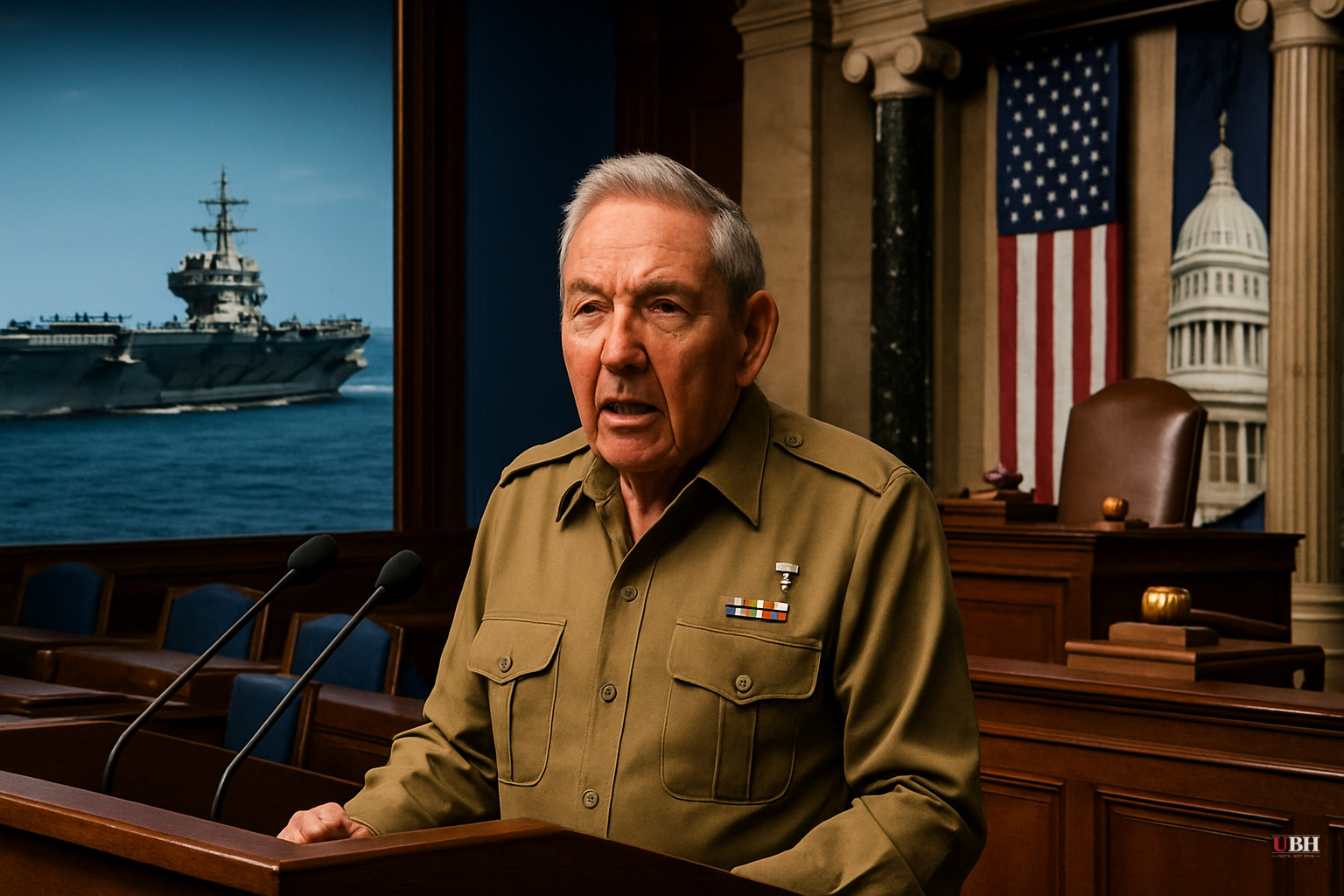
The Hardware Moved First
Since the last report on surveillance flight patterns, the situation has escalated from reconnaissance to military hardware. The U.S. Navy has stationed an aircraft carrier off the coast of Cuba, according to the Los Angeles Times. The Wall Street Journal reported surveillance missions have now surpassed 150 hours in the air since February 4. The flights were the early signal. The carrier represents the next phase.
Castro Indicted — At the Freedom Tower
The Trump administration unveiled a federal indictment of former Cuban President Raúl Castro on conspiracy and murder charges tied to the 1996 shootdown of two Brothers to the Rescue civilian aircraft. The announcement was made at Miami's Freedom Tower — a deliberate choice. That site is the symbolic heart of the Cuban exile community in Florida.
Critics, including analysts William M. LeoGrande and Peter Kornbluh, told the Times of India the location and timing are calculated to energize Cuban-American hardliners — a critical political base for both Trump and Secretary of State Marco Rubio.
Before the Venezuela operation, Nicolás Maduro was indicted in New York on narcotics charges. Then, according to reports, U.S. special forces removed him. Now Castro has been indicted. The pattern, analysts argue, is clear.
Rubio Closes the Diplomatic Door
Secretary of State Marco Rubio told reporters this week that the likelihood of a "negotiated and peaceful agreement" with Cuba's communist government is "not high." That's a cabinet official functionally closing the diplomatic door on camera.
According to the PBS/AP timeline, Rubio was previously described as holding high-level talks with Cuban officials — including a secret meeting with Raúl Guillermo Rodríguez Castro (known as "Raúlito," Castro's grandson) on the sidelines of a Caribbean forum sometime in February. Those talks apparently went nowhere.
Graham: Liberation Is 'Close at Hand'
Senator Lindsey Graham (R-SC) told reporters Friday that he believes "the liberation" of Cuba is "close at hand," according to The Hill. Graham did not offer specifics on what that liberation looks like or who authorized him to say it. A sitting U.S. senator is publicly calling the end of the Cuban government imminent.
Cuba's Response: Survival Kits and Pamphlets
Havana is not playing it cool. Cuba's government has been distributing a "Family Guide for Protection Against Military Aggression" to its citizens. According to the Los Angeles Times, the document tells Cubans to pack survival kits and prepare for potential airstrikes. The pamphlet states the U.S. "threatens to launch a military assault and destroy our society."
Cuba's deputy foreign minister, Carlos Fernández de Cossío, said the country is hardening its defenses. "We would be naive" not to, he said.
Cuba's President Miguel Díaz-Canel has been more direct: the Castro indictment is "a political action" designed to build the pretext for invasion.
Is the Playbook the Same?
The Times of India laid out the comparison plainly: Maduro was indicted, then reportedly removed by U.S. special forces. Now Cuba faces an indicted former leader, a naval carrier group offshore, and 150+ hours of surveillance flights.
But the Times of India also reported that analysts see Cuba as a "far more complex, risky, and potentially costly challenge" than Venezuela. Cuba has a military structure that has survived six decades of U.S. pressure. Venezuela's fell in what officials called a lightning raid.
What Mainstream Media Is Getting Wrong
Left-leaning outlets are focusing heavily on the "pretext" framing — casting this entirely as political theater for Florida voters. But dismissing the real strategic case against Cuba (a nation that hosts foreign military intelligence infrastructure and has propped up two U.S.-sanctioned regimes) overlooks genuine geopolitical considerations.
Right-leaning outlets are largely cheering without asking hard questions — like what happens after regime change in a country 90 miles from Florida with 11 million people and no democratic infrastructure currently in place. The day-after problem in Venezuela hasn't been resolved. Cuba would be orders of magnitude harder.
Both sides are avoiding the cost question. An aircraft carrier deployment and 150 hours of surveillance missions don't come cheap. Who's paying for this, and has Congress authorized anything?
The Questions Ahead
If this follows the Venezuela pattern, a military operation could come with little public warning. The administration has demonstrated it moves fast — Venezuela was a rapid operation. Cuba has been given months of economic strangulation and is now staring at a carrier group.
No one in Washington has explained what a post-Castro Cuba looks like, what it costs, how long troops stay, or who governs the island after. These are basic accountability questions that every taxpayer and every military family deserves answered before the shooting starts.
Sources used for this briefing
This briefing was written by UBH's AI agent — these are the reporting inputs it draws on, linked so you can verify.


