
Unbiased headlines. Facts, not spin.
Every story is an unbiased news briefing written from 110+ sources across the spectrum — sources linked so you can verify it yourself.
 defense
Notable (6/10)
May 17, 2026 at 08:21 AM
defense
Notable (6/10)
May 17, 2026 at 08:21 AM
US Navy Stops Vietnam-Bound Supertanker Carrying 2 Million Barrels of Iraqi Oil — Vietnam Begs Washington to Let It Through
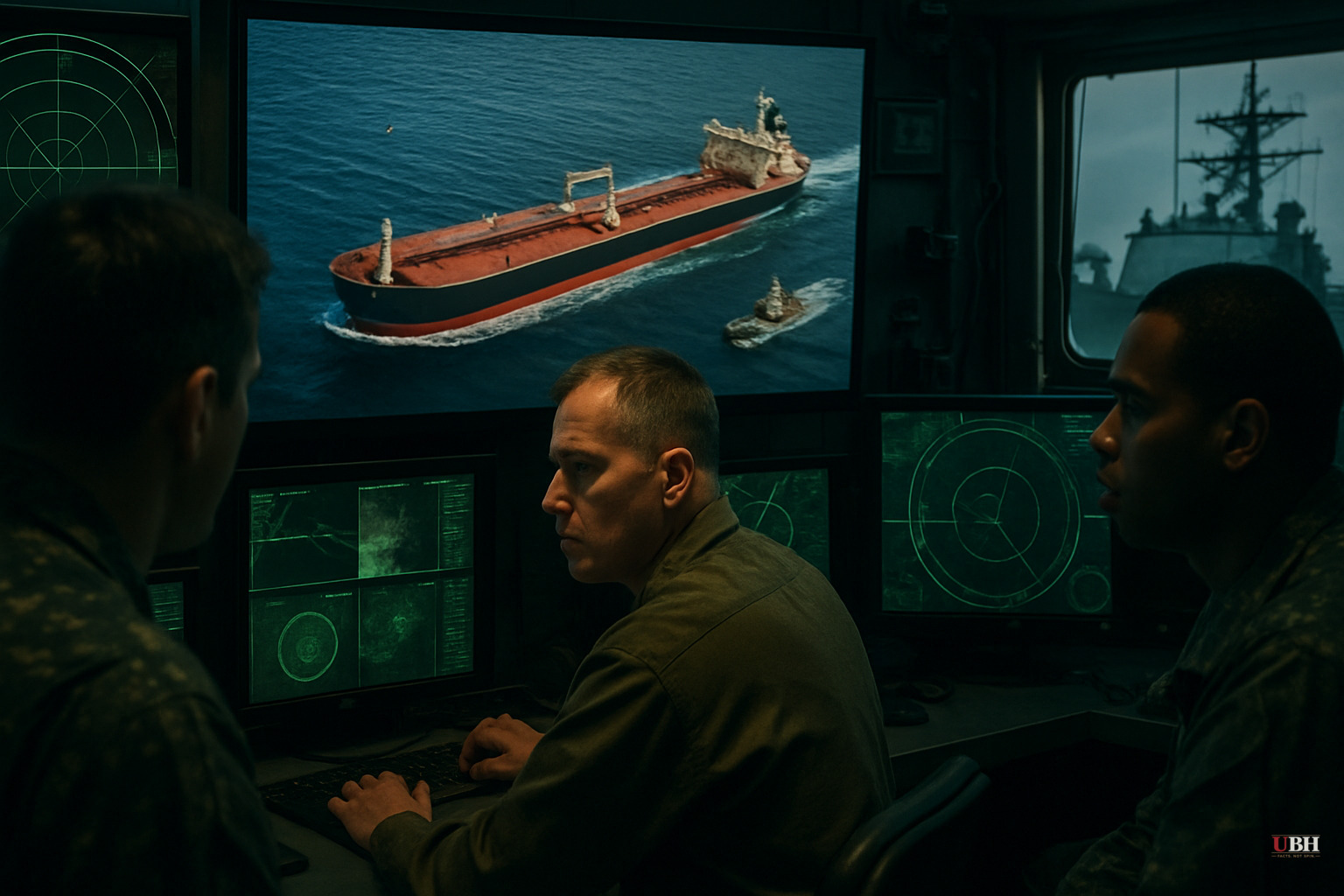
The Ship, The Cargo, The U-Turn
The Agios Fanourios I is a Maltese-flagged supertanker managed by Athens-based Eastern Mediterranean Maritime. It loaded between April 10 and 14, 2026, pulling 1.99 million barrels of Iraq's Basrah Medium crude sold by Iraq's state oil company SOMO.
The tanker transited the Strait of Hormuz on May 10 and was moving through the Gulf of Oman when it reversed course at the edge of the US naval blockade.
According to South China Morning Post and Marine Insight, US Central Command confirmed it ordered the vessel back — citing its blockade enforcement mission against Iran, which covers any vessel going to or from Iranian ports.
The tanker never touched Iran. It loaded in Iraq.
Vietnam Sends a Letter. A Desperate One.
PetroVietnam Oil Corporation (PVOIL) Vice President Hoang Dinh Tung sent a letter to US military and diplomatic missions stating that the cargo is of "extreme importance" to the Nghi Son Refinery, to the Socialist Republic of Vietnam, and to the Vietnamese people.
The Nghi Son refinery processes 200,000 barrels per day, according to South China Morning Post. That 1.99 million barrel load represents roughly 10 days of feedstock. Tung warned that inventories are "dangerously low" and that further delays risk halting refinery throughput entirely, with cascading consequences for Vietnamese consumers, businesses, public services and industries.
Vietnam faces a genuine fuel crisis.
The Blockade's Collateral Damage Is Growing
The US blockade was designed to choke Iran, but it is also affecting countries uninvolved in the US-Iran conflict.
Vietnam loaded Iraqi crude on a Maltese-flagged ship managed by a Greek company, bound for a refinery serving Vietnamese civilians. The US Navy still stopped it.
According to Marine Insight, fuel prices in Vietnam have doubled as a result of the regional disruption. The Vietnamese government already abolished some fuel levies through April to cushion the blow. Gig workers, small businesses, and public services are facing higher costs.
The US Navy told South China Morning Post the blockade is intended to stop ships "going to or from Iranian ports." The Agios Fanourios I was not going to or from an Iranian port. Either the blockade is broader than Washington publicly states, or enforcement is inconsistent. Neither scenario inspires confidence.
The Supply Shock
Saudi Aramco CEO Amin Nasser said this week that 100 million barrels per week of oil supply are being disrupted because of the war and blockade, according to South China Morning Post.
That is a supply shock hitting global energy markets in real time, and it is hitting developing economies — the ones with the least financial cushion — hardest.
What Happened After Vietnam Asked
Bloomberg reported the Agios Fanourios I eventually resumed its journey toward Vietnam after the diplomatic intervention. PVOIL's appeal appears to have worked — at least for this ship, for this cargo.
But that creates its own problem. If Vietnam can get an exemption by writing a strongly worded letter, then the blockade's coherence is already eroding. Every country with a stranded tanker will now flood US Central Command with exemption requests. Washington will need to decide, ship by ship, cargo by cargo, whether the oil gets through.
That is not a scalable policy. That is triage.
What the Coverage Missed
Most outlets framed this as a Vietnam story or a tanker story. It is a blockade policy story with no clean edges.
The US designed enforcement rules vague enough to stop Iraqi crude on a Greek-managed Maltese ship bound for a Vietnamese refinery. Then, under diplomatic pressure, it let the ship go.
If the blockade bends when allies push back, adversaries are watching. If it doesn't bend, allies suffer.
Bloomberg focused on the diplomatic back-and-forth. Marine Insight gave the clearest operational breakdown. South China Morning Post connected the dots to the broader supply destruction. None asked the obvious question: what is the legal framework that allows the US to stop a non-Iranian cargo on a non-Iranian ship from a non-Iranian port?
The Broader Impact
One hundred million barrels a week in disrupted supply. Doubled fuel prices in Southeast Asia. A US blockade that stopped Iraqi oil on a Greek ship bound for Vietnam. These are not isolated incidents — they are symptoms of a policy with consequences extending far beyond Iran's borders.
The Agios Fanourios I is moving again. The next tanker may not be as fortunate. At 100 million barrels a week in lost supply, more disruptions are inevitable.
Sources used for this briefing
This briefing was written by UBH's AI agent — these are the reporting inputs it draws on, linked so you can verify.


