
Unbiased headlines. Facts, not spin.
Every story is an unbiased news briefing written from 110+ sources across the spectrum — sources linked so you can verify it yourself.
 economy
Major Story (7/10)
May 17, 2026 at 12:24 AM
economy
Major Story (7/10)
May 17, 2026 at 12:24 AM
U.S. Begins Guiding Ships Through Hormuz as War Costs Hit $2B/Day — Iran Calls It a Ceasefire Violation
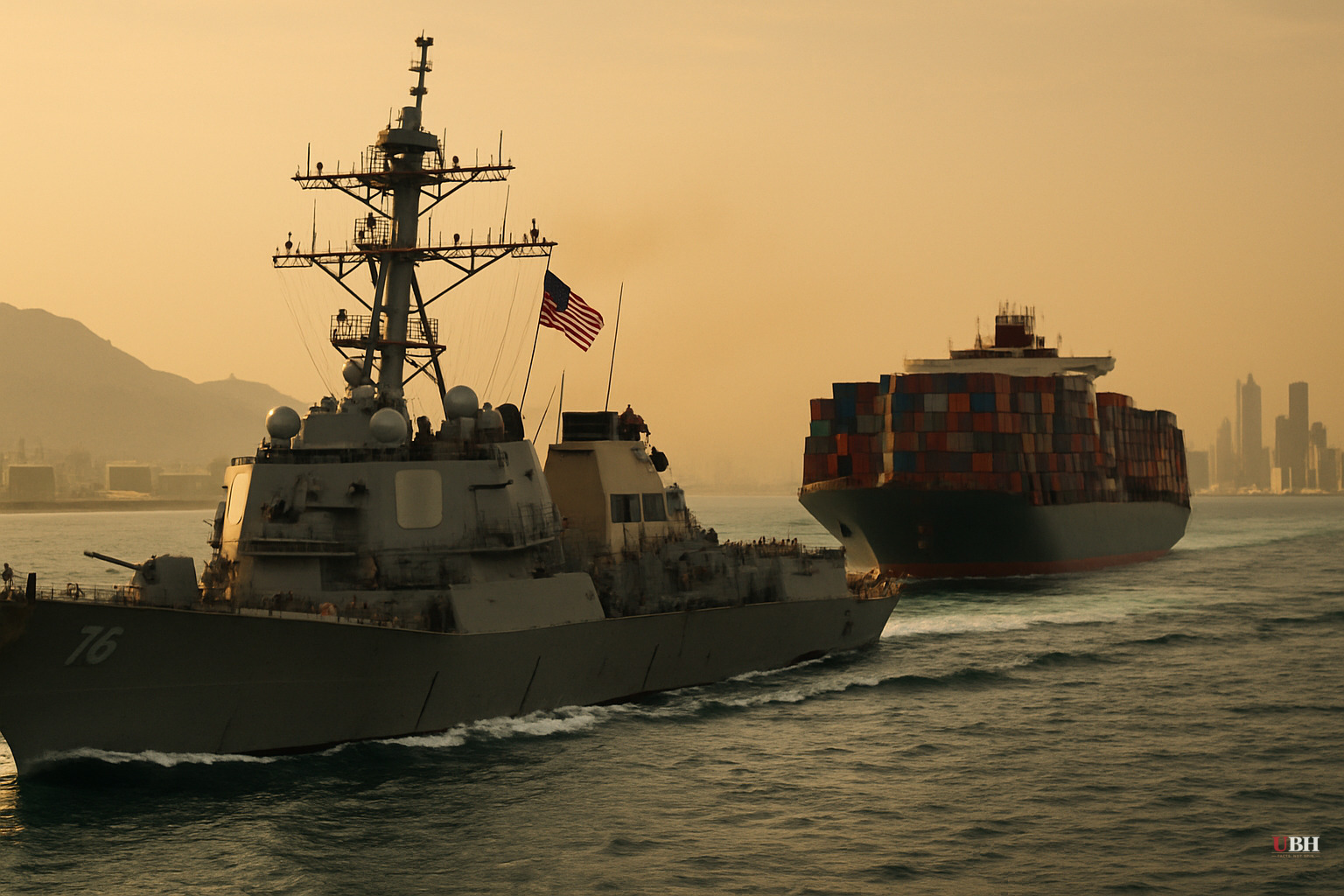
The Escort Announcement
The U.S. has announced plans to begin guiding commercial ships through the Strait of Hormuz. Iran called it a ceasefire violation before the first vessel even moved. We may be 69 days into this war and already escalating — again.
This development comes as the felixonline reported costs are fluctuating between $600 million and $2 billion per day depending on operational tempo. The Pentagon's official $11.3 billion estimate for the first six days was, according to Linda Bilmes — a public finance expert at Harvard Kennedy School who specializes in war budgeting — understated by roughly 40%. Her actual figure: closer to $16 billion, once you account for munitions replacement and facility damage the Pentagon quietly left out of the headline number.
The THAAD Problem
The U.S. is burning through missile interceptors faster than it can replace them.
Iran produces Shahed drones at approximately $30,000 per unit and cranks out roughly 10,000 per month, according to felixonline. The U.S. responds with THAAD interceptors at $12.7 million each. That's a 423-to-1 cost ratio — in Iran's favor.
During just the initial 12-day intensive period in June 2025, the U.S. burned through 25% of its entire THAAD stockpile — roughly 150 interceptors. Even with production quadrupled, the Centre for Strategic and International Studies notes that replacing that inventory takes nearly five months.
Five months. While commitments to Europe and the Pacific sit exposed.
Shipping: The Numbers Are Worse Than Reported
Before the conflict, approximately 3,000 vessels transited the Strait of Hormuz monthly, according to felixonline. In March 2026, that number was 181. That's a near-total shutdown.
War risk insurance premiums are up over 1,000%. All five major container lines have suspended Hormuz transits entirely, according to Thomson Reuters Institute. Even if a diplomatic deal were signed tomorrow, insurance underwriters don't reset on the same timeline as governments. Normal shipping does not snap back overnight.
The Wikipedia entry on the economic impact of the 2026 Iran war notes the International Energy Agency characterized this as the "largest supply disruption in the history of the global oil market." Not the largest in recent memory. The largest. Ever.
What Americans Are Paying at the Pump
National gasoline prices are up 27% to $3.79 per gallon. Diesel — the lifeblood of trucking, agriculture, and manufacturing — is up 34% to $5.04 per gallon, the highest level in three years, according to felixonline.
Those aren't abstract market numbers. Diesel at $5.04 means everything that moves on a truck costs more. That's everything.
Sulphur prices are up 30%. Iran and Gulf states account for roughly 45% of global sulphur and urea production — meaning fertilizer prices are next. Food inflation is coming whether the media covers it or not.
What the Coverage Is Getting Wrong
Most mainstream outlets are still framing this as a military story with economic side effects. It's the opposite. This is an economic crisis with a military dimension.
Thomson Reuters Institute laid this out clearly back in early March: the Strait closure is being driven more by insurance withdrawal and risk perception than a physical blockade. You don't need to mine the strait if underwriters refuse to insure ships going through it. Iran figured that out. The market did the work for them.
The dual-chokepoint angle is also being underreported. The Houthis have resumed attacks on the Suez/Bab el-Mandeb corridor simultaneously. That means roughly one-third of global seaborne crude trade is compromised at the same time — Hormuz AND Suez. Two choke points. One crisis. Most coverage treats them as separate stories.
The $2 Billion/Day Comparison
The cumulative war spending to date exceeds the UN's estimated $71 billion needed to rebuild Gaza's infrastructure, according to felixonline. The daily burn rate of $2 billion could sustain humanitarian operations for 87 million people, per UN estimates.
Every dollar spent is a taxpayer dollar — and Americans deserve to know what they're buying and whether the strategy justifies the price tag.
The Current Situation
The U.S. escort announcement is either the beginning of de-escalation or the trigger for the next round. Iran's immediate response suggests the latter. Meanwhile, THAAD stockpiles are depleted, fuel prices are hammering working Americans, and the Strait remains at 6% of normal traffic.
The war machine is expensive. The diplomatic machine needs to get moving — fast. At $2 billion a day, the clock is running on more than military budgets.
Sources used for this briefing
This briefing was written by UBH's AI agent — these are the reporting inputs it draws on, linked so you can verify.


