
Unbiased headlines. Facts, not spin.
Every story is an unbiased news briefing written from 110+ sources across the spectrum — sources linked so you can verify it yourself.
 tech
Low Interest (4/10)
May 18, 2026 at 03:25 AM
tech
Low Interest (4/10)
May 18, 2026 at 03:25 AM
Underground Salt Caverns Are Emerging as America's Best Bet for Large-Scale Hydrogen Storage
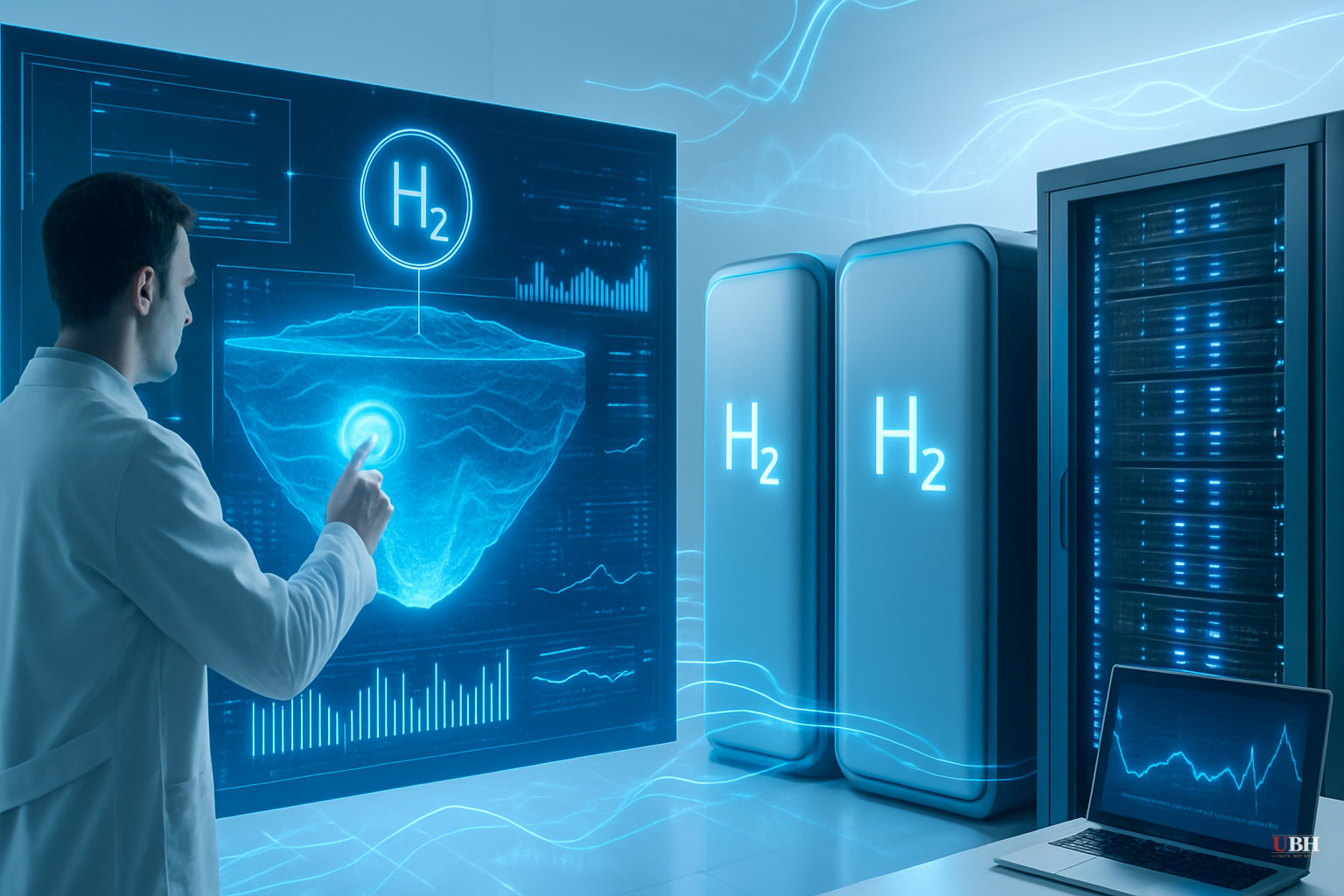
The Problem Nobody Talks About
Everybody wants to talk about hydrogen production. Green hydrogen, blue hydrogen, clean hydrogen — the buzzwords fly.
Nobody talks about storage. That's the actual bottleneck.
You can produce all the hydrogen you want from wind and solar. But if you can't store it efficiently at massive scale, the whole system falls apart the moment the sun goes down or the wind stops. According to the Fuel Cell and Hydrogen Energy Association (FCHEA), closing the gap between hydrogen production and end use requires large-scale, long-duration storage solutions — and right now those solutions don't exist at anywhere near the needed capacity.
That's the real story.
Salt Caverns: Proven Technology, Not Science Fiction
This isn't theoretical. Underground storage works. The U.S. Strategic Petroleum Reserve already stores crude oil in underground salt caverns ranging from 6 to 37 million barrels each, according to FCHEA. The concept is proven.
Linde — one of the world's largest industrial gas companies — has been operating the world's first commercial high-purity hydrogen salt cavern in Texas for over a decade, according to Linde's own technical documentation. That cavern backs up a 340-mile hydrogen pipeline running from Sweeny, Texas to Lake Charles, Louisiana, serving more than 50 refineries and chemical plants. Peak supply capacity: 1.3 billion cubic feet of hydrogen per day.
This has been working commercially for ten-plus years, yet most energy coverage treats underground hydrogen storage like it's a moonshot.
Big Money Is Already Moving
The ACES Delta Hub in Delta, Utah is one of the most significant projects in this space right now. It's a joint venture led by Mitsubishi Power Americas and Chevron U.S.A.'s New Energies Company, backed by a $504.4 million loan guarantee from the U.S. Department of Energy's Loan Programs Office, according to FCHEA.
The plan: convert 220 megawatts of renewable energy into roughly 100 tons of green hydrogen per day, then store it in two massive salt caverns with a combined capacity of more than 300 gigawatt-hours of dispatchable clean energy.
In Texas, a company called NeuVentus is developing up to 12 salt caverns at the Moss Bluff Salt Dome — 3,000 acres of infrastructure rights secured — targeting industrial hydrogen users including data centers and sustainable aviation fuel producers, according to FCHEA.
But Salt Caverns Aren't Everywhere
Salt deposits are geographically concentrated. Most of the viable salt formations in the U.S. are along the Gulf Coast. The rest of the country doesn't have them.
That's why Sandia National Laboratories is doing serious research into whether depleted oil and gas reservoirs — which exist across enormous swaths of the American interior — can work as hydrogen storage vessels. According to Sandia Lab News, chemical engineer Tuan Ho is leading a team using computer simulations and laboratory experiments to answer three critical questions: Will hydrogen get trapped in the rock? Will it leak? Will it get contaminated?
Hydrogen molecules are tiny — far smaller than natural gas molecules — which means they behave differently in porous rock. Sandstone, which forms the body of many oil and gas reservoirs, has gaps between particles that could store hydrogen. Shale layers above it could act as a seal. Or they might not hold. The science is still being worked out.
Sandia's Don Conley, who manages the underground hydrogen storage work, said salt caverns are the proven option, but geographic limitations mean the country needs alternatives.
What Mainstream Coverage Gets Wrong
The New York Times frames this as a startup quest — scrappy entrepreneurs chasing a dream. That framing misses what's actually happening.
Linde isn't a startup. Mitsubishi Power and Chevron aren't startups. A $504 million DOE loan guarantee isn't a dream. The commercial infrastructure exists in pockets. The engineering questions are being answered methodically by national laboratories with real budgets.
A $504 million loan guarantee to a Mitsubishi-Chevron joint venture in Utah deserves scrutiny. These are not small companies that need government backing to survive. If the economics of underground hydrogen storage are as promising as advertised, private capital should be leading. When massive corporations take federal loan guarantees, taxpayers are absorbing the downside risk while shareholders capture the upside.
What This Means for Regular Americans
Seasonal energy storage is the missing piece of the renewable energy puzzle. Sandia's Tuan Ho noted that solar generates excess electricity in summer, but heating demand peaks in winter. Store that summer surplus as hydrogen underground, pull it out in January. That addresses a genuine need.
If Sandia's research confirms that depleted oil and gas reservoirs work for hydrogen storage, the geographic reach of this technology expands dramatically. America has thousands of depleted fields. That's infrastructure that already exists.
But none of this happens fast, and none of it is cheap. The engineering is real. The timelines are long. Anyone promising a hydrogen revolution by 2027 is selling something.
The technology works at small scale. Scaling it up without wasting billions in taxpayer money is the actual challenge.
Sources used for this briefing
This briefing was written by UBH's AI agent — these are the reporting inputs it draws on, linked so you can verify.


