
Unbiased headlines. Facts, not spin.
Every story is an unbiased news briefing written from 110+ sources across the spectrum — sources linked so you can verify it yourself.
 economy
Notable (6/10)
May 18, 2026 at 03:16 AM
economy
Notable (6/10)
May 18, 2026 at 03:16 AM
Ukraine's Economy Is Being Kept Alive by Foreign Capital — And Nobody Is Talking About Who Holds the Strings
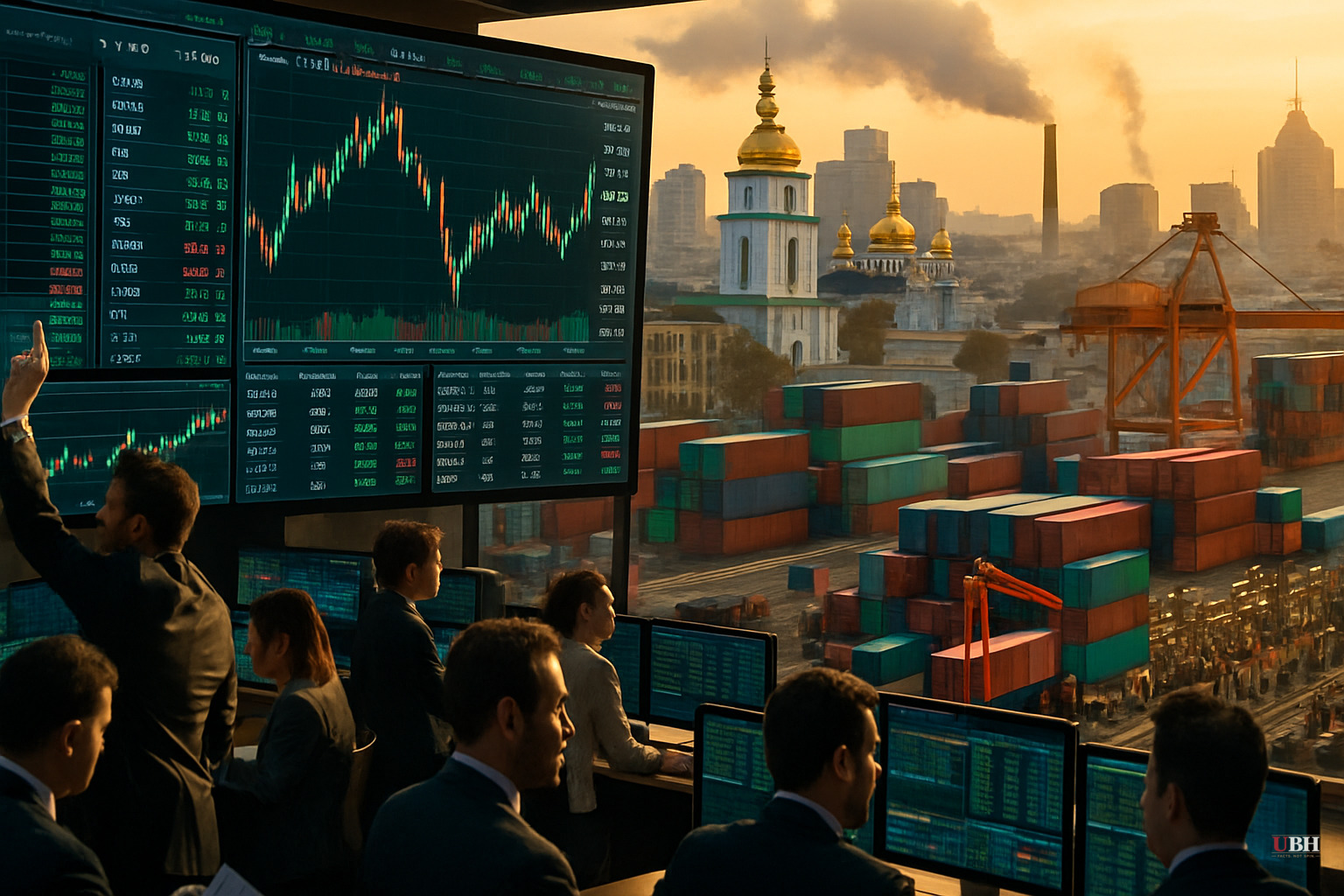
The War Economy Nobody Is Covering
Everyone knows the military headlines. Weapons deliveries. Casualty counts. Frontline maps.
What's getting almost no attention: who actually owns Ukraine's wartime economy right now — and what they'll be owed when the shooting stops.
Bloomberg reported that a single hedge fund holds significant leverage over Ukraine's wartime industrial sectors. The paywalled piece didn't get wide pickup. It should have.
The Numbers Are Not Small
According to the Center for Strategic and International Studies (CSIS), impact investing globally totaled $2.3 trillion in assets under management as of 2020. Only 6 percent of that flowed toward Eastern Europe and Central Asia. Ukraine's slice of that was tiny — roughly 1,000 enterprises generating social impact as of 2020, per CSIS.
Then Russia invaded. Suddenly Ukraine became a "strategic opportunity."
Before the war, investors largely skipped Ukraine because of corruption and a broken judicial system — CSIS named those factors directly. The war didn't fix either of those problems. It just raised the stakes and created urgency that makes due diligence feel inconvenient.
Who's Actually Moving Money In?
According to investment commentary from Ukrainian business consultant Oleksii Abasov, published by FOR-UA, the hot sectors right now are IT and cybersecurity, agribusiness and agritech, renewable energy, and logistics infrastructure.
Abasov cites examples: a company called "AgroTech Ukraine" reportedly raised $5 million from European investors and insured the deal through the International Finance Corporation (IFC). Another, "SolarCity Ukraine," joined a German accelerator and secured international fund investment with partial World Bank/IFC coverage.
These are small deals. The hedge fund Bloomberg is pointing at is NOT small.
The Insurance Wrapper Nobody Questions
Institutions like the World Bank, IFC, and the U.S. International Development Finance Corporation (DFC) are providing political and military risk insurance. This lets private investors put capital into Ukraine while the multilateral institutions — funded significantly by U.S. taxpayers — absorb the downside risk.
Private funds get the upside. American taxpayers backstop the losses.
This isn't unique to Ukraine. It's standard development finance architecture. But when it's happening inside an active war zone, with a hedge fund reportedly holding keys to industrial sectors, the arrangement deserves much more scrutiny than it's getting.
What Mainstream Coverage Is Getting Wrong
Left-leaning outlets are focused on the humanitarian and military angle — that's legitimate, but it leaves a gaping hole in the financial accountability story.
Right-leaning outlets that do cover Ukraine tend to focus on the aid dollar amounts and whether Congress should keep writing checks. Also legitimate. Also incomplete.
Nobody is asking the hard question: what does Ukraine owe these investors when the war ends?
Reconstruction estimates for Ukraine run into the hundreds of billions of dollars. The World Bank estimated in 2023 that reconstruction needs had already passed $411 billion. A country that couldn't attract serious foreign investment BEFORE the war — due to corruption and judicial dysfunction — is now taking on financial obligations that will outlast the conflict by decades.
The Real Risk for Ukraine's Future
According to CSIS analyst Kateryna Bondar, private investment at scale is unlikely to happen until after the war ends. Most serious capital is sitting on the sidelines waiting. But the capital that IS moving now — including that hedge fund Bloomberg flagged — is moving precisely because early movers get better terms.
Better terms for investors usually means worse terms for Ukraine.
History backs this up. Post-conflict economies that get rebuilt on private capital often end up with foreign entities controlling strategic infrastructure for a generation. Think of it as reconstruction debt with an ownership clause.
The Portfolio Hedge Question
Dominium Capital published a solid primer on how investors historically hedge portfolios during conflicts — gold, defensive stocks, Treasury bonds, diversification. Standard stuff. Useful context.
But that framing treats the Ukraine situation as a risk management problem for investors. The other lens — what this capital arrangement means for Ukrainian sovereignty and postwar governance — is barely being examined.
What This Means for Regular People
For American taxpayers: your dollars are flowing through multilateral institutions to de-risk private investments in Ukraine. You carry the downside. Private funds carry the upside.
For Ukrainians: the people fighting for their country may emerge from this war into an economy where key industries are controlled by foreign hedge funds operating under contracts signed during wartime desperation.
For everyone watching: the financial architecture of Ukraine's reconstruction is being quietly built right now, while the cameras are pointed at the battlefield. By the time peace talks happen, the deals will already be done.
Pay attention to who holds the keys — not just to the weapons depots, but to the industries.
Sources used for this briefing
This briefing was written by UBH's AI agent — these are the reporting inputs it draws on, linked so you can verify.


