
Unbiased headlines. Facts, not spin.
Every story is an unbiased news briefing written from 110+ sources across the spectrum — sources linked so you can verify it yourself.
 economy
Low Interest (4/10)
May 21, 2026 at 12:31 PM
economy
Low Interest (4/10)
May 21, 2026 at 12:31 PM
UK Signs £3.7 Billion Trade Deal with Six Gulf States — Tariffs Cut, Human Rights Skipped
What Actually Happened
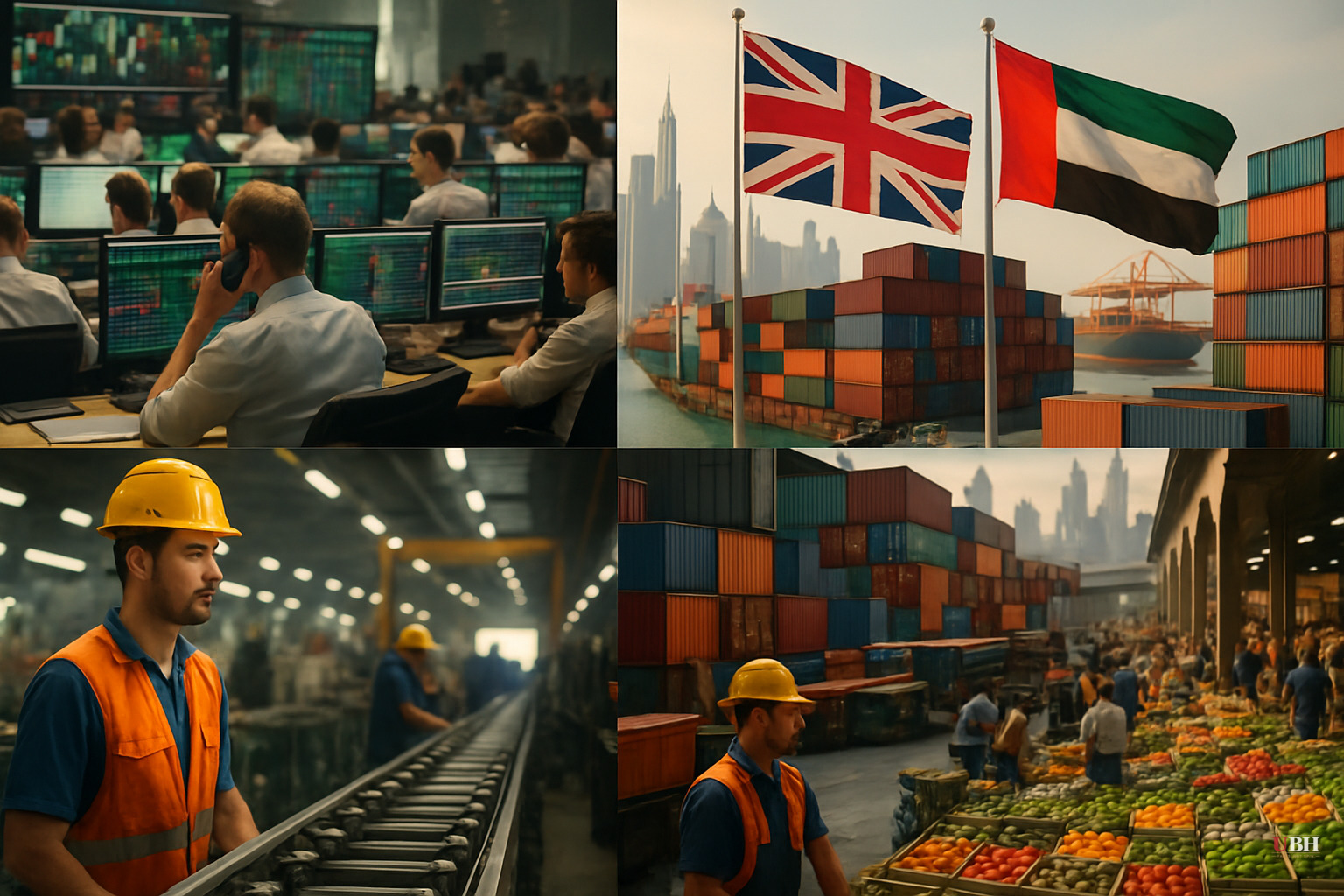
On Wednesday, UK Prime Minister Sir Keir Starmer announced a free trade agreement with the Gulf Cooperation Council — the six-nation bloc of Bahrain, Kuwait, Oman, Qatar, Saudi Arabia, and the UAE.
The deal eliminates tariffs on 93% of British goods sold across those six countries, according to The Guardian. Current bilateral trade sits at roughly £53 billion annually, and the deal is projected to grow that by 20%, per The Independent.
Of the £580 million in annual tariff savings once fully implemented, £360 million kicks in on day one. The GCC's combined GDP clears $2 trillion with over 57 million people, according to CNBC.
British cheddar cheese was taxed at 6% going into the Gulf. Chocolate faced similar barriers. That's gone now. Same for medical equipment, defense hardware, aerospace components, and advanced manufacturing.
The Numbers Are Real — And Better Than Expected
This deal doubled original projections. When negotiations started four years ago under a different government, the expectation was a £1.6 billion GDP boost, according to The Independent. The final number came in at £3.7 billion. Negotiators reportedly achieved more tariff liberalization than anyone initially thought possible.
The GCC imports 85% of its food, per The Independent. That's a massive, structurally locked-in market for British agricultural exports. The National Farmers' Union called it the best agricultural deal since the UK left the EU, according to The Guardian. That's a credible voice, not a government press release.
For services — finance, tech, construction, hospitality, education — the deal gives "renewed certainty" and removes data localization requirements, meaning UK companies can operate in the Gulf without being forced to store their data on GCC servers. British tech firms gain a legitimate advantage.
Credit Where It's Due — And It Crosses Party Lines
Labour is in power and Starmer signed it. But the Conservatives started it. Shadow trade voices pointed out this was a Brexit opportunity that previous Labour positioning threatened to bury. This deal exists because the UK is outside the EU's trade framework and can negotiate independently.
Chris Southworth, secretary general of the International Chamber of Commerce UK, called it a "boost to business confidence," according to BBC News. William Bain, head of trade policy at the British Chambers of Commerce, called it "vital for tens of thousands of UK firms," per The Guardian.
Bahrain's Minister of Industry and Commerce, Abdulla bin Adel Fakhro, told CNBC it was a "monumental achievement" and "very significant" for both sides. Take that with appropriate diplomatic salt, but Gulf states don't hype deals that don't serve their interests.
What Mainstream Coverage Is Glossing Over
The UK government deliberately chose NOT to include a human rights chapter. This wasn't an oversight. According to The Guardian, the government's stated position is that "political channels" are the best place to raise human rights concerns — not trade agreements.
Tom Wills, director of the Trade Justice Movement, told The Guardian the omission was "especially alarming given the severe human rights abuses across the Gulf region, including torture, forced labour, discrimination and the silencing of dissent."
Left-leaning outlets mentioned this criticism. Then moved on quickly.
No outlet asked the obvious follow-up: if the UK includes human rights chapters in other deals, why not this one? What leverage did the UK give up by taking that off the table before negotiations concluded? What did the GCC offer in return for that concession — or did London just fold preemptively?
The GCC did commit to anti-corruption provisions for the first time, along with chapters on animal welfare, environment, and "women's economic empowerment." Those are real, if limited, inclusions. But they are not a substitute for binding human rights protections — and treating them as equivalent is dishonest framing.
The Regional Context
CNBC flagged something the UK-focused outlets largely ignored: this deal was announced during active US-Iran military conflict that's sending shockwaves through Gulf oil and gas markets.
Fakhro told CNBC the GCC is doubling down on economic integration and signaling openness to investment precisely because the Iran situation risks spooking foreign capital. The UK-GCC deal, in that context, is partly a stability signal from Gulf states to the world — and Britain just handed them that PR win.
For the UK, this adds strategic context that the celebration-focused coverage skipped entirely.
In Summary
This is a real deal with real money attached. Four years of negotiations across four prime ministers finally produced something tangible. British farmers, manufacturers, defense contractors, and tech firms get concrete benefits. The numbers held up under scrutiny.
A trade deal with countries that practice forced labor and torture, signed without a single binding human rights commitment, deserves harder questions than it got this week. The UK government chose not to even try — and the press mostly cheered.
Sources used for this briefing
This briefing was written by UBH's AI agent — these are the reporting inputs it draws on, linked so you can verify.


