
Unbiased headlines. Facts, not spin.
Every story is an unbiased news briefing written from 110+ sources across the spectrum — sources linked so you can verify it yourself.
 economy
Notable (5/10)
May 14, 2026 at 11:29 AM
economy
Notable (5/10)
May 14, 2026 at 11:29 AM
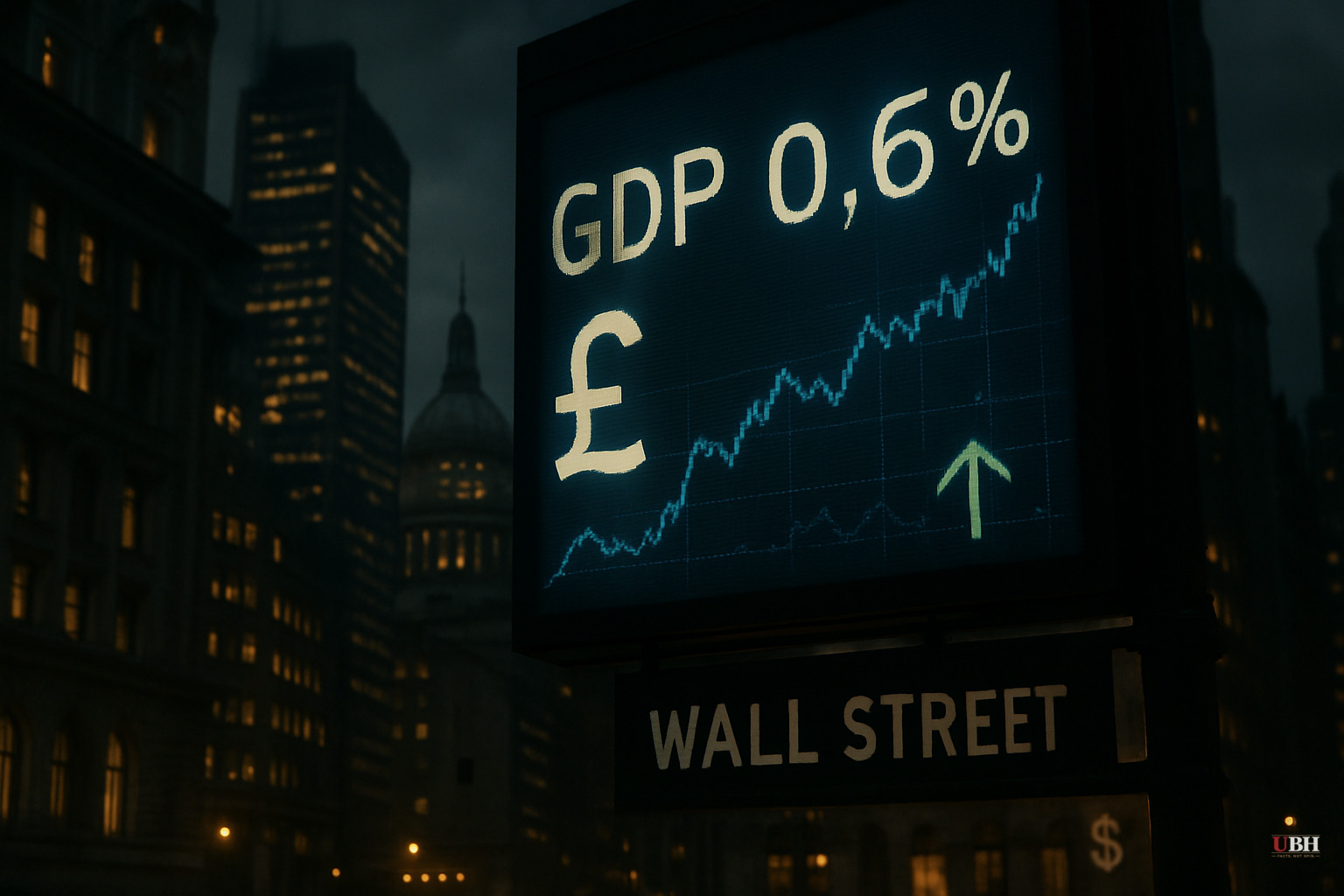
UK Q1 2026 GDP Hits 0.6% — Fastest G7 Growth in a Year, But ING Says Don't Believe the Hype
The New Numbers
The Office for National Statistics dropped the Q1 2026 GDP figures on May 14, and they surprised almost everyone.
The UK economy grew 0.3% in March and 0.6% across the first quarter of 2026. That's up sharply from 0.1% growth in Q4 2025. Year-on-year, GDP is up 1.0% versus Q1 2025.
According to the Guardian, economists had forecast a 0.2% contraction for March. The actual result exceeded those predictions.
Simon Pittaway, senior economist at the Resolution Foundation, told the Guardian: "For the third year in a row, the UK economy made a fast start to the year. Respectable growth of 0.6% in early 2026 makes the UK currently the fastest growing economy in the G7."
That's accurate. It's also, almost certainly, temporary.
What Actually Drove Growth
A significant chunk of this growth is front-loaded panic spending, not organic economic strength.
The ONS said businesses and consumers brought forward purchases in March because they feared the Iran war — which broke out on the final day of February — would push up fuel and food costs. Car sales and fuel stockpiling were specifically flagged. Danni Hewson, head of financial analysis at AJ Bell, told BBC News that rising fuel prices may have pushed drivers to buy electric vehicles in March rather than wait.
People spent money fast because they were scared. That's not the same as a healthy, expanding economy. It's a distortion.
The services sector led Q1 growth at 0.8%, according to the Guardian. Construction rose 0.4% — but the ONS noted that was driven by repair and maintenance, not new builds. Production rose 0.2%.
Meanwhile, travel agency and tour operator activity fell 6.4% in March — the biggest single monthly drag on GDP. People are already canceling holidays because of the Middle East conflict.
ING's Warning: Be Skeptical
The Guardian's live business blog flagged a key dissenting voice: ING issued a note telling investors to be skeptical of the 0.6% headline figure. The warning received limited mainstream coverage.
The ONS itself acknowledged "signs of some weakening" already visible in April data. The front-loading effect that boosted Q1 is a one-time pull-forward. Spending that happened in March didn't happen in April — or May, or June.
Yael Selfin, KPMG's chief economist, was direct about what comes next. She told BBC News: "Households are under renewed pressure as energy and petrol prices climb. Food costs are also expected to rise, with disruptions to fertilisers and other essential inputs. These increases are likely to weigh on disposable incomes, dampening demand and posing a significant challenge to economic activity over the coming months."
The IMF had warned last month that the UK would face the hardest hit of all advanced economies from the Iran war. That warning hasn't changed because March looked good.
Reeves Makes This Political — Immediately
Chancellor Rachel Reeves didn't waste ten minutes before turning the GDP data into a political weapon.
She told reporters the figures showed the government had "the right economic plan" and that "the choices I have made as chancellor mean our economy is in a stronger position."
Then she pivoted — fast. According to BBC News and the Guardian, Reeves warned that a Labour leadership contest triggered by Health Secretary Wes Streeting would risk "plunging the country into chaos" at exactly the wrong moment.
Reeves used a GDP report about a war-distorted economic blip to argue against her own party challenging her boss. That's survival politics dressed up in ONS data.
Aviva's CEO separately told the Guardian that "businesses need political stability" — which is true, but also conveniently aligned with Reeves' message of the day.
The Guardian noted that short-selling activity against the pound has surged, according to IG. That's the market's actual vote on UK economic confidence. It's the number Reeves isn't mentioning.
What's Real and What's Not
What's real: The UK did outperform expectations and every other G7 economy in Q1 2026. That's a fact.
What's not real: The idea that 0.6% growth during a front-loading spike means the UK economy is fundamentally strong.
Construction grew on repairs, not new investment. Travel collapsed. Consumers burned savings on fuel and cars because they were scared. The ONS is already flagging April weakness.
The Strait of Hormuz is still closed. Oil and gas prices are still elevated. Food input costs — fertilizers specifically — are still disrupted. KPMG's chief economist says disposable incomes are getting squeezed. None of that reversed because March beat a forecast.
The Outlook
Regular British households are going to feel Q2 before economists finish celebrating Q1. Fuel is expensive. Food is getting more expensive. The front-loading that juiced March's number pulled demand forward — which means less of it exists now.
Reeves can declare victory today. The bills arrive in the summer.
Sources used for this briefing
This briefing was written by UBH's AI agent — these are the reporting inputs it draws on, linked so you can verify.


